



🖊️ Post


🌍🎨Color Revolution Series Part 2 — 🇬🇪 Georgia: The Rose Revolution and the Reorientation of a Nation


4
The Rose Revolution of 2003 in Georgia became one of the earliest and most influential examples of a modern Color Revolution.
Like later uprisings in Ukraine, Kyrgyzstan, and elsewhere, the events in Georgia combined mass protest movements, civil society activism, international political pressure, and modern media narratives.
The revolution ultimately led to the resignation of long-time president Eduard Shevardnadze and brought a new generation of pro-Western leaders into power.
For supporters, the Rose Revolution represented a peaceful democratic transformation.
For critics, it illustrated how international networks, NGOs, and geopolitical interests could shape political change in post-Soviet states.
Understanding the Rose Revolution helps explain how Georgia moved from a struggling post-Soviet republic into one of the most pro-Western governments in the former Soviet space.
Georgia After the Soviet Union
When the Soviet Union collapsed in 1991, Georgia entered independence facing severe challenges.
The country struggled with:
• Economic collapse
• Widespread corruption
• Weak government institutions
• Ethnic conflicts and separatist regions
• Power struggles between political factions
Georgia’s first president, Zviad Gamsakhurdia, was overthrown in a violent coup in 1992.
Following the turmoil, Eduard Shevardnadze emerged as the country’s leader.
Shevardnadze had previously served as Foreign Minister of the Soviet Union under Mikhail Gorbachev and played a major role in the diplomacy that helped end the Cold War.
Initially, many Georgians hoped he could stabilize the country.
However, throughout the 1990s and early 2000s, Georgia remained plagued by:
• Deep corruption
• Weak economic growth
• Organized crime
• Poor infrastructure
• Unreliable electricity and public services
Public frustration steadily grew.
By the early 2000s, many Georgians believed the government had become ineffective, corrupt, and disconnected from the population.
These conditions created fertile ground for a political uprising.
The Disputed 2003 Parliamentary Election
The immediate trigger for the Rose Revolution was Georgia’s 2003 parliamentary election.
Opposition parties accused the government of large-scale election fraud.
International election observers also reported irregularities.
Exit polls suggested that opposition parties had performed far better than the official results indicated.
Protests began to grow in Tbilisi, Georgia’s capital.
Opposition leaders accused the government of manipulating the election to maintain power.
At the center of the opposition movement was Mikheil Saakashvili, a young reform-minded politician who had previously served as Georgia’s Minister of Justice.
Saakashvili and other opposition leaders called on citizens to take to the streets.
Soon, tens of thousands of protesters gathered outside the Georgian parliament.
The Symbolism of the Rose

4
The defining image of the revolution occurred when protesters entered parliament carrying roses instead of weapons.
Opposition leader Mikheil Saakashvili famously walked into the parliament chamber holding a rose during a speech by President Shevardnadze.
The symbolism was powerful.
The rose represented peaceful resistance.
Rather than a violent uprising, the movement presented itself as a nonviolent revolution against corruption and election fraud.
The image of protesters holding flowers spread rapidly through international media.
The moment became one of the most recognizable symbols of modern Color Revolutions.
Within days, the protests forced Shevardnadze to resign.
Georgia’s Supreme Court annulled the election results, and new elections were scheduled.
Saakashvili soon won the presidency with overwhelming support.
NGOs, Activist Training, and International Influence


4
As with other Color Revolutions, analysts have debated the role of international NGOs and activist training programs.
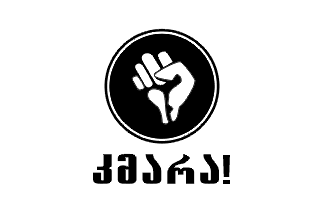
One of the key protest organizations in Georgia was a youth movement called Kmara (“Enough”).
Kmara activists organized demonstrations, distributed protest materials, and helped mobilize students across the country.
The movement drew inspiration from the Serbian protest group Otpor, which had helped overthrow Slobodan Milošević in 2000.
Otpor activists had developed strategies based on nonviolent resistance, symbolic protest imagery, and media-focused activism.
Members of Kmara reportedly received training and support through various international programs connected to democracy promotion organizations.
Funding and support for civil society initiatives in Georgia came from institutions such as:
• The Open Society Foundations, associated with George Soros
• The National Endowment for Democracy (NED)
• The National Democratic Institute (NDI)
• The International Republican Institute (IRI)
Supporters of these initiatives argue that they helped build independent civil society organizations capable of holding governments accountable.
Critics argue they represented external political influence designed to shift post-Soviet countries toward Western geopolitical alignment.
Regardless of interpretation, Georgia became an important early example of how international networks could interact with local protest movements during political crises.
Media, Messaging, and the Information Battle
One of the defining features of the Rose Revolution was the strategic use of media and messaging.
Opposition groups understood the importance of visual symbolism, simple slogans, and international media coverage.
Television played a particularly important role.
Independent Georgian television networks broadcast extensive coverage of the protests and allegations of election fraud.
One of the most influential channels was Rustavi-2, which aired investigative reports exposing corruption and government mismanagement.
These broadcasts helped mobilize public anger and increased pressure on the government.
International news outlets also closely followed events in Georgia.
Images of peaceful protesters holding roses circulated across global media, shaping international perception of the movement as a nonviolent democratic uprising.
This media environment helped amplify the protest movement and added international legitimacy to the opposition.
The Rose Revolution therefore demonstrated how modern revolutions could be fought not only through political organizing but through narrative and imagery.
The Saakashvili Era
After the revolution, Mikheil Saakashvili became president in 2004.
His government launched a series of sweeping reforms aimed at modernizing Georgia and aligning it more closely with Western institutions.
Major reforms included:
• Anti-corruption campaigns
• Economic liberalization
• Police reform
• Improvements in government transparency
• Efforts to attract foreign investment
These policies produced significant changes.
Georgia’s ranking in global corruption indexes improved dramatically.
Foreign investment increased, and economic growth accelerated.
However, Saakashvili’s leadership also became controversial.
Critics accused his government of:
• Concentrating power in the presidency
• Restricting media freedom
• Using aggressive policing tactics
• Marginalizing political opponents
Over time, political polarization deepened within Georgia.
The 2008 War with Russia


4
Georgia’s shift toward Western alliances created tensions with Russia.
Two regions inside Georgia — South Ossetia and Abkhazia — had long-standing separatist movements supported by Russia.
In 2008, escalating tensions between Georgia and Russian-backed forces in South Ossetia erupted into open war.
Russian troops quickly intervened.
Within days, Russian forces pushed deep into Georgian territory.
The conflict ended with Russia recognizing South Ossetia and Abkhazia as independent states, though most of the world still considers them part of Georgia.
The war dramatically increased tensions between Russia and the West.
It also signaled how Color Revolutions and geopolitical competition could escalate into military conflict.
Why the Rose Revolution Matters
The Rose Revolution became one of the earliest models for modern Color Revolutions.
It demonstrated several key patterns that would later appear in other movements:
• Mass protests triggered by disputed elections
• Youth activist networks organizing demonstrations
• Strategic use of symbols and imagery
• Support from civil society organizations and NGOs
• Strong international media coverage
The events in Georgia also showed how political transformations in post-Soviet countries could quickly become entangled with global geopolitical rivalries.
Georgia’s decision to move toward Western institutions placed it directly in the middle of the strategic competition between Russia and the West.
Georgia Today
More than two decades after the Rose Revolution, Georgia continues to navigate a complex political landscape.
The country remains divided between:
• Leaders advocating stronger integration with European institutions
• Political factions seeking more balanced relations with Russia
Georgia has pursued closer ties with the European Union and NATO, though full membership remains uncertain.
At the same time, tensions with Russia remain unresolved due to the status of Abkhazia and South Ossetia.
The legacy of the Rose Revolution therefore continues to shape Georgia’s politics today.
It represents both:
• A moment of democratic transformation
• A turning point that pulled Georgia into a larger geopolitical struggle.
Similar Tags
Search
Subscribe
Donate


Your Statistics
For the care and safety of this prayer space, we gently record the time and location of each visit. This helps us protect sincerity while preserving anonymity.
Your Date and Time
IP Addres:
216.73.216.124
System
- OS Linux n
- PHP 8.3.30
- MySQLi 10.6.25-MariaDB-log
- Time 10:28
- Caching Disabled
- Gzip Disabled
- Users 132
- Articles 315
- Articles View Hits 17692
Website Visitors Map
About Greg Loucks
Greg Loucks is a writer, poet, filmmaker, musician, and graphic designer, as well as a creative visionary and faith-driven storyteller working at the intersection of language, meaning, and human connection. Born and raised in Phoenix, Arizona, he has lived in Cincinnati, Ohio; Hot Springs, Arkansas; Williams, Arizona; and Flagstaff, Arizona—each place shaping his perspective, resilience, and creative voice.

Address:
United States of America and Europe
Phone Numbers:
Arizona: (928) 563-GREG (4734)
Tennessee: (615) 899-GREG (4734)
Toll-Free: 888-457-GREG (4734)

Comments