



🖊️ Post


☪︎ The Arab Spring Part 9 🇯🇴 Jordan: The Protests That Pressured Reform Without Toppling the Monarchy


4
The Jordanian protests of 2011 were part of the broader wave of unrest during the Arab Spring, yet they followed a markedly different trajectory from revolutions in Tunisia, Egypt, or Libya.
Rather than demanding the overthrow of the monarchy, most protesters in Jordan called for political reform, economic relief, and greater accountability.
The movement placed significant pressure on the government and led to constitutional changes and leadership reshuffles, but it did not result in regime collapse.
For supporters, the protests represented a measured and pragmatic push for reform within an existing system.
For critics, they demonstrated how controlled political concessions can diffuse unrest without fundamentally altering power structures.
Jordan’s experience became one of the clearest examples of how the Arab Spring could lead to adaptation instead of revolution.
Jordan’s Political System
Jordan is a constitutional monarchy ruled by King Abdullah II, who ascended to the throne in 1999.
The king holds significant authority, including:
• Control over the military and security forces
• The power to appoint and dismiss governments
• Influence over legislation and parliament
Jordan also has:
• An elected parliament
• A prime minister and cabinet
• A multi-party political system
However, critics have long argued that real political power remains concentrated in the monarchy.
Before 2011, Jordan faced several structural challenges:
• High unemployment
• Rising living costs
• Economic inequality
• Limited political reform
These conditions created a foundation for public dissatisfaction.
The Arab Spring Reaches Jordan


4
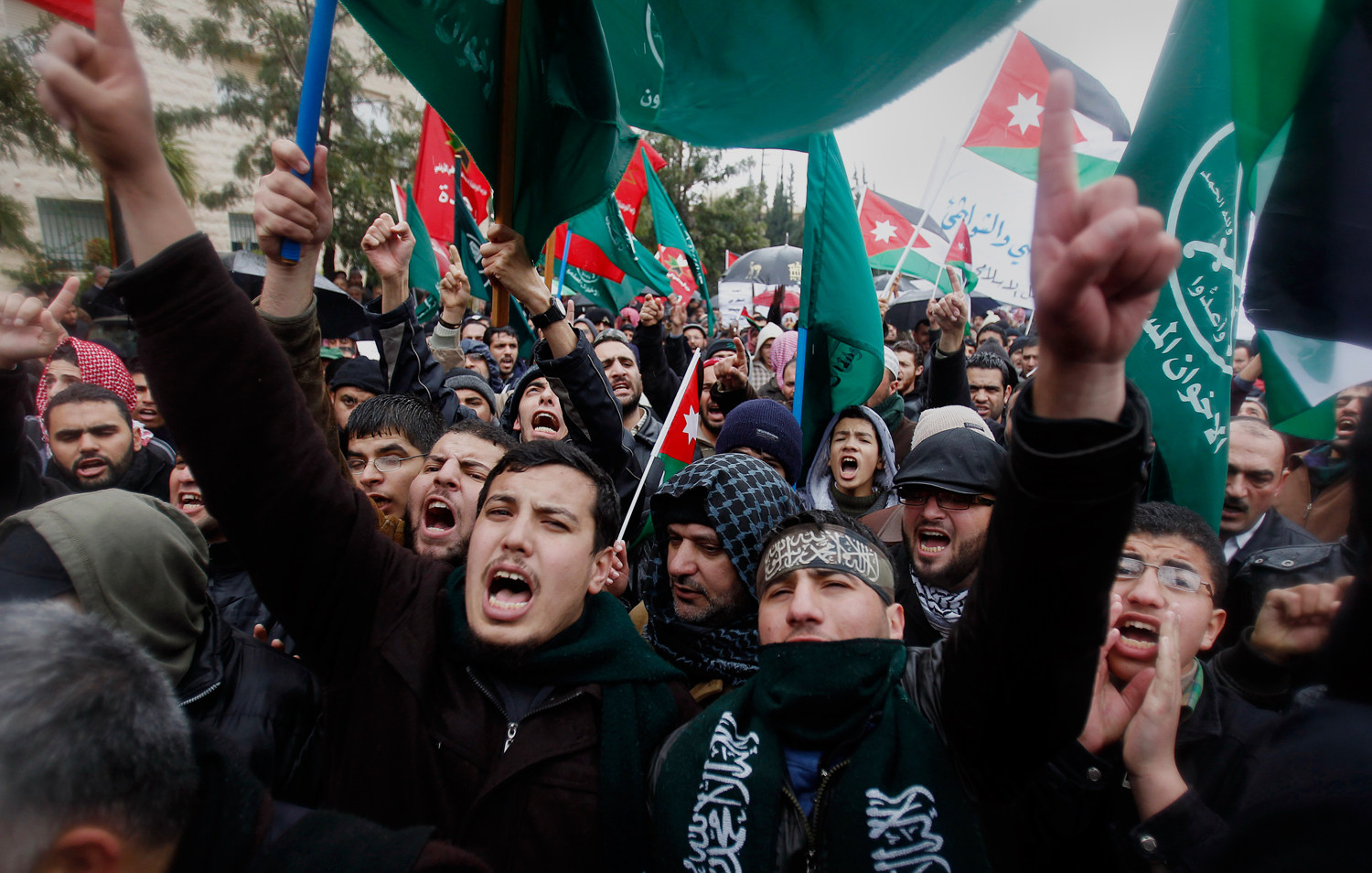
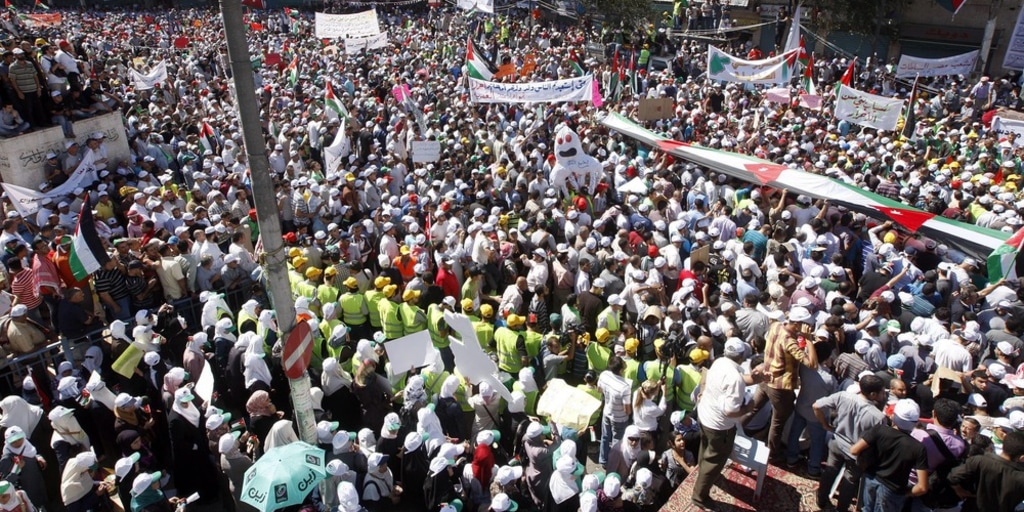
Inspired by events in Tunisia and Egypt, protests began in Jordan in January 2011.
Demonstrations took place in:
• Amman (the capital)
• Zarqa
• Irbid
• Other urban centers
Protesters included:
• Youth activists
• Labor unions
• Islamist groups
• Tribal representatives
Unlike other Arab Spring countries, the demands in Jordan were largely reformist rather than revolutionary.
Protesters called for:
• Lower food and fuel prices
• Anti-corruption measures
• Electoral reform
• Greater political representation
The protests were generally peaceful and organized.
Economic Pressure and Public Frustration


4
Economic issues were a central driver of the protests.
Jordan is a resource-limited country that relies heavily on:
• Foreign aid
• Imports of energy and food
By 2011, many citizens were struggling with:
• Rising prices
• Unemployment, especially among youth
• Limited economic opportunities
These economic pressures created widespread frustration.
Many protesters focused on immediate economic relief rather than long-term ideological change.
The Role of Social Media and Organization


4
As in other Arab Spring countries, social media played an important role in organizing protests.
Activists used platforms such as:
• Facebook
• Twitter
• Online forums
These tools allowed organizers to:
• Coordinate protest events
• Share information quickly
• Mobilize participants
While social media helped amplify the movement, Jordan’s protests remained more decentralized and less intense than those in countries like Egypt.
The King’s Response

4
One of the key reasons Jordan avoided large-scale instability was the swift response of King Abdullah II.
The king implemented several measures aimed at calming public unrest:
• Dismissing multiple prime ministers
• Appointing new governments
• Promising political reforms
• Launching investigations into corruption
In addition, the government introduced constitutional amendments in 2011, which included:
• Establishing a constitutional court
• Creating an independent electoral commission
• Expanding some parliamentary powers
These reforms were designed to address public concerns while maintaining the existing political structure.
Why Jordan Did Not Experience Revolution
Several factors explain why Jordan’s protests did not escalate into revolution:
Reform-Oriented Demands
Most protesters sought change within the system rather than its complete removal.
Monarchical Legitimacy
The monarchy retained a degree of public trust and historical legitimacy.
Rapid Government Response
The king introduced reforms quickly, reducing momentum for escalation.
Strong Security Apparatus
The state maintained control over security forces without resorting to widespread violence.
These factors helped Jordan navigate the Arab Spring without experiencing collapse.
Continued Protests and Political Pressure


4
Although the intensity of protests decreased after 2011, demonstrations did not completely disappear.
In the years that followed, Jordanians continued to protest over:
• Economic policies
• Tax reforms
• Government corruption
Periodic protests have remained part of Jordan’s political landscape.
Jordan Today
Today, Jordan remains a key political and strategic player in the Middle East.
The country has maintained:
• Relative political stability
• Strong international alliances
• A functioning monarchy
However, challenges remain:
• Economic pressures
• Youth unemployment
• Calls for deeper political reform
The legacy of the Arab Spring continues to influence public expectations and political discourse.
Why Jordan Matters in the Arab Spring
Jordan’s experience provides an important contrast to other Arab Spring countries.
It demonstrates that:
• Not all protest movements aim to overthrow governments
• Reform can be used as a tool to stabilize political systems
• Controlled political change can prevent escalation into conflict
Jordan represents a case where pressure from the streets led to adaptation rather than collapse.
Final Reflection
The Jordanian protests show that revolutions are not always about sudden, dramatic change.
Sometimes, they are about gradual pressure that forces governments to adjust, respond, and evolve.
Jordan’s path during the Arab Spring highlights the importance of:
• Timing
• Leadership decisions
• Public expectations
In a region marked by upheaval, Jordan became one of the few countries to navigate the Arab Spring through measured reform rather than revolutionary rupture.
Similar Tags
Search
Subscribe
Donate


Your Statistics
For the care and safety of this prayer space, we gently record the time and location of each visit. This helps us protect sincerity while preserving anonymity.
Your Date and Time
IP Addres:
216.73.216.124
System
- OS Linux n
- PHP 8.3.30
- MySQLi 10.6.25-MariaDB-log
- Time 06:47
- Caching Disabled
- Gzip Disabled
- Users 132
- Articles 315
- Articles View Hits 17639
Website Visitors Map
About Greg Loucks
Greg Loucks is a writer, poet, filmmaker, musician, and graphic designer, as well as a creative visionary and faith-driven storyteller working at the intersection of language, meaning, and human connection. Born and raised in Phoenix, Arizona, he has lived in Cincinnati, Ohio; Hot Springs, Arkansas; Williams, Arizona; and Flagstaff, Arizona—each place shaping his perspective, resilience, and creative voice.

Address:
United States of America and Europe
Phone Numbers:
Arizona: (928) 563-GREG (4734)
Tennessee: (615) 899-GREG (4734)
Toll-Free: 888-457-GREG (4734)

Comments