



🖊️ Post


☪︎ The Arab Spring Part 7 🇧🇭 Bahrain: The Uprising at Pearl Roundabout and the Revolution That Was Contained


4
The Bahraini uprising of 2011 was one of the most significant protest movements of the Arab Spring, yet it remains one of the least discussed.
Centered in the capital city of Manama, the protests brought tens of thousands of people into the streets demanding political reform, greater representation, and an end to systemic inequality.
Unlike Tunisia or Egypt, however, the uprising in Bahrain did not lead to the fall of the government.
Instead, it was rapidly suppressed through a combination of domestic security measures and regional military intervention.
For supporters, the movement represented a legitimate demand for democratic reform and equal rights.
For the government and its allies, the protests were viewed as a threat to national stability and regional security.
The events in Bahrain highlight how geopolitics, sectarian dynamics, and regional alliances can shape the outcome of protest movements.
Bahrain’s Political System
To understand the uprising, it is necessary to examine Bahrain’s political structure.
Bahrain is a constitutional monarchy ruled by the Al Khalifa family, which has governed the country for more than two centuries.
The political system includes:
• A king with significant executive power
• An appointed upper house of parliament
• An elected lower house with limited authority
One of the most important underlying tensions in Bahrain is its demographic and sectarian composition.
• The ruling family is Sunni Muslim
• The majority of the population is Shiite Muslim
Many members of the Shiite majority have long expressed grievances over:
• Limited political representation
• Economic inequality
• Discrimination in government employment and security services
These tensions had existed for decades before the Arab Spring.
The Arab Spring Reaches Bahrain


4
Inspired by the uprisings in Tunisia and Egypt, protests began in Bahrain in February 2011.
Demonstrators gathered at Pearl Roundabout, a central traffic circle in Manama that quickly became the symbolic heart of the movement.
Protesters set up tents and created an encampment similar to those seen in Tahrir Square in Egypt.
The movement included a broad range of participants:
• Youth activists
• Political opposition groups
• Religious leaders
• Ordinary citizens
The demands of the protesters included:
• Constitutional reforms
• A more representative government
• Greater civil liberties
• An end to corruption and discrimination
In the early days, the demonstrations were largely peaceful and organized.
Escalation and Government Response


4
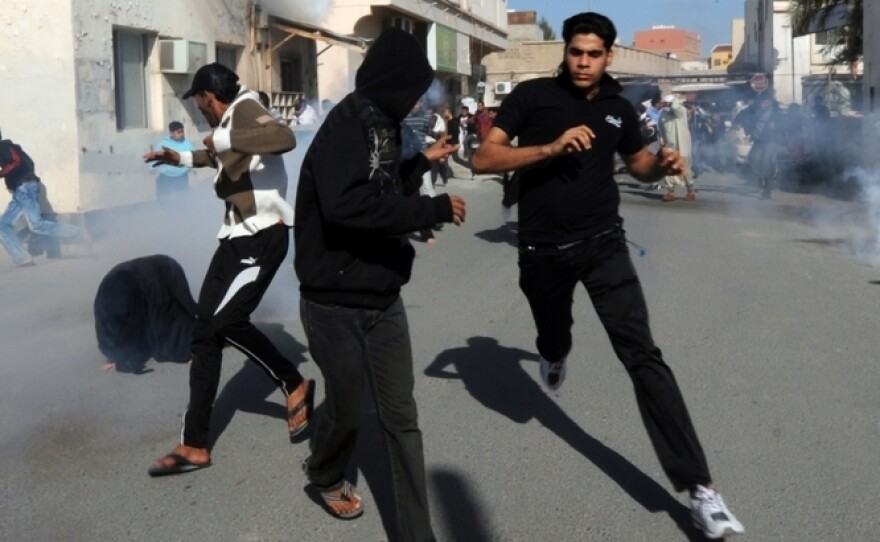
As protests grew larger, the Bahraini government began to respond with force.
Security forces used:
• Tear gas
• Rubber bullets
• Arrests of protest leaders
One of the most dramatic moments occurred when security forces moved to clear the protest camp at Pearl Roundabout, leading to clashes and casualties.
Rather than ending the protests, the crackdown intensified public anger.
Demonstrations continued and expanded, drawing even larger crowds.
At this point, the situation in Bahrain had become a major regional concern.
Regional Intervention


4
In March 2011, Bahrain requested assistance from neighboring Gulf countries.
Troops from Saudi Arabia and the United Arab Emirates entered Bahrain under the framework of the Gulf Cooperation Council (GCC).
The intervention was justified by Gulf leaders as necessary to:
• Restore stability
• Protect key infrastructure
• Prevent regional instability
With the support of GCC forces, Bahraini authorities launched a large-scale operation to suppress the protests.
Pearl Roundabout was cleared, and the protest camp was dismantled.
The roundabout itself was later demolished, symbolizing the government’s determination to end the movement.
The Crackdown


4
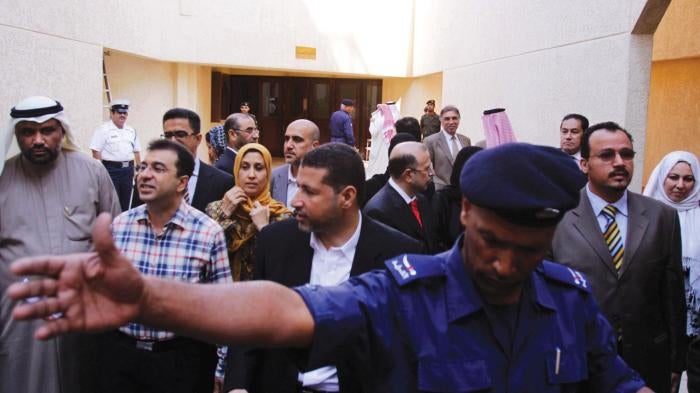
Following the intervention, the government intensified its crackdown.
Measures included:
• Arresting opposition leaders and activists
• Closing or restricting opposition media outlets
• Deploying security forces across major cities
• Declaring a state of emergency
Many protesters were detained, and some opposition figures were tried in special courts.
The crackdown effectively ended large-scale demonstrations.
However, smaller protests and political tensions continued in the years that followed.
Media, Narrative, and Geopolitics
The events in Bahrain became part of a larger regional and international narrative.
Western media often portrayed the protests as part of the broader Arab Spring movement for democracy.
However, coverage of Bahrain was sometimes more limited compared to countries like Egypt and Libya.
Regional governments, particularly in the Gulf, viewed the uprising through a different lens.
Many leaders saw the protests as:
• A potential threat to regional stability
• A movement that could inspire unrest in other Gulf states
• A situation influenced by broader geopolitical tensions, including rivalry with Iran
These differing perspectives shaped how the events were interpreted globally.
Why the Bahrain Uprising Matters
The Bahraini uprising highlights several important aspects of modern protest movements:
• Not all Arab Spring uprisings led to regime change
• Regional alliances can play a decisive role in political outcomes
• Governments with strong security support can contain protest movements
The events also demonstrated how sectarian dynamics and geopolitical considerations can influence both domestic and international responses to uprisings.
Bahrain Today
Today, Bahrain remains under the rule of the Al Khalifa monarchy.
While the government has introduced some reforms, political tensions persist.
Issues such as:
• Political representation
• Civil liberties
• Sectarian divisions
continue to shape the country’s political landscape.
The events of 2011 remain a defining moment in Bahrain’s modern history.
Bahrain and the Arab Spring Legacy
The Bahraini uprising is a reminder that the Arab Spring produced very different outcomes across the region.
While some countries experienced revolution or war, Bahrain represents a case where:
• A large protest movement emerged
• The government retained control
• Regional intervention played a decisive role
It stands as one of the clearest examples of how power structures and geopolitical alliances can determine whether a revolution succeeds or is contained.
Similar Tags
Search
Subscribe
Donate


Your Statistics
For the care and safety of this prayer space, we gently record the time and location of each visit. This helps us protect sincerity while preserving anonymity.
Your Date and Time
IP Addres:
216.73.216.124
System
- OS Linux n
- PHP 8.3.30
- MySQLi 10.6.25-MariaDB-log
- Time 10:25
- Caching Disabled
- Gzip Disabled
- Users 132
- Articles 315
- Articles View Hits 17689
Website Visitors Map
About Greg Loucks
Greg Loucks is a writer, poet, filmmaker, musician, and graphic designer, as well as a creative visionary and faith-driven storyteller working at the intersection of language, meaning, and human connection. Born and raised in Phoenix, Arizona, he has lived in Cincinnati, Ohio; Hot Springs, Arkansas; Williams, Arizona; and Flagstaff, Arizona—each place shaping his perspective, resilience, and creative voice.

Address:
United States of America and Europe
Phone Numbers:
Arizona: (928) 563-GREG (4734)
Tennessee: (615) 899-GREG (4734)
Toll-Free: 888-457-GREG (4734)

Comments