



🖊️ Post


🌍🎨Color Revolution Series Part 9 🇲🇰 North Macedonia: The Colorful Revolution and the Fight Against Corruption


4
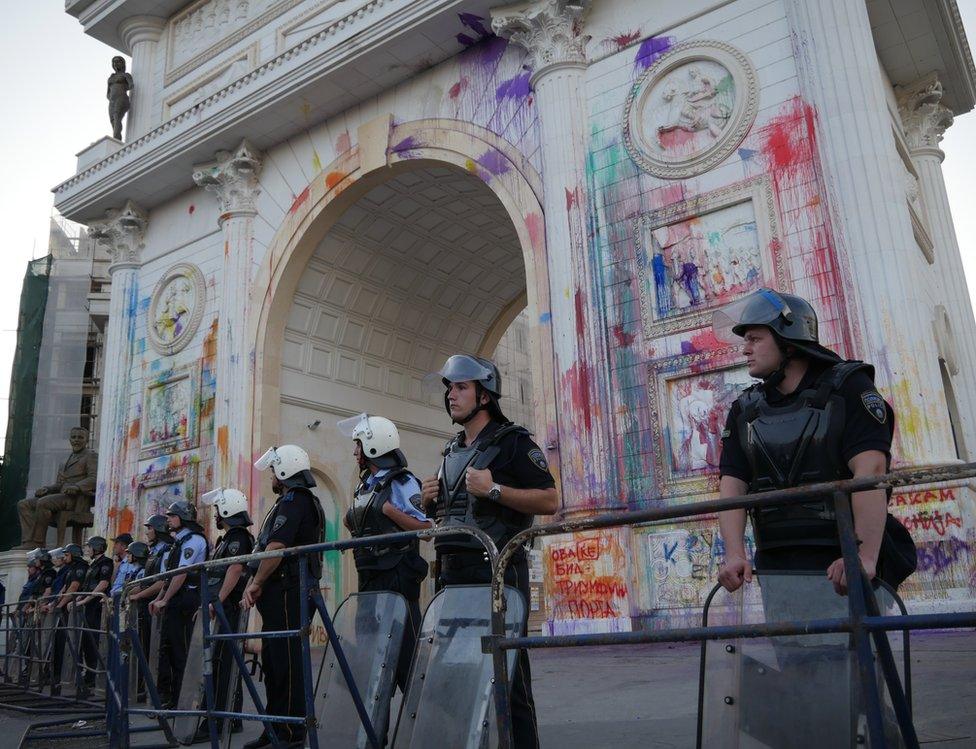
The Colorful Revolution in North Macedonia (2016–2017) became one of the most visually distinctive protest movements in Europe during the 21st century.
Unlike many earlier Color Revolutions that were named after flowers or colors used in political branding, the Macedonian movement gained its name from a unique tactic used by protesters: throwing brightly colored paint at government buildings and monuments.
The movement emerged during a deep political crisis triggered by corruption scandals, allegations of illegal surveillance, and disputes over democratic governance.
For supporters, the Colorful Revolution represented a citizen-led movement demanding accountability, transparency, and democratic reform.
For critics, the protests raised questions about external political influence, civil society activism, and geopolitical competition in the Balkans.
The uprising ultimately helped bring down a long-dominant political leadership and reshaped the country’s political direction, eventually contributing to the historic decision to rename the country North Macedonia as part of an international agreement with Greece.
Macedonia After the Yugoslav Breakup
When Yugoslavia dissolved in the early 1990s, the Republic of Macedonia declared independence in 1991.
Unlike several other Yugoslav republics, Macedonia avoided the large-scale wars that devastated parts of the Balkans.
However, the country still faced several major challenges.
These included:
• Economic instability following the collapse of the Yugoslav economy
• Political tensions between ethnic Macedonians and the Albanian minority
• Diplomatic disputes with neighboring Greece over the country’s name
• Weak institutions and corruption within government structures
The dispute with Greece became one of the most significant international challenges facing the country.
Greece objected to the use of the name “Macedonia,” arguing that it implied territorial claims over the Greek region with the same name.
As a result, the country was internationally referred to for many years as the Former Yugoslav Republic of Macedonia (FYROM).
Domestically, Macedonian politics gradually became dominated by two major parties:
• VMRO-DPMNE, a nationalist conservative party
• SDSM (Social Democratic Union of Macedonia), a center-left party
Political competition between these parties often became highly polarized.
The Rise of Nikola Gruevski
During the mid-2000s, the political landscape became dominated by Nikola Gruevski, leader of the VMRO-DPMNE party.
Gruevski served as prime minister from 2006 to 2016, making him one of the most powerful figures in modern Macedonian politics.
His government pursued policies aimed at:
• Economic growth
• National identity projects
• Infrastructure development
One of the most controversial initiatives was the “Skopje 2014” urban project, which involved constructing large monuments, statues, and classical-style buildings in the capital city.
Supporters argued that the project strengthened national identity.
Critics argued that it was expensive, politically motivated, and symbolic of growing government excess.
Over time, accusations of corruption and abuse of power began to mount against the government.
These accusations would eventually trigger one of the most significant political crises in the country’s history.
The Wiretapping Scandal
The immediate trigger for the Colorful Revolution came in 2015, when opposition leaders released recordings that they claimed revealed widespread government misconduct.
According to the opposition, the recordings showed that the government had illegally wiretapped more than 20,000 citizens, including journalists, politicians, and activists.
The recordings also allegedly exposed:
• Corruption within government institutions
• Manipulation of elections
• Political pressure on the judiciary and media
The revelations shocked the country and triggered a deep political crisis.
Opposition parties accused the government of undermining democratic institutions.
Large protests began to emerge across the country demanding accountability.
The Birth of the Colorful Revolution


4
In 2016, the protest movement evolved into what became known as the Colorful Revolution.
The name came from the movement’s signature tactic.
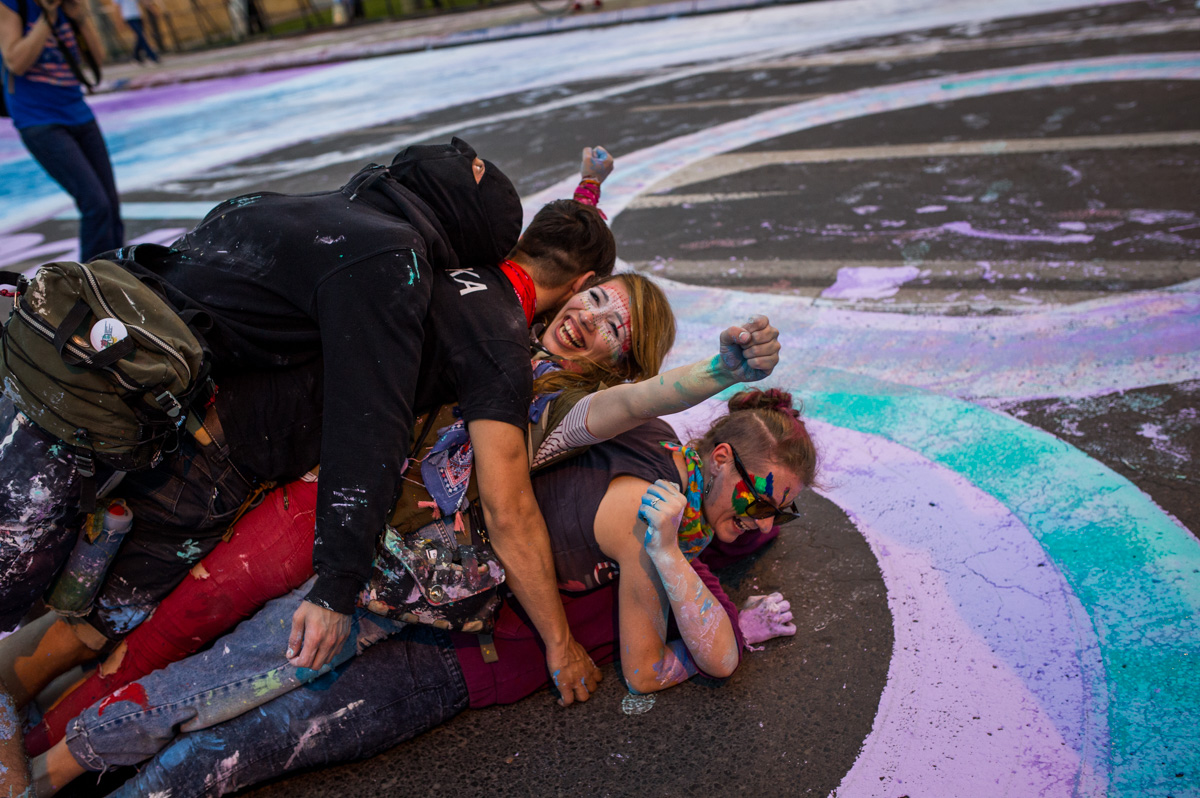
Protesters began throwing brightly colored paint at government buildings, statues, and monuments associated with the ruling party.
The paint symbolized public anger toward what protesters viewed as corruption and authoritarianism.
Some of the most prominent targets included monuments constructed under the controversial Skopje 2014 project.
The paint-covered statues became powerful visual symbols of the protest movement.
Crowds of demonstrators marched through the streets of Skopje, the capital city, calling for political reform.
Protesters demanded:
• The resignation of political leaders involved in the scandal
• Investigations into corruption allegations
• Free and fair elections
• Greater democratic transparency
The protests were largely peaceful, though tensions between demonstrators and police occasionally occurred.
Civil Society and Protest Organization


4
The Colorful Revolution was driven largely by civil society organizations, youth activists, and opposition political groups.
Activists organized demonstrations, rallies, and public gatherings throughout the country.
University students, journalists, artists, and professionals played a visible role in the movement.
The protests reflected a broader frustration among many citizens with what they viewed as growing authoritarian tendencies within the government.
International organizations promoting democratic governance had also supported programs in the region focused on:
• Media independence
• Civic engagement
• Election transparency
• Anti-corruption initiatives
Organizations involved in such efforts included institutions such as:
• The Open Society Foundations, associated with George Soros
• The National Endowment for Democracy (NED)
• The National Democratic Institute (NDI)
• The International Republican Institute (IRI)
Supporters argue that these initiatives help strengthen democratic institutions.
Critics argue that international involvement in domestic political development can sometimes influence national political outcomes.
Social Media and Information Networks

4
Like many modern protest movements, the Colorful Revolution relied heavily on social media and digital communication platforms.
Activists used platforms such as:
• Facebook
• Twitter
• YouTube
• Messaging applications
These platforms allowed organizers to:
• Coordinate protest routes and gathering points
• Share images and videos of demonstrations
• Spread information about political developments
• Mobilize participants quickly
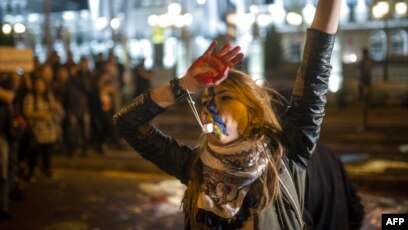
Images of colorful paint splashed across government monuments spread rapidly across international media and social networks.
The visual symbolism helped the movement attract global attention.
As in other Color Revolutions, the information environment became a major arena of political contestation, with both government supporters and opposition activists attempting to shape public perception.
The Political Turning Point
The ongoing protests created enormous pressure on the Macedonian political system.
Negotiations between political parties eventually led to the Pržino Agreement, a political compromise designed to resolve the crisis.
Key elements of the agreement included:
• The resignation of Prime Minister Nikola Gruevski
• The formation of a transitional government
• New parliamentary elections
• Investigations into the wiretapping scandal
The elections held in 2016 produced a dramatic shift in the political landscape.
Opposition leader Zoran Zaev and the Social Democratic Union of Macedonia (SDSM) eventually formed a new government.
The long-dominant rule of VMRO-DPMNE had been broken.
The Name Change and International Agreements


4
One of the most historic consequences of the political shift was the Prespa Agreement of 2018 between Macedonia and Greece.
Under the agreement, the country officially changed its name to North Macedonia.
The compromise resolved a long-standing diplomatic dispute that had blocked the country’s membership in international organizations.
Following the agreement:
• North Macedonia joined NATO in 2020
• The country moved closer to European Union integration
Supporters viewed the agreement as a major diplomatic breakthrough.
Critics argued that the name change represented a loss of national identity.
Why the Colorful Revolution Matters
The Colorful Revolution became one of the most visually recognizable protest movements in Europe.
It demonstrated several important features of modern political uprisings:
• Symbolic protest tactics designed to attract media attention
• Strong participation from civil society organizations
• The growing importance of digital communication networks
• Political crises triggered by corruption scandals and institutional breakdown
The movement also highlighted how domestic political struggles can intersect with international geopolitical dynamics, particularly in regions where countries seek membership in Western institutions such as NATO and the European Union.
North Macedonia Today
Today, North Macedonia continues to navigate complex political and economic challenges.
The country has made progress toward integration with Western institutions, but it still faces issues including:
• Economic reform
• Political polarization
• Regional diplomacy
The Colorful Revolution remains one of the most important moments in the country’s recent history.
It showed how citizen mobilization, symbolic protest actions, and political negotiation could combine to reshape the direction of a nation.
Similar Tags
Search
Subscribe
Donate


Your Statistics
For the care and safety of this prayer space, we gently record the time and location of each visit. This helps us protect sincerity while preserving anonymity.
Your Date and Time
IP Addres:
216.73.216.29
System
- OS Linux n
- PHP 8.3.30
- MySQLi 10.6.25-MariaDB-log
- Time 19:07
- Caching Disabled
- Gzip Disabled
- Users 10
- Articles 315
- Articles View Hits 6386
Website Visitors Map
About Greg Loucks
Greg Loucks is a writer, poet, filmmaker, musician, and graphic designer, as well as a creative visionary and faith-driven storyteller working at the intersection of language, meaning, and human connection. Born and raised in Phoenix, Arizona, he has lived in Cincinnati, Ohio; Hot Springs, Arkansas; Williams, Arizona; and Flagstaff, Arizona—each place shaping his perspective, resilience, and creative voice.

Address:
United States of America and Europe
Phone Numbers:
Arizona: (928) 563-GREG (4734)
Tennessee: (615) 899-GREG (4734)
Toll-Free: 888-457-GREG (4734)

Terms & Conditions
Subscribe
Report
My comments