



🖊️ Post


☪︎ The Arab Spring Part 5 🇸🇾 Syria: From Protest to One of the World’s Most Devastating Wars


4
The Syrian uprising of 2011 began as part of the wider Arab Spring, when protests across the Middle East and North Africa challenged long-standing governments.
What began as peaceful demonstrations calling for political reform quickly escalated into one of the most destructive and complex wars of the 21st century.
Unlike Tunisia or Egypt, where governments collapsed relatively quickly, the Syrian uprising transformed into a long civil war involving numerous domestic factions and foreign powers.
The conflict reshaped the Middle East, created one of the largest refugee crises in modern history, and became a major arena for global geopolitical competition.
For supporters of the uprising, the early protests represented a popular demand for freedom and political reform.
For the Syrian government and its allies, the events were portrayed as foreign-backed attempts to destabilize the country.
Over time, the conflict became far more complicated than either of those early narratives.
Syria Under the Assad Family
To understand the Syrian uprising, it is necessary to examine the political system that existed before the protests began.
Syria had been ruled by the Assad family for decades.
Hafez al-Assad seized power in 1970 through a military coup and established a highly centralized political system dominated by the Ba'ath Party.
After his death in 2000, his son Bashar al-Assad became president.
Under the Assad government:
• Political opposition was tightly restricted
• Emergency laws limited civil liberties
• Security services played a dominant role in public life
• The ruling elite maintained strong control over political institutions
At the same time, Syria faced significant economic challenges.
These included:
• High unemployment among young people
• Rising food prices
• Economic inequality between urban and rural areas
• Drought conditions that devastated agricultural communities
These factors created growing frustration among parts of the population, particularly in poorer regions of the country.
The Daraa Incident


4
The immediate spark of the Syrian uprising occurred in the southern city of Daraa in March 2011.
Several teenagers had written anti-government graffiti on a school wall, reportedly inspired by the protest slogans spreading across the Arab world.
The teenagers were arrested by security forces.
When local residents protested the arrests, demonstrations began to grow.
Security forces responded with a crackdown.
The use of force against protesters quickly escalated tensions.
Instead of suppressing the demonstrations, the crackdown triggered larger protests across the country.
Soon demonstrations were appearing in cities including:
• Damascus
• Homs
• Hama
• Aleppo
Protesters called for:
• Political reforms
• Greater freedoms
• An end to corruption
In many early demonstrations, protesters did not initially demand the removal of the government.
However, as violence increased, the protests became more radicalized.
The Escalation into Armed Conflict


4
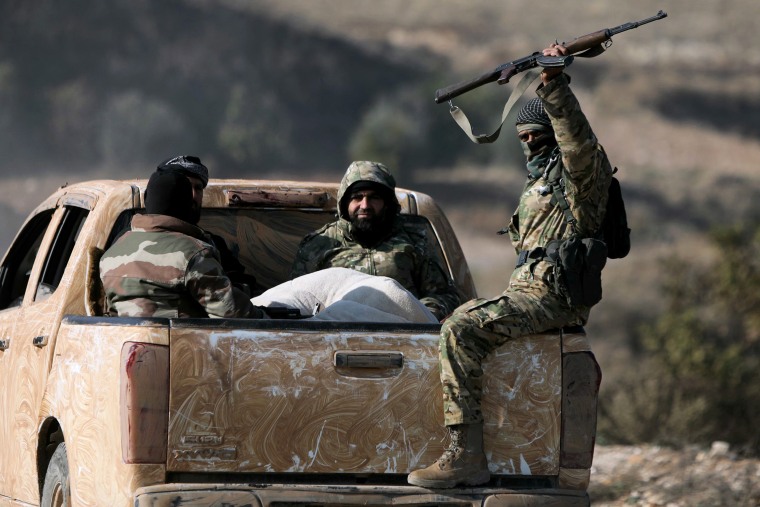
As the protests continued, some opposition groups began to take up arms against the government.
Defectors from the Syrian military formed an organization known as the Free Syrian Army.
The country gradually descended into civil war.
Several factions emerged within the conflict:
Syrian Government Forces
• Loyal to President Bashar al-Assad
• Supported by the Syrian military and security services
Rebel Groups
• Various opposition militias seeking to overthrow the government
Islamist Militant Groups
• Including extremist organizations such as ISIS and Jabhat al-Nusra
Kurdish Forces
• Kurdish groups in northern Syria seeking autonomy
The war quickly became fragmented, with multiple armed groups fighting each other as well as government forces.
Cities and towns across Syria were devastated by the fighting.
The Rise of ISIS


4
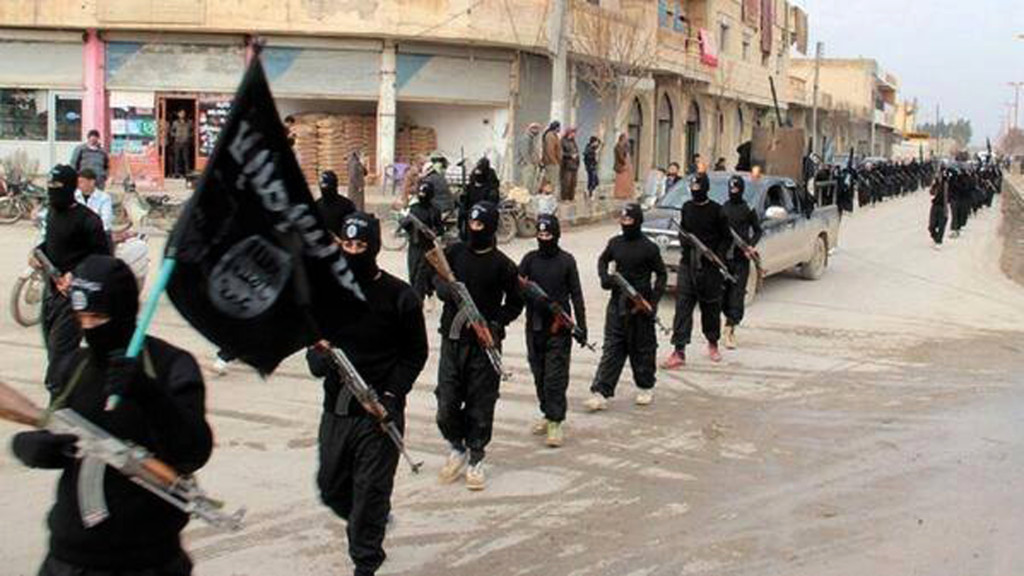
One of the most dramatic developments during the Syrian conflict was the rise of the militant group known as ISIS (Islamic State).
ISIS emerged from earlier extremist networks in Iraq but expanded rapidly during the chaos of the Syrian war.
By 2014, ISIS had captured large areas of territory in both Syria and Iraq.
The group declared the creation of a “caliphate” and ruled millions of people under an extremely strict interpretation of Islamic law.
ISIS became known worldwide for its brutality, including:
• Mass executions
• Enslavement of minority populations
• Terrorist attacks in multiple countries
The rise of ISIS transformed the Syrian war into a major global security issue.
An international coalition led by the United States launched military operations against the group.
Foreign Powers Enter the War


4
The Syrian war eventually drew in several major international powers.
Russia
• Entered the war in 2015 to support the Syrian government
Iran
• Provided military advisers and allied militias to assist government forces
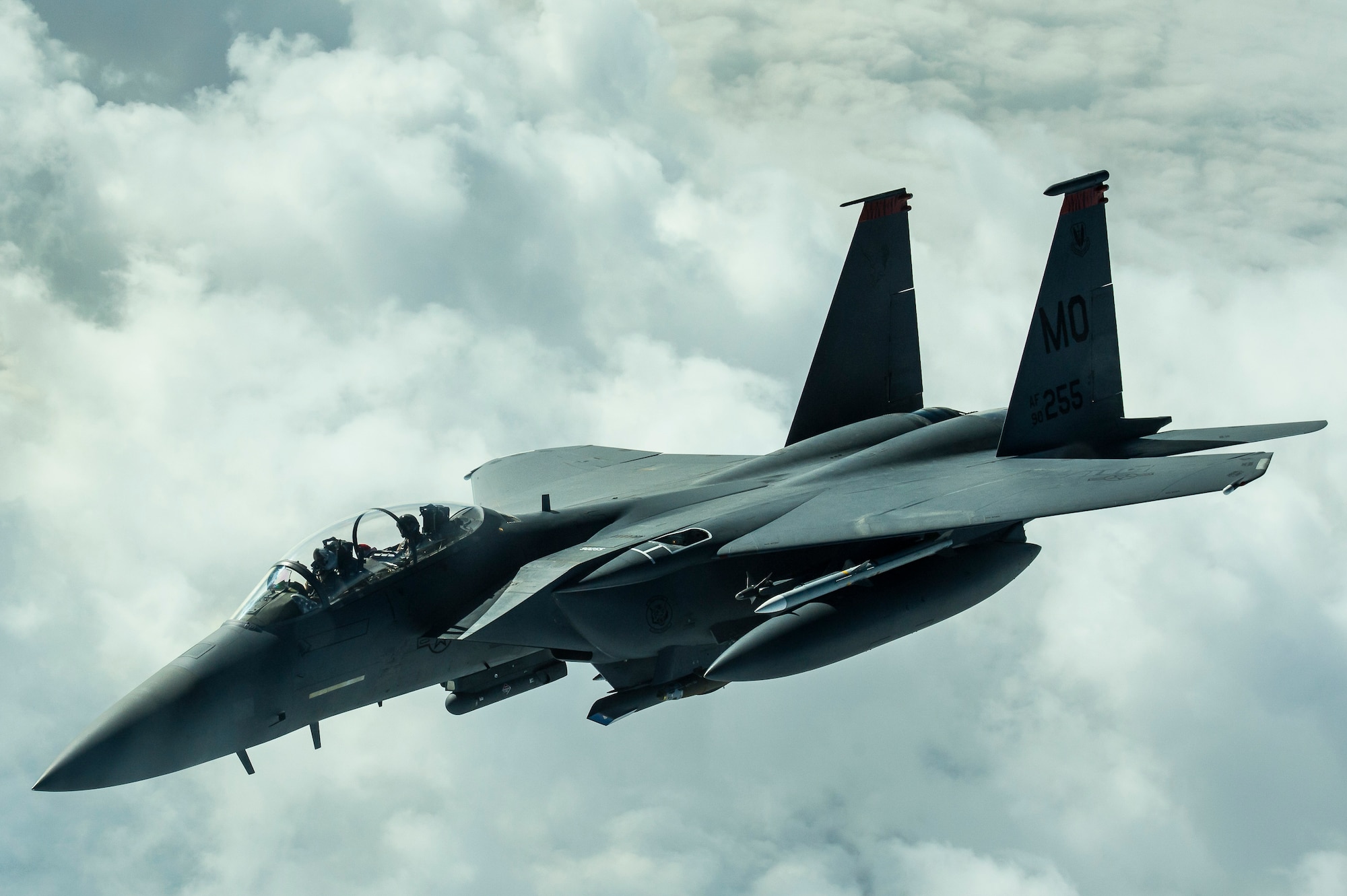
United States and Western Allies
• Conducted airstrikes against ISIS and supported some rebel groups
Turkey
• Conducted military operations in northern Syria
As a result, the conflict evolved into a complex proxy war involving regional and global powers.
This made the war far more difficult to resolve.
The Humanitarian Crisis


4
The Syrian war created one of the worst humanitarian disasters in modern history.
Millions of Syrians were forced to flee their homes.
The conflict produced:
• More than 6 million refugees abroad
• Millions more displaced inside the country
• Widespread destruction of cities and infrastructure
Large refugee populations fled to countries including:
• Turkey
• Lebanon
• Jordan
• European nations
The refugee crisis became a major international issue affecting global migration policies and humanitarian aid efforts.
Why the Syrian Conflict Matters
The Syrian uprising began as a protest movement similar to those seen elsewhere during the Arab Spring.
However, it evolved into something far more complex.
Several factors contributed to this transformation:
• Deep political divisions within Syrian society
• The fragmentation of opposition groups
• The involvement of extremist organizations
• The intervention of foreign powers
The conflict demonstrated how revolutions can spiral into prolonged wars when multiple internal and external forces become involved.
Syria Today
More than a decade after the uprising began, the Syrian conflict has largely stabilized but remains unresolved.
The Syrian government still controls most of the country.
However, several regions remain outside its authority.
The country continues to face enormous challenges, including:
• Economic devastation
• Infrastructure destruction
• Ongoing political tensions
• Millions of displaced citizens
The Syrian war remains one of the most significant geopolitical crises of the modern era.
Syria and the Legacy of the Arab Spring
The Syrian uprising illustrates both the power and the dangers of revolutionary movements.
What began as peaceful protests calling for reform eventually became one of the most devastating conflicts of the 21st century.
The war reshaped the political landscape of the Middle East and continues to influence global politics today.
The Syrian case remains a stark reminder that political revolutions can unleash forces that are difficult to control once large-scale violence begins.
Similar Tags
Search
Subscribe
Donate


Your Statistics
For the care and safety of this prayer space, we gently record the time and location of each visit. This helps us protect sincerity while preserving anonymity.
Your Date and Time
IP Addres:
216.73.216.124
System
- OS Linux n
- PHP 8.3.30
- MySQLi 10.6.25-MariaDB-log
- Time 06:47
- Caching Disabled
- Gzip Disabled
- Users 132
- Articles 315
- Articles View Hits 17641
Website Visitors Map
About Greg Loucks
Greg Loucks is a writer, poet, filmmaker, musician, and graphic designer, as well as a creative visionary and faith-driven storyteller working at the intersection of language, meaning, and human connection. Born and raised in Phoenix, Arizona, he has lived in Cincinnati, Ohio; Hot Springs, Arkansas; Williams, Arizona; and Flagstaff, Arizona—each place shaping his perspective, resilience, and creative voice.

Address:
United States of America and Europe
Phone Numbers:
Arizona: (928) 563-GREG (4734)
Tennessee: (615) 899-GREG (4734)
Toll-Free: 888-457-GREG (4734)

Comments