









📚 Categories


📚 Categories
Categories
Glossaries
80s Bands
Author: Greg Loucks
Hits: 75
Hits: 75
The 1980s saw an explosion of musical creativity that reshaped the global soundscape, driven in large part by the rise of synthesizers, music television, and genre-blending experimentation. Bands like Duran Duran, Tears for Fears, and Depeche Mode helped define the era’s polished, atmospheric sound, combining electronic instrumentation with emotionally resonant lyrics. The launch of MTV in 1981 further amplified their influence, turning music videos into a powerful artistic and promotional medium. Meanwhile, bands such as The Police and U2 blended rock with reggae and post-punk elements, achieving massive global success while maintaining distinct sonic identities.
Alongside mainstream success, alternative and underground scenes flourished. Groups like The Cure and Echo & the Bunnymen cultivated darker, more introspective sounds that would later influence generations of indie and alternative artists. At the heavier end, bands such as Metallica and Iron Maiden helped bring heavy metal into the mainstream, while acts like Van Halen and Bon Jovi dominated arena rock with anthemic hits. Across genres—from synth-pop and new wave to hard rock and metal—the bands of the 1980s left a lasting cultural imprint, shaping not only the sound of the decade but the future direction of popular music worldwide.
80s Singers - Category
Author: Greg Loucks
Hits: 85
Synonyms: 80s singer
Hits: 85
Synonyms: 80s singer
80s singers defined a vibrant era of pop, rock, and soul, characterized by the rise of MTV, synthesized sounds, and dramatic fashion. Iconic artists like Michael Jackson, Madonna, and Whitney Houston dominated, while New Wave, hair metal, and British pop bands brought unique, high-energy styles to the forefront.
Abkhazia - Category
Author: Greg Loucks
Hits: 182
Synonyms: Аԥсны, Абхазия, Republic of Abkhazia, Аԥсны Аҳәынҭқарра, Республика Абхазия, ალანიის შტატი, აფხაზეთის რესპუბლიკა
Hits: 182
Synonyms: Аԥсны, Абхазия, Republic of Abkhazia, Аԥсны Аҳәынҭқарра, Республика Абхазия, ალანიის შტატი, აფხაზეთის რესპუბლიკა
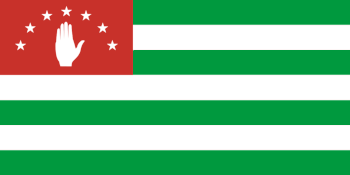
Abkhazia, officially the Republic of Abkhazia,[c] is a partially recognised state in the South Caucasus. It sits on the eastern coast of the Black Sea, at the intersection of Eastern Europe and West Asia. It covers 8,665 square kilometres (3,346 sq mi) and has a population of around 245,000. Its capital and largest city is Sukhumi.
Administrative Divisions - Category
Author: Greg Loucks
Hits: 95
Hits: 95
Administrative divisions (also administrative units, administrative regions, subnational entities, or constituent states, as well as many similar generic terms) are geographical areas into which a particular independent sovereign state is divided. Such a unit usually has an administrative authority with the power to take administrative or policy decisions for its area. Administrative divisions are often used as polygons in geospatial analysis.
Afghanistan - Category
Author: Greg Loucks
Hits: 215
Synonyms: افغانستان, افغانستان, Islamic Emirate of Afghanistan, د افْغَانِسْتَانُ اسْلَامِيٌّ امَارَتْ, اِمَارَّتِ اسْلَامَى افْغَانِسْتَانْ
Hits: 215
Synonyms: افغانستان, افغانستان, Islamic Emirate of Afghanistan, د افْغَانِسْتَانُ اسْلَامِيٌّ امَارَتْ, اِمَارَّتِ اسْلَامَى افْغَانِسْتَانْ
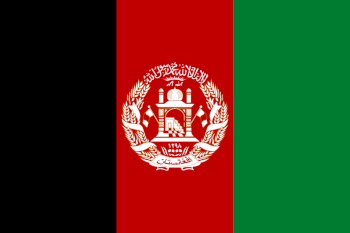
Afghanistan, officially the Islamic Emirate of Afghanistan, is a landlocked country located at the crossroads of Central and South Asia. It is bordered by Pakistan to the east and south, Iran to the west, Turkmenistan to the northwest, Uzbekistan to the north, Tajikistan to the northeast, and China to the northeast and east. Occupying 652,864 square kilometers (252,072 sq mi) of land, the country is predominantly mountainous with plains in the north and the southwest, which are separated by the Hindu Kush mountain range. Kabul is the country's capital and largest city. Afghanistan's population is estimated to be between 40 and 50 million.
Africa - Category
Author: Greg Loucks
Hits: 74
Hits: 74
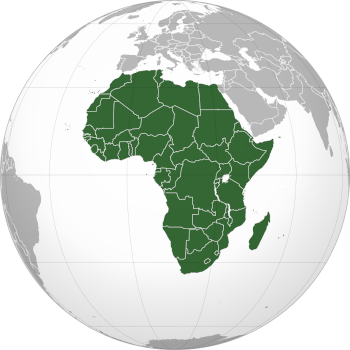
Africa is the world's second-largest and second-most populous continent after Asia. At about 30.3 million km2 (11.7 million square miles) including adjacent islands, it covers around 20% of Earth's land area and 6% of its total surface area. With nearly 1.4 billion people as of 2021, it accounts for about 18% of the world's human population. Africa's population is the youngest among all the continents; the median age in 2012 was 19.7, when the worldwide median age was 30.4. Based on 2024 projections, Africa's population will exceed 3.8 billion people by 2100. Africa is the least wealthy inhabited continent per capita and second-least wealthy by total wealth, ahead of Oceania. Scholars have attributed this to different factors including geography, climate, corruption, colonialism, the Cold War, and neocolonialism. Despite this low concentration of wealth, recent economic expansion and a large and young population make Africa an important economic market in the broader global context, and Africa has a large quantity of natural resources.
Akrotiri and Dhekelia - Category
Author: Greg Loucks
Hits: 172
Synonyms: Sovereign Base Areas of Akrotiri and Dhekelia
Hits: 172
Synonyms: Sovereign Base Areas of Akrotiri and Dhekelia
Akrotiri and Dhekelia (/ˌækroʊˈtɪəri ənd diˈkeɪliə/), officially the Sovereign Base Areas of Akrotiri and Dhekelia[3] (SBA), is a British Overseas Territory that consists of two separate areas on the island of Cyprus. The areas, which include British military bases and installations that were formerly part of the Crown colony of Cyprus, were retained by the British under the 1960 treaty of independence signed by the United Kingdom, Greece, Turkey, the president of Cyprus and the representative of the Turkish Cypriot community.
Alabama - Category
Author: Greg Loucks
Hits: 162
Hits: 162
Alabama (/ˌæləˈbæmə/ ⓘ, AL-ə-BAM-ə) is a state in the Southeastern and Deep Southern regions of the United States. It borders Tennessee to the north, Georgia to the east, Florida and the Gulf of Mexico to the south, and Mississippi to the west. Alabama is the 30th largest by area, and the 24th-most populous of the 50 U.S. states.
Åland - Category
Author: Greg Loucks
Hits: 163
Synonyms: Åland Islands, Ahvenanmaa, Region of Åland, Landskapet Åland, Ahvenanmaan maakunta
Hits: 163
Synonyms: Åland Islands, Ahvenanmaa, Region of Åland, Landskapet Åland, Ahvenanmaan maakunta
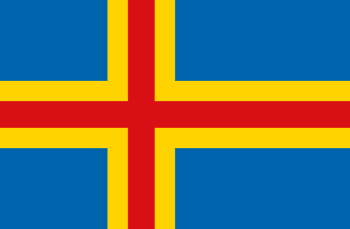
Åland (/ˈɔːlənd/ AW-lənd, Swedish: [ˈǒːland] ⓘ; Finnish: Ahvenanmaa) is an autonomous and demilitarised region of Finland. Receiving its autonomy by a 1920 decision of the League of Nations, it is the smallest region of Finland by both area (1,580 km2 or 610 sq mi) and population (30,654), constituting 0.51% of Finland's land area and 0.54% of its population. Its official language is Swedish and the capital city is Mariehamn.
Alaska - Category
Author: Greg Loucks
Hits: 147
Hits: 147
Alaska (/əˈlæskə/ ⓘ ə-LASS-kə) is a non-contiguous U.S. state located in the northwestern regions of North America. Part of the Western United States region, it is one of the two non-contiguous U.S. states, alongside Hawaii. Alaska is considered to be the northernmost, westernmost, and, longitudinally, the easternmost state in the United States.[a] It is a semi-exclave of the U.S., bordering the Canadian territory of Yukon and the province of British Columbia to the east. It shares a western maritime border in the Bering Strait with Russia's Chukotka Autonomous Okrug, and is closer to another continent (Asia) than any other U.S. state. The Chukchi and Beaufort Seas of the Arctic Ocean lie to the north, and the Pacific Ocean to the south.
Albania - Category
Author: Greg Loucks
Hits: 225
Synonyms: Republic of Albania, Shqipëri, Republika e Shqipërisë
Hits: 225
Synonyms: Republic of Albania, Shqipëri, Republika e Shqipërisë
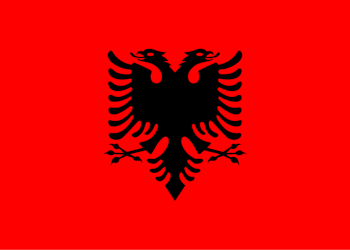
Albania, officially the Republic of Albania, is a country in Southeast Europe. It is located in the Balkans, on the Adriatic and Ionian Seas within the Mediterranean Sea, and shares land borders with Montenegro to the northwest, Kosovo to the northeast, North Macedonia to the east and Greece to the south. With an area of 28,748 km2 (11,100 sq mi), it has a varied range of climatic, geological, hydrological and morphological conditions. Albania's landscapes range from rugged snow-capped mountains in the Albanian Alps and the Korab, Skanderbeg, Pindus and Ceraunian Mountains, to fertile lowland plains extending from the Adriatic and Ionian seacoasts. Tirana is the capital and largest city in the country, followed by Durrës, Vlorë, and Shkodër.
Alberta - Category
Author: Greg Loucks
Hits: 53
Hits: 53
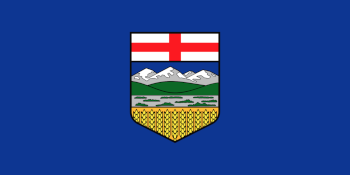
Alberta is a province in Canada. It is a part of Western Canada and is one of the three prairie provinces. Alberta is bordered by British Columbia to its west, Saskatchewan to its east, the Northwest Territories to its north, and the U.S. state of Montana to its south. Itself and Saskatchewan are the only two landlocked Canadian provinces. The eastern part of the province is occupied by the Great Plains, while the western part borders the Rocky Mountains. The province has a predominantly continental climate, but seasonal temperatures tend to swing rapidly because it is so arid. Those swings are less pronounced in western Alberta because of its occasional Chinook winds. Alberta is the fourth-largest province by area, at 661,848 square kilometres (255,541 square miles), and the fourth-most populous, with 4,262,635 residents. Alberta's capital is Edmonton; its largest city is Calgary. The two cities are Alberta's largest census metropolitan areas. More than half of Albertans live in Edmonton or Calgary, which encourages a continuing rivalry between the two cities. English is the province's official language. In 2016, 76.0% of Albertans were anglophone, 1.8% were francophone and 22.2% were allophone.
Alderney - Category
Author: Greg Loucks
Hits: 129
Hits: 129
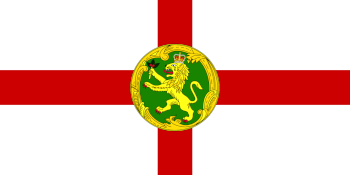
Alderney is one of the Channel Islands in the English Channel between England and France. It forms part of the Bailiwick of Guernsey, but its parliament, The States of Alderney, still has the right to make laws for the island.
Algeria - Category
Author: Greg Loucks
Hits: 217
Synonyms: الجزائر, People's Democratic Republic of Algeria, الجمهورية الجزائرية الديمقراطية الشعبية, Algérie, République algérienne démocratique et populaire, ⴷⵣⴰⵢⴻⵔ, ⵜⴰⴳⴷⵓⴷⴰ ⵜⴰⵎⴳⴷⴰⵢⵜ ⵜⴰⵖⵔⴼⴰⵏⵜ ⵜⴰⴷⵣⴰⵢⵔⵉⵢⵜ
Hits: 217
Synonyms: الجزائر, People's Democratic Republic of Algeria, الجمهورية الجزائرية الديمقراطية الشعبية, Algérie, République algérienne démocratique et populaire, ⴷⵣⴰⵢⴻⵔ, ⵜⴰⴳⴷⵓⴷⴰ ⵜⴰⵎⴳⴷⴰⵢⵜ ⵜⴰⵖⵔⴼⴰⵏⵜ ⵜⴰⴷⵣⴰⵢⵔⵉⵢⵜ
Algeria, officially the People's Democratic Republic of Algeria, is a country in the Maghreb region of North Africa. Spanning over 2,381,741 square kilometres (919,595 sq mi), it is the largest country in Africa and the tenth largest in the world. It is bordered to the northeast by Tunisia; to the east by Libya; to the southeast by Niger; to the southwest by Mali, Mauritania, and Western Sahara; to the west by Morocco; and to the north by the Mediterranean Sea. With a population of over 47 million, Algeria is the tenth-most populous country in Africa. Its capital largest city is Algiers.
American Samoa - Category
Author: Greg Loucks
Hits: 178
Synonyms: Amerika Sāmoa
Hits: 178
Synonyms: Amerika Sāmoa
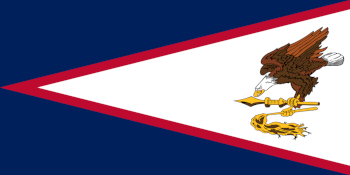
American Samoa is an unincorporated and unorganized territory of the United States located in the Polynesia region of the south Pacific Ocean. Centered on 14.3°S 170.7°W, it is 40 miles (64 km) southeast of the island country of Samoa, east of the International Date Line and the Wallis and Futuna Islands, west of the Cook Islands, north of Tonga, and some 310 miles (500 km) south of Tokelau. American Samoa is the southernmost territory of the United States, situated 2,200 miles (3,500 km) southwest of the U.S. state of Hawaii, and one of two U.S. territories south of the Equator, along with the uninhabited Jarvis Island.
Search
Subscribe
Donate


Your Statistics
For the care and safety of this prayer space, we gently record the time and location of each visit. This helps us protect sincerity while preserving anonymity.
Your Date and Time
IP Addres:
216.73.216.45
System
- OS Linux n
- PHP 8.3.31
- MySQLi 10.6.26-MariaDB
- Time 09:46
- Caching Disabled
- Gzip Disabled
- Users 265
- Articles 315
- Articles View Hits 25497
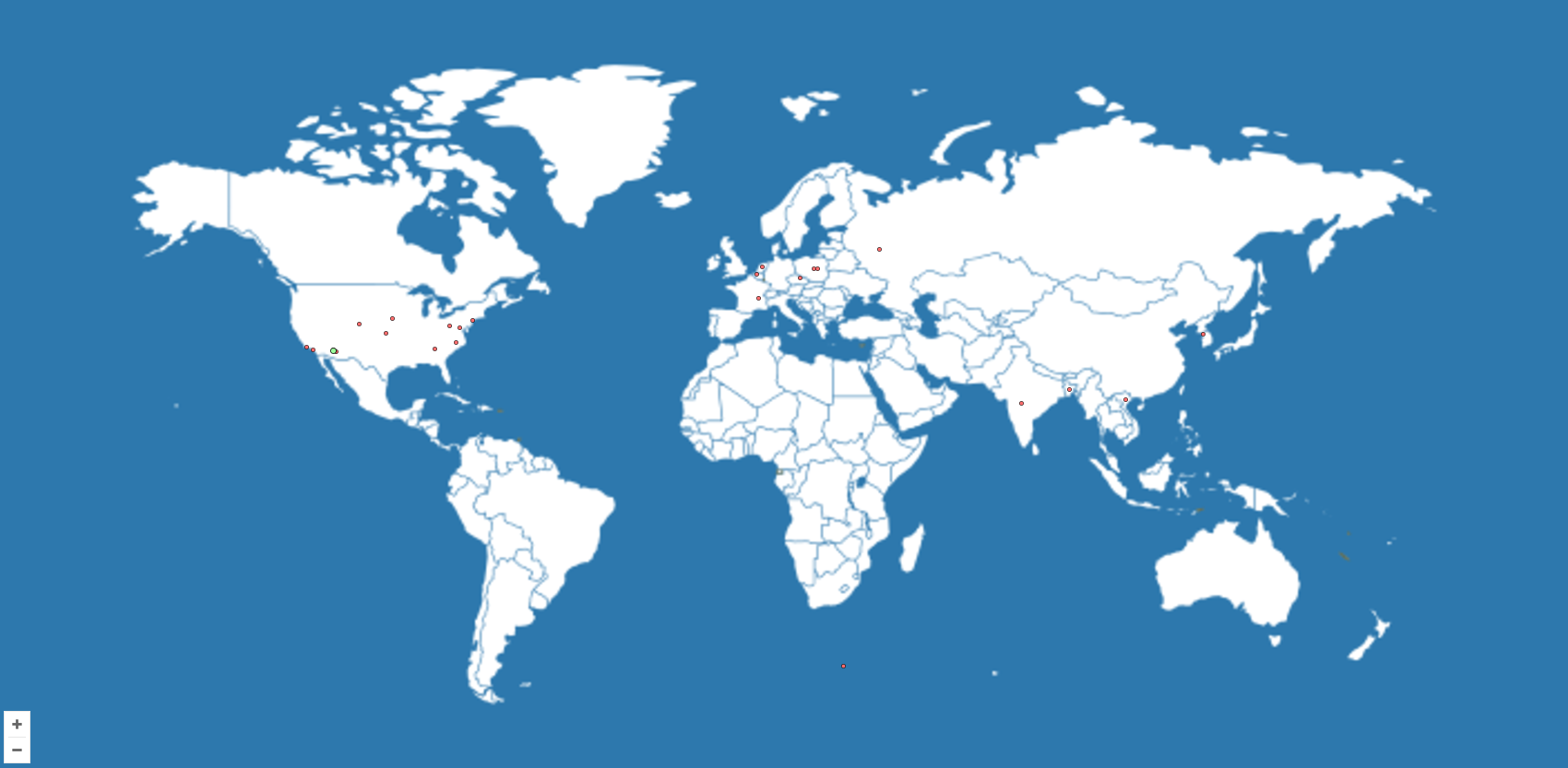
Website Visitors Map
About Greg Loucks
Greg Loucks is a writer, poet, filmmaker, musician, and graphic designer, as well as a creative visionary and faith-driven storyteller working at the intersection of language, meaning, and human connection. Born and raised in Phoenix, Arizona, he has lived in Cincinnati, Ohio; Hot Springs, Arkansas; Williams, Arizona; and Flagstaff, Arizona—each place shaping his perspective, resilience, and creative voice.

Address:
United States of America and Europe
Phone Numbers:
Arizona: (928) 563-GREG (4734)
Tennessee: (615) 899-GREG (4734)
Toll-Free: 888-457-GREG (4734)
