





📚 Categories


📚 Categories
Categories
Glossaries
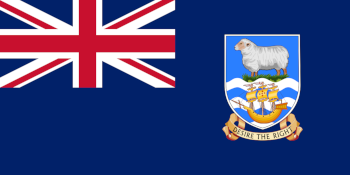
Falkland Islands - Category
Author: Greg Loucks
Hits: 256
Synonyms: The Falklands, Islas Malvinas
Hits: 256
Synonyms: The Falklands, Islas Malvinas
The Falkland Islands (/ˈfɔː(l)klənd, ˈfɒlk-/; Spanish: Islas Malvinas [ˈislas malˈβinas]), commonly referred to as The Falklands, is an archipelago in the South Atlantic Ocean on the Patagonian Shelf. The principal islands are about 300 mi (500 km) east of South America's southern Patagonian coast and 752 mi (1,210 km) from Cape Dubouzet at the northern tip of the Antarctic Peninsula, at a latitude of about 52°S. The archipelago, with an area of 4,700 sq mi (12,000 km2), comprises East Falkland, West Falkland, and 776 smaller islands. As a British Overseas Territory, the Falklands have internal self-governance, while the United Kingdom takes responsibility for their defence and foreign affairs. The capital and largest settlement is Stanley on East Falkland.
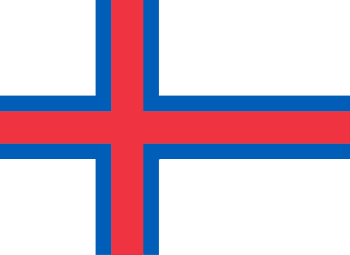
Faroe Islands - Category
Author: Greg Loucks
Hits: 252
Hits: 252
The Faroe Islands[b] (/ˈfɛəroʊ/ FAIR-oh), also known as the Faroes, are an archipelago in the North Atlantic Ocean and a rigsdel ('autonomous territory') of the Kingdom of Denmark. Located between Iceland, Norway, and the Hebrides and Shetland isles of Scotland, the islands have a population of 54,870 as of November 2025 and a land area of 1,393 km2 (538 sq mi). The official language is Faroese, which is partially mutually intelligible with Icelandic. The terrain is rugged, dominated by fjords and cliffs with sparse vegetation and few trees. As a result of their proximity to the Arctic Circle, the islands experience perpetual civil twilight during summer nights and very short winter days; nevertheless, they experience a subpolar oceanic climate and mild temperatures year-round due to the Gulf Stream. The capital, Tórshavn, receives the fewest recorded hours of sunshine of any city in the world at only 840 per year.
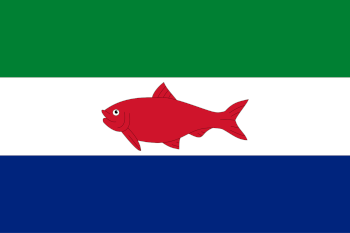
Federal Dependencies of Venezuela
Author: Greg Loucks
Hits: 134
Synonyms: Dependencias Federales de Venezuela
Hits: 134
Synonyms: Dependencias Federales de Venezuela
The Federal Dependencies of Venezuela (Spanish: Dependencias Federales de Venezuela) encompass most of Venezuela's offshore islands in the Caribbean Sea, excluding those islands that form the State of Nueva Esparta and some Caribbean coastal islands that are integrated with nearby states. These islands, with a total area of 342 square kilometres, are sparsely populated – according to the preliminary results of the 2011 Census only 2,155 people live there permanently, with another hundred from Margarita Island who live there seasonally to engage in fishing. Local government is officially under the authority of Central government in Caracas, although de facto power is often held by the heads of the sparse and somewhat isolated communities that decorate the territories.
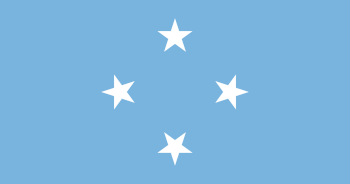
Federated States of Micronesia - Category
Author: Greg Loucks
Hits: 209
Synonyms: Micronesia, Estados Federados de Micronesia
Hits: 209
Synonyms: Micronesia, Estados Federados de Micronesia
The Federated States of Micronesia (/ˌmaɪkroʊˈniːʒə/ ⓘ, abbreviated FSM), or simply Micronesia, is an island country in Micronesia, a region of Oceania. The federation encompasses the majority of the Caroline Islands (excluding Palau) and consists of four states—from west to east: Yap, Chuuk, Pohnpei, and Kosrae—that span the western Pacific just north of the equator for a longitudinal distance of almost 2,700 km (1,700 mi). Together, the states comprise around 607 islands and a combined land area of approximately 702 km2 or 271 sq mi.
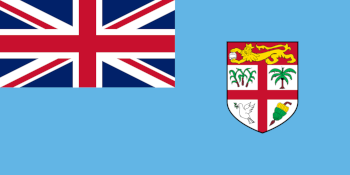
Fiji - Category
Author: Greg Loucks
Hits: 185
Synonyms: Viti, फ़िजी, Republic of Fiji, Matanitu Tugalala o Viti, फ़िजी गणराज्य
Hits: 185
Synonyms: Viti, फ़िजी, Republic of Fiji, Matanitu Tugalala o Viti, फ़िजी गणराज्य
Fiji, officially the Republic of Fiji,[b] is an island country in Melanesia, part of Oceania in the South Pacific Ocean. It lies about 1,100 nautical miles (2,000 km; 1,300 mi) north-northeast of New Zealand. Fiji consists of an archipelago of more than 330 islands—of which about 110 are permanently inhabited—and more than 500 islets, amounting to a total land area of about 18,300 square kilometres (7,100 sq mi). The most outlying island group is Ono-i-Lau. About 87% of the total population live on the two major islands, Viti Levu and Vanua Levu. About three-quarters of Fijians live on Viti Levu's coasts, either in the capital city of Suva, or in smaller urban centres such as Nadi (where tourism is the major local industry) or Lautoka (where the sugar-cane industry is dominant). The interior of Viti Levu is sparsely inhabited because of its terrain.
Films - Category
Author: Greg Loucks
Hits: 37
Synonyms: movie, movies, film, films
Hits: 37
Synonyms: movie, movies, film, films
A film, movie, or motion picture is a work of visual art that simulates experiences and otherwise communicates ideas, stories, perceptions, emotions, or atmosphere through the use of moving images that are generally, since the 1930s, synchronized with sound and sometimes using other sensory stimuli.
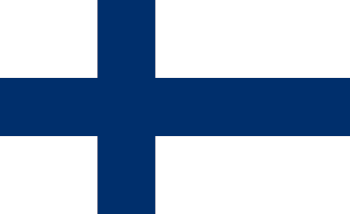
Finland - Category
Author: Greg Loucks
Hits: 304
Synonyms: Suomi, Republic of Finland, Suomen tasavalta, Republiken Finland
Hits: 304
Synonyms: Suomi, Republic of Finland, Suomen tasavalta, Republiken Finland
Finland, officially the Republic of Finland, is a Nordic country in Northern Europe. It borders Sweden to the northwest, Norway to the north, and Russia to the east, with the Gulf of Bothnia to the west and the Gulf of Finland to the south, opposite Estonia. Its capital and largest city is Helsinki. Finland has a population of 5.6 million. The official languages are Finnish and Swedish, the mother tongues of 84.1 percent and 5.1 percent of the population, respectively. Finland's climate varies from humid continental in the south to boreal in the north. Its land is predominantly covered by boreal forest, with over 180,000 recorded lakes.
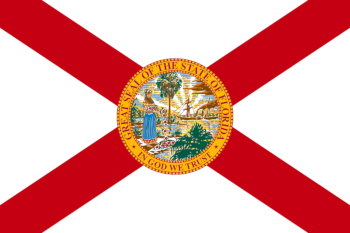
Florida - Category
Author: Greg Loucks
Hits: 209
Hits: 209
Florida (/ˈflɒrɪdə/ ⓘ FLORR-ih-də; Spanish: [floˈɾiða] ⓘ) is a state in the Southeastern and South Atlantic regions of the United States. It borders the Gulf of Mexico to the west, Alabama to the northwest, Georgia to the north, the Atlantic Ocean to the east, the Straits of Florida to the south, and The Bahamas to the southeast. About two-thirds of Florida occupies a peninsula between the Gulf of Mexico and the Atlantic Ocean. It has the longest coastline in the contiguous United States, spanning approximately 1,350 miles (2,170 km), not including its many barrier islands. It is the only state that borders both the Gulf of Mexico and the Atlantic Ocean. With a population of over 23 million, it is the third-most populous state in the United States and ranks seventh in population density as of 2020. Florida spans 65,758 square miles (170,310 km2), ranking 22nd in area among the states. The Miami metropolitan area, anchored by the cities of Miami, Fort Lauderdale, and West Palm Beach, is the state's largest metropolitan area, with a population of 6.138 million; the most populous city is Jacksonville. Florida's other major population centers include Tampa Bay, Orlando, Cape Coral, and the state capital of Tallahassee.
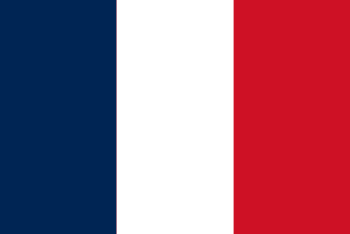
France - Category
Author: Greg Loucks
Hits: 290
Synonyms: French Republic République française
Hits: 290
Synonyms: French Republic République française
France, officially the French Republic, is a country primarily located in Western Europe. Its overseas regions and territories include French Guiana in South America, Saint Pierre and Miquelon in the North Atlantic, the French West Indies, and many islands in Oceania and the Indian Ocean. Metropolitan France shares borders with Belgium and Luxembourg to the north; Germany to the northeast; Switzerland to the east; Italy and Monaco to the southeast; Andorra and Spain to the south; and a maritime border with the United Kingdom to the northwest. Its metropolitan area extends from the Rhine to the Atlantic Ocean and from the Mediterranean Sea to the English Channel and the North Sea. Its 18 integral regions—five of which are overseas—span a combined area of 632,702 km2 (244,288 sq mi), with a total population estimated at 69.1 million in 2026. Its capital, largest city and main cultural and economic centre is Paris.
French Guiana - Category
Author: Greg Loucks
Hits: 223
Synonyms: Guyane
Hits: 223
Synonyms: Guyane
French Guiana, or Guyane in French, is an overseas department and region of France located on the northern coast of South America in the Guianas and the West Indies. Bordered by Suriname to the west and Brazil to the east and south, French Guiana covers a total area of 84,000 km2 (32,000 sq mi) and a land area of 83,534 km2 (32,253 sq mi). As of January 2026, it is home to 298,554 people.
French Polynesia - Category
Author: Greg Loucks
Hits: 258
Synonyms: Polynésie française, Pōrīnetia farāni
Hits: 258
Synonyms: Polynésie française, Pōrīnetia farāni
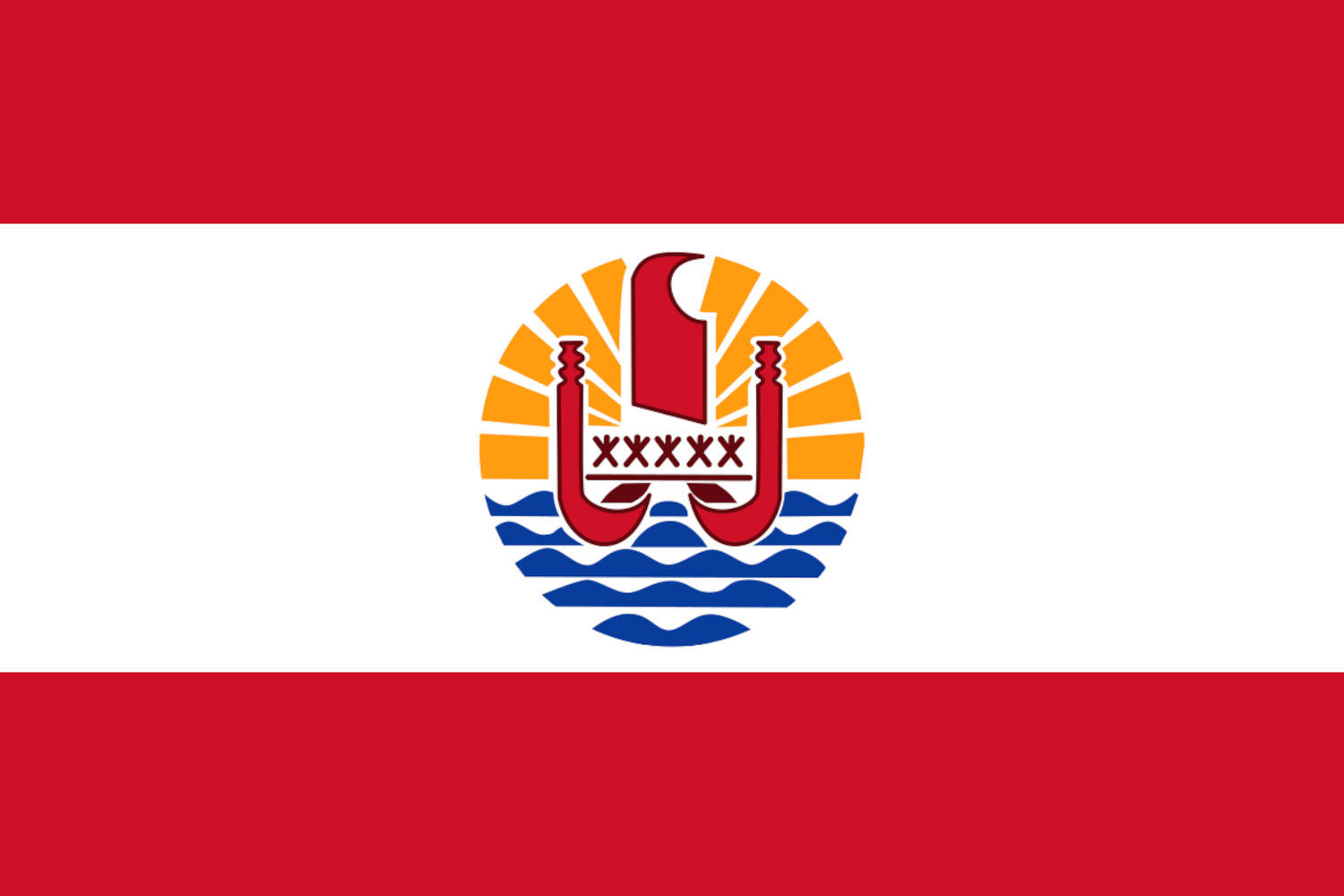
French Polynesia (/ˌpɒlɪˈniːʒə/ ⓘ POL-ih-NEE-zhə; French: Polynésie française [pɔlinezi fʁɑ̃sɛːz] ⓘ; Tahitian: Pōrīnetia farāni) is an overseas collectivity of France and its sole overseas country. It comprises 121 geographically dispersed islands and atolls stretching over more than 2,000 kilometres (1,200 mi) in the South Pacific Ocean. French Polynesia is associated with the European Union as an overseas country and territory (OCT). The total land area of French Polynesia is 3,521 square kilometres (1,359 sq mi), with a population of 282,596 as of September 2025 of which at least 205,000 live in the Society Islands and the remaining population lives in the rest of the archipelago.
French Southern and Antarctic Lands - Category
Author: Greg Loucks
Hits: 248
Synonyms: Terres australes et antarctiques françaises
Hits: 248
Synonyms: Terres australes et antarctiques françaises
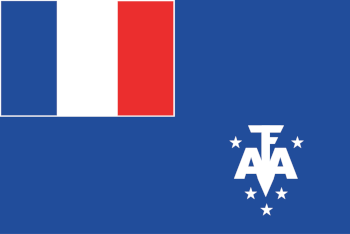
The French Southern and Antarctic Lands[6] (French: Terres australes et antarctiques françaises, TAAF) is an overseas territory (French: Territoire d'outre-mer or TOM) of France.
It consists of:
- Adélie Land (Terre Adélie), the French claim on the continent of Antarctica.
- Crozet Islands (Îles Crozet), a group in the southern Indian Ocean, south of Madagascar.
- Kerguelen Islands (Archipel des Kerguelen), a group of volcanic islands in the southern Indian Ocean, southeast of Africa and southwest of Australia.
- Saint Paul and Amsterdam Islands (Îles Saint Paul et Amsterdam), a group to the north of the Kerguelen Islands.
- Scattered Islands (Îles Éparses), a dispersed group of islands around the coast of Madagascar.
The territory is sometimes referred to as the French Southern Lands (French: Terres australes françaises) or the French Southern Territories, usually to emphasize non-recognition of French sovereignty over Adélie Land as part of the Antarctic Treaty System.
Search
Subscribe
Donate


Your Statistics
For the care and safety of this prayer space, we gently record the time and location of each visit. This helps us protect sincerity while preserving anonymity.
Your Date and Time
IP Addres:
216.73.216.138
System
- OS Linux n
- PHP 8.3.31
- MySQLi 10.6.27-MariaDB
- Time 18:14
- Caching Disabled
- Gzip Disabled
- Users 406
- Articles 314
- Articles View Hits 31067
Website Visitors Map
About Greg Loucks
Greg Loucks is a writer, poet, filmmaker, musician, and graphic designer, as well as a creative visionary and faith-driven storyteller working at the intersection of language, meaning, and human connection. Born and raised in Phoenix, Arizona, he has lived in Cincinnati, Ohio; Hot Springs, Arkansas; Williams, Arizona; and Flagstaff, Arizona—each place shaping his perspective, resilience, and creative voice.

Address:
United States of America and Europe
Phone Numbers:
Arizona: (928) 563-GREG (4734)
Tennessee: (615) 899-GREG (4734)
Toll-Free: 888-457-GREG (4734)
