

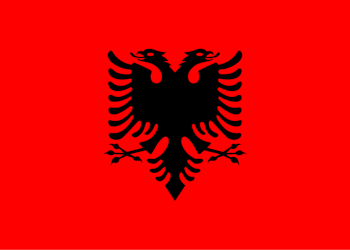
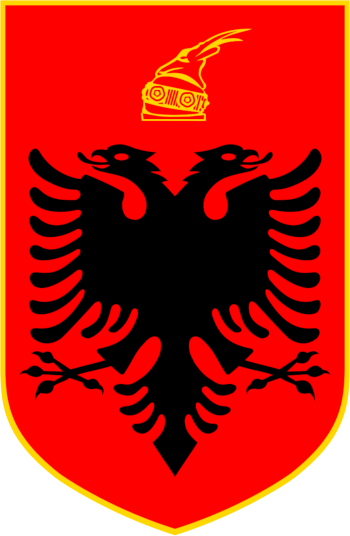

Since July 24, 2022 · President of Albania · Ceremonial Head of State of the Parliamentary Republic

Since September 15, 2013 · Prime Minister of Albania · Head of Government & Executive Authority

Head of the Former House of Zogu · Recognized by Monarchist Supporters as Pretender to the Albanian Throne


Counties
Albania is a mountainous country in southeastern Europe on the Balkan Peninsula, featuring rugged highlands, fertile valleys, and a scenic coastline along the Adriatic and Ionian Seas.
📍 Albania is a small country located in Southeastern Europe on the Balkan Peninsula, positioned along the Adriatic and Ionian Seas. It serves as a geographic link between the western Balkans and Greece, and lies just across the sea from Italy. Albania is bordered by Montenegro to the northwest, Kosovo to the northeast, North Macedonia to the east, and Greece to the south and southeast. To the west, it has a coastline along the Adriatic Sea, while the southwest borders the Ionian Sea.
Its terrain is largely mountainous, with the Albanian Alps in the north and rugged highlands covering much of the interior, while narrow plains stretch along the coast. This varied landscape has influenced settlement, agriculture, and transportation throughout its history. Albania’s location has made it an important cultural and historical crossroads within the Balkans, connecting different civilizations and trade routes over time.
Cities
(Qytetet)


Counties (Qarqe)
B

Berat County
(Qarku i Beratit)
D

Dibër County
(Qarku i Dibrës)

Durrës County
(Qarku i Durrësit)
E

Elbasan County
(Qarku i Elbasanit)
F

Fier County
(Qarku i Fierit)
G

Gjirokastër County
(Qarku i Gjirokastrës)
K

Korçë County
(Qarku i Korçës)

Kukës County
(Qarku i Kukësit)
L

Lezhë County
(Qarku i Lezhës)
S

Shkodër County
(Qarku i Shkodrës)
T

Tiranë County
(Qarku i Tiranës)
V

Vlorë County
(Qarku i Vlorës)
B
D
Delvinë
(Rrethi i Delvinës)
Devoll
(Rrethi i Devollit)
Dibër
(Rrethi i Dibrës)
Durrës
(Rrethi i Durrësit)
E
Elbasan
(Rrethi i Elbasanit)
F
Fier
(Rrethi i Fierit)
G
Gjirokastër
(Rrethi i Gjirokastrës)
Gramsh
(Rrethi i Gramshit)
H
Has
(Rrethi i Hasit)
K
Kavajë
(Rrethi i Kavajës)
Kolonjë
(Rrethi i Kolonjës)
Korçë
(Rrethi i Korçës)
Krujë
(Rrethi i Krujës)
Kuçovë
(Rrethi i Kuçovës)
Kukës
(Rrethi i Kukësit)
L
Laç
(Rrethi i Kurbinit)
Lezhë
(Rrethi i Lezhës)
Librazhd
(Rrethi i Librazhdit)
Lushnjë
(Rrethi i Lushnjës)
M
Malësi e Madhe
(Rrethi i Malësisë së Madhe)
Mallakastër
(Rrethi i Mallakastrës)
Mat
(Rrethi i Matit)
Mirditë
(Rrethi i Mirditës)
P
Peqin
(Rrethi i Peqinit)
Përmet
(Rrethi i Përmetit)
Pogradec
(Rrethi i Pogradecit)
Pukë
(Rrethi i Pukës)
S
T
V
Vlorë
(Rrethi i Vlorës)
Airports (Aeroporte)
K

Kukës International Airport
Kukës • KFZ
T
Tirana International Airport
Tiranë • TIA
V

Vlorë International Airport
Vlorë • VOA
Albania's aviation system is centered around Tirana International Airport, the country's primary international gateway.
Regional airport infrastructure is expanding through Kukës International Airport and the developing Vlorë International Airport.
IATA airport codes are displayed beside each airport.
Total Airports Listed: 3
Regional airport infrastructure is expanding through Kukës International Airport and the developing Vlorë International Airport.
IATA airport codes are displayed beside each airport.
Total Airports Listed: 3
Road System (Southeastern European Balkan Infrastructure)
Drives On: Right
Albania follows right-hand traffic regulations.
Electrical System (Balkan Regional Standards)
Primary Plug Types: Type C & Type F
Voltage: 230V / 50Hz
Albania uses standard continental European electrical systems.
What is the Internet TLD for Albania?
A top-level domain (TLD) is the ending section of a website address appearing after the final dot.Country-code TLDs are assigned to sovereign states and territories worldwide.
Examples:
.gr = Greece .it = Italy .mk = North Macedonia
Albania uses:
.al
What is the ISO Code for Albania?
ISO country codes originate from the international ISO 3166 standard maintained by the International Organization for Standardization (ISO).Albania is a sovereign country located in Southeastern Europe on the Balkan Peninsula.
Albania is assigned the following international identifiers:
AL — ISO 3166-1 Alpha-2 ALB — ISO 3166-1 Alpha-3 008 — ISO 3166-1 Numeric
Official ISO country name:
Republic of Albania
ISO-2 Code: AL
ISO-3 Code: ALB
ISO Numeric Code: 008
AL 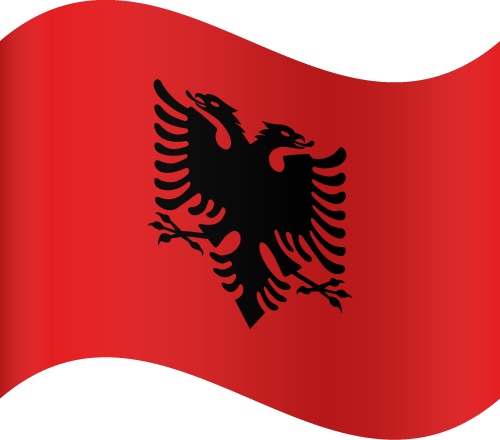 Albania (ISO 3166-1)
Albania (ISO 3166-1) Click to Copy Flag
Unicode Flag Code: U+1F1E6 U+1F1F1
Click to Copy

🇦🇱 "Himni i Flamurit" – (Albanian) / "Hymn to the Flag"
• Lyrics written by Asdreni (Aleksandër Stavre Drenova)
• Music composed by Ciprian Porumbescu
• Adopted as Albania’s national anthem in 1912
• Music composed by Ciprian Porumbescu
• Adopted as Albania’s national anthem in 1912
- ALBANIA: The Country That Vanished for 50 Years
- WONDERS OF ALBANIA | Most Amazing Places in Albania | 4K Travel Guide 2
- Life in ALBANIA - The Country of EXTREMELY BEAUTIFUL WOMEN in THE BALKANS - TIRANA DOCUMENTARY VLOG
- Wonders of Albania | The Most Fascinating Places in Albania | Travel Video 4K
- Albania Explained in 19 Minutes | History, Geography, Culture
- Albania Travel Guide: How to Travel Europe's Best Kept Secret
- 10+ Amazing Facts About Albania
- Albania Was NOT What We Expected (Our First Time in Tirana)
- Traveling to ALBANIA in 2026? You NEED To Watch This Video
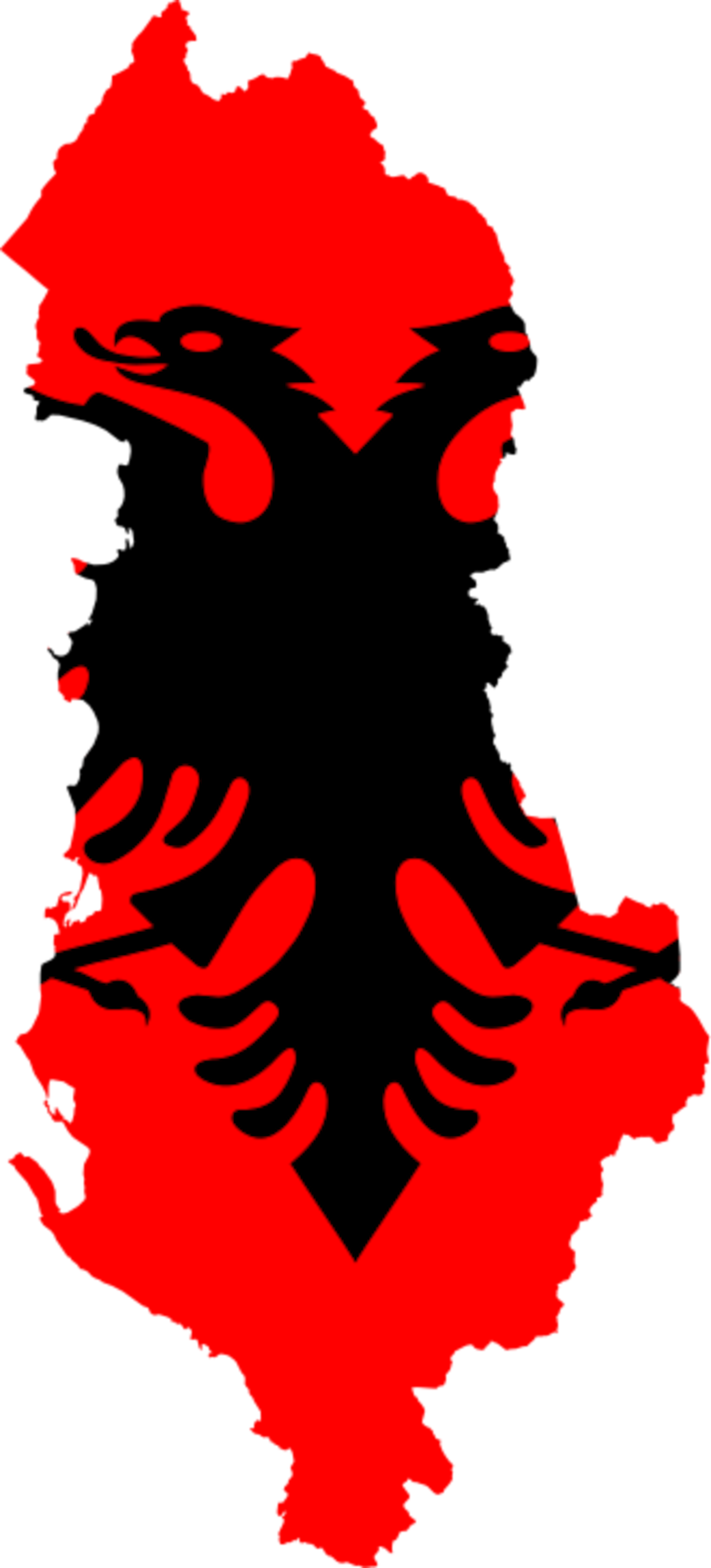
Albania
Albania, officially the Republic of Albania, is a country in Southeast Europe located on the Balkan Peninsula. Bordering the Adriatic and Ionian Seas within the Mediterranean, it shares land borders with Montenegro in the northwest, Kosovo in the northeast, North Macedonia in the east, and Greece in the south. Covering 28,748 square kilometers (11,100 square miles), Albania features diverse climates, landscapes, and geological formations. Its terrain ranges from the snow-covered peaks of the Albanian Alps and the Korab, Skanderbeg, Pindus, and Ceraunian mountain ranges to fertile coastal plains stretching along the Adriatic and Ionian shores. The capital and largest city is Tirana, followed by Durrës, Vlorë, and Shkodër.
In ancient times, Albania was inhabited by several Illyrian tribes, including the Ardiaei, Bylliones, Dassaretii, Enchele, and Taulantians, while the Chaonians settled in the southwest. Ancient Greek colonies such as Apollonia were established along the coast. The Illyrians remained the dominant regional power until the expansion of Macedon. After the Illyrian Wars, the territory became part of the Roman Empire and later the Byzantine Empire following Rome’s division. During the Middle Ages, a number of Albanian states emerged, including the Principality of Arbanon, the Kingdom of Albania, the Principality of Albania, and Albania Veneta. In the 15th century, Albania became a major center of resistance to Ottoman expansion under the leadership of Gjergj Kastrioti Skanderbeg, whose campaigns held back Ottoman forces for more than twenty years. Although eventually incorporated into the Ottoman Empire, Albania maintained a distinct cultural identity through centuries of foreign rule, leading to the Albanian National Renaissance in the 19th century. Albania declared independence in 1912, and its modern history included periods of monarchy, occupation during both World Wars, and communist rule under Enver Hoxha.
Since gaining independence, Albania has experienced major political transformations, evolving from a monarchy to a communist state before becoming a parliamentary constitutional republic. The country’s government is based on the separation of powers and includes a parliament, president, prime minister, and judicial system. Albania has a developing upper-middle-income economy centered on services, with manufacturing and tourism also playing important roles; tourism alone brought more than 11 million visitors in 2024. Following the end of communism, Albania transitioned from a centrally planned system to an open-market economy. Citizens benefit from universal healthcare and free primary and secondary education. Albania is also an official candidate for membership in the European Union and has been engaged in accession negotiations since 2022.
Official Motto:
"Ti, Shqipëri, më jep nder, më jep emrin Shqiptar"
(Translated from Albanian: "You, Albania, give me honor, give me the name Albanian")
🇦🇱 Albania Radio Stations (Click to Open / Close)
Top Albania Radio
ENERGY Albania
Radio Maria Albania
Club FM
Scandinavian Albania Radio
Radio Emigranti
Carbon Stereo 92.5
Radio Logos
Pri Radio
Alfa e Omega Radio
Etymology
The name Albania is believed to derive from medieval Latin and is linked to the ancient Illyrian tribe known as the Albani. Evidence for this connection appears in the writings of the 2nd-century Greek geographer Ptolemy, who referred to a settlement called Albanopolis located northeast of Durrës. Historians have also noted the existence of the medieval settlement names Albanon or Arbanon, suggesting a possible historical continuity between these references. However, scholars continue to debate whether Albanopolis and Albanon were in fact the same place.
The earliest widely accepted mention of the Albanians appears in the 11th century in the writings of the Byzantine historian Michael Attaliates. He described Albanians taking part in a revolt against Constantinople in 1079 and also referred to the Arbanitai as subjects of the Duke of Dyrrachium. During the Middle Ages, Albanians referred to their homeland as Arbëri or Arbëni and called themselves Arbëreshë or Arbëneshë. By the 14th century, the terms Shqipëri and Shqipëria began to emerge, though they only gradually replaced the older names during the late 17th and early 18th centuries. These newer names are commonly interpreted as meaning “Land of the Eagles” and “Children of the Eagles.”
- A Super Quick History of Albania
- Albania Explained in 19 Minutes | History, Geography, Culture
- The Untold Story of Albania in less than 5 minutes
- The ENTIRE History of ALBANIA | FULL DOCUMENTARY
- 10+ Amazing Facts About Albania
- The Albanians: Europe's Original 'White Muslims'
- Albania: History, Culture, and Folklore Explained | Nations of the World
MY BLOG
Below is all of my blogs together, from all of my sites.
Cultural Survival, 🇱🇮 Liechtenstein: Small State, Enduring Identity2026-03-18 20:26:58
A Series on Cultural Survival 4 Throughout history, many nations survived because of size,...
Cultural Survival, 🇩🇪 Germany: Identity Through Fragmentation and Reunification2026-03-18 20:25:25
A Series on Cultural Survival 4 Throughout history, some nations survived conquest. Others endured...
Cultural Survival, 🇦🇹 Austria: From Empire to Identity2026-03-18 20:23:46
A Series on Cultural Survival 4 Throughout history, some nations fought to gain power. Others...
SUBSCRIBE
Subscribe To Our Blog (News)
CONTACT ME
There are a few ways to contact me. Important phone calls and emails will be answered in 24 hours.
Office Address
Located in the USA and Europe
Phone Number
Email Address