



🖊️ Post


🌍🎨Color Revolution Series Part 1 — 🇺🇦 Ukraine: The Orange Revolution, Euromaidan, and the Road to War
🌍🎨 Series Introduction: Understanding Color Revolutions


4
In the modern political landscape, one term appears repeatedly in discussions about regime change, geopolitical influence, and popular uprisings: the “Color Revolution.”
From Georgia’s Rose Revolution to Ukraine’s Orange Revolution, from Kyrgyzstan’s Tulip Revolution to various movements across Eastern Europe and Central Asia, these events are often presented as spontaneous democratic uprisings against corruption and authoritarianism.
Yet critics and analysts alike argue that these movements often involve external influence, international funding networks, activist training programs, and strategic geopolitical interests.
This new blog series will explore Color Revolutions around the world — their origins, the organizations involved, the political consequences, and how they reshape global power dynamics.
Each article will examine:
• The historical background of the country
• The political conditions before the revolution
• The role of NGOs, foreign funding, and media influence
• The events of the uprising itself
• The aftermath and geopolitical consequences
Some revolutions led to democratic reforms. Others produced instability, economic hardship, or long-term geopolitical conflict.
Understanding them requires looking beyond slogans and examining the deeper political machinery behind modern protest movements.
In the 20th century, revolutions were often fought with weapons and armies. In the 21st century, revolutions are increasingly fought with media narratives, international pressure, economic leverage, social networks, and public perception.
Information itself has become a strategic weapon.
Television networks, activist livestreams, viral videos, hashtags, and international news coverage can influence global opinion in real time. Governments, NGOs, political movements, and intelligence agencies all recognize that controlling the narrative can be nearly as important as controlling territory.
Because of this, Color Revolutions are not only political events — they are also information wars.
They involve messaging strategies, symbolic imagery, slogans, protest branding, and international media campaigns designed to shape global understanding of events.
This series will explore both sides of these revolutions:
• The genuine grassroots frustrations of citizens
• The international networks that sometimes amplify those movements
The goal is not to reduce these events to simple explanations, but to understand the complex intersection of local protest movements, foreign influence, and global geopolitics.
This series begins with one of the most influential examples: Ukraine.
🇺🇦 Ukraine: The Orange Revolution, Euromaidan, and the Road to War


4
Ukraine has been the site of two major Color Revolutions within a decade, each reshaping the country’s political orientation and its relationship with Russia and the West.
These movements — the Orange Revolution (2004) and the Euromaidan protests (2013–2014) — dramatically altered Ukraine’s political trajectory and ultimately helped set the stage for the current war between Russia and Ukraine.
To understand the conflict today, we must first examine the revolutions that preceded it.
Ukraine’s unique geopolitical position has long made it a strategic crossroads between East and West.
Historically, the country has been deeply connected to Russia through centuries of shared imperial history under the Russian Empire and later the Soviet Union. At the same time, western regions of Ukraine have strong cultural and historical ties with Central and Eastern Europe.
Since gaining independence after the collapse of the Soviet Union in 1991, Ukraine has often been politically divided between:
• Pro-European political movements seeking integration with Western institutions
• Political factions favoring closer economic and cultural ties with Russia
These competing visions created a fragile political balance that would repeatedly erupt into crisis.
The Orange Revolution (2004)
In 2004, Ukraine faced a deeply contested presidential election.
The two main candidates represented two different geopolitical directions for the country:
Viktor Yanukovych
-
Supported closer ties with Russia
-
Backed by then-President Leonid Kuchma
-
Favored stronger economic ties with Moscow
Viktor Yushchenko
-
Advocated closer integration with Europe and NATO
-
Supported by many Ukrainian nationalists and Western governments
When the election results declared Yanukovych the winner, allegations of widespread election fraud immediately surfaced.
Mass protests erupted across the country, centered in Kyiv’s Independence Square.
Demonstrators wore orange, the campaign color of Yushchenko, giving the movement its name:
The Orange Revolution.
Hundreds of thousands of people filled the streets for weeks demanding new elections.
Ukraine’s Supreme Court eventually invalidated the results and ordered a new vote.
In the rerun election, Viktor Yushchenko won the presidency.
For many Western observers, the Orange Revolution represented a triumph of democracy.
For critics, it represented the beginning of heavy Western political influence in Ukrainian politics.
The Orange Revolution also demonstrated the growing importance of modern media in shaping political events.
Independent television channels, international news organizations, and early internet forums played a significant role in spreading information about alleged election fraud and organizing protest activity.
Satellite television and foreign media coverage helped bring the protests to global audiences, increasing international pressure on Ukraine’s leadership.
These developments foreshadowed the far more powerful social media and digital media environment that would shape the next revolution nearly a decade later.
NGOs, Activist Training, and Western Influence


4
One of the most debated aspects of Color Revolutions is the role of international NGOs and activist networks.
Organizations linked to Western democracy-promotion initiatives helped train activists in nonviolent protest strategies, media messaging, and political organization.
These groups often drew inspiration from the Serbian movement Otpor, which helped overthrow Slobodan Milošević in 2000.
Otpor activists developed a strategy often called “nonviolent resistance” or “strategic civil resistance.”
This included tactics such as:
• Mass demonstrations
• Symbolic protest imagery
• Political satire and messaging
• Decentralized organization
• Media-focused protest events designed to generate international attention
Training programs for activists were funded or supported by organizations such as:
• The Open Society Foundations, associated with George Soros
• The National Endowment for Democracy (NED)
• The International Republican Institute (IRI)
• The National Democratic Institute (NDI)
Supporters argue these programs strengthened civil society and democratic participation.
Critics argue they effectively functioned as tools of Western geopolitical influence, helping steer post-Soviet countries away from Russian influence and toward NATO and EU alignment.
Regardless of perspective, there is little doubt that NGOs and activist networks played a role in shaping the strategies used during these protests.
The Euromaidan Protests (2013–2014)


4
Nearly a decade after the Orange Revolution, Ukraine faced another political crisis.
In 2010, Viktor Yanukovych returned to power, winning the presidency in a new election.
This time, however, the crisis emerged over Ukraine’s relationship with the European Union.
In 2013, Ukraine was expected to sign an Association Agreement with the EU, which would move the country economically and politically closer to Europe.
But at the last moment, Yanukovych suspended the agreement, choosing instead to pursue closer economic ties with Russia.
The decision sparked protests in Kyiv.
Initially small, the demonstrations grew rapidly after police violently dispersed student protesters.
Soon, hundreds of thousands of Ukrainians filled Independence Square again, creating a massive protest encampment known as Euromaidan.
The protests lasted for months and eventually escalated into violent clashes between protesters and security forces.
In February 2014, after deadly confrontations that killed dozens, Yanukovych fled the country.
Ukraine’s parliament removed him from power and formed a new government.
Supporters called the event the “Revolution of Dignity.”
Critics called it a Western-backed coup.
The Role of New Media and Information Warfare During Euromaidan
The Euromaidan protests took place in a completely different media environment than the Orange Revolution.
By 2013, the rise of social media platforms, smartphones, livestreaming, and viral video had transformed how political movements operated.
Platforms such as Facebook, Twitter, YouTube, and emerging livestream networks became critical tools for organizing demonstrations and spreading information.
Protesters used social media to:
• Coordinate protest locations and logistics
• Share real-time footage from demonstrations
• Document clashes with police
• Spread slogans, memes, and protest imagery
• Mobilize international attention
Livestreams from Kyiv’s Independence Square allowed people around the world to watch events unfold in real time.
Images of burning barricades, injured protesters, and massive crowds quickly circulated across international media networks.
At the same time, the information environment became deeply polarized.
Western media outlets often portrayed Euromaidan as a popular democratic uprising against corruption and authoritarian leadership.
Russian state media and pro-Russian outlets framed the protests very differently, often describing them as a Western-backed attempt to destabilize Ukraine and pull it away from Russia’s sphere of influence.
Both sides engaged in intense information campaigns aimed at shaping international perception.
This period marked one of the earliest large-scale examples of modern hybrid information warfare, where narrative control, media framing, and viral content became central to geopolitical conflict.
The battle for public opinion was fought across television broadcasts, news websites, social media platforms, and online forums.
In many ways, the Euromaidan protests represented not only a political revolution but also a turning point in how information itself could drive political change.
The Geopolitical Consequences


4
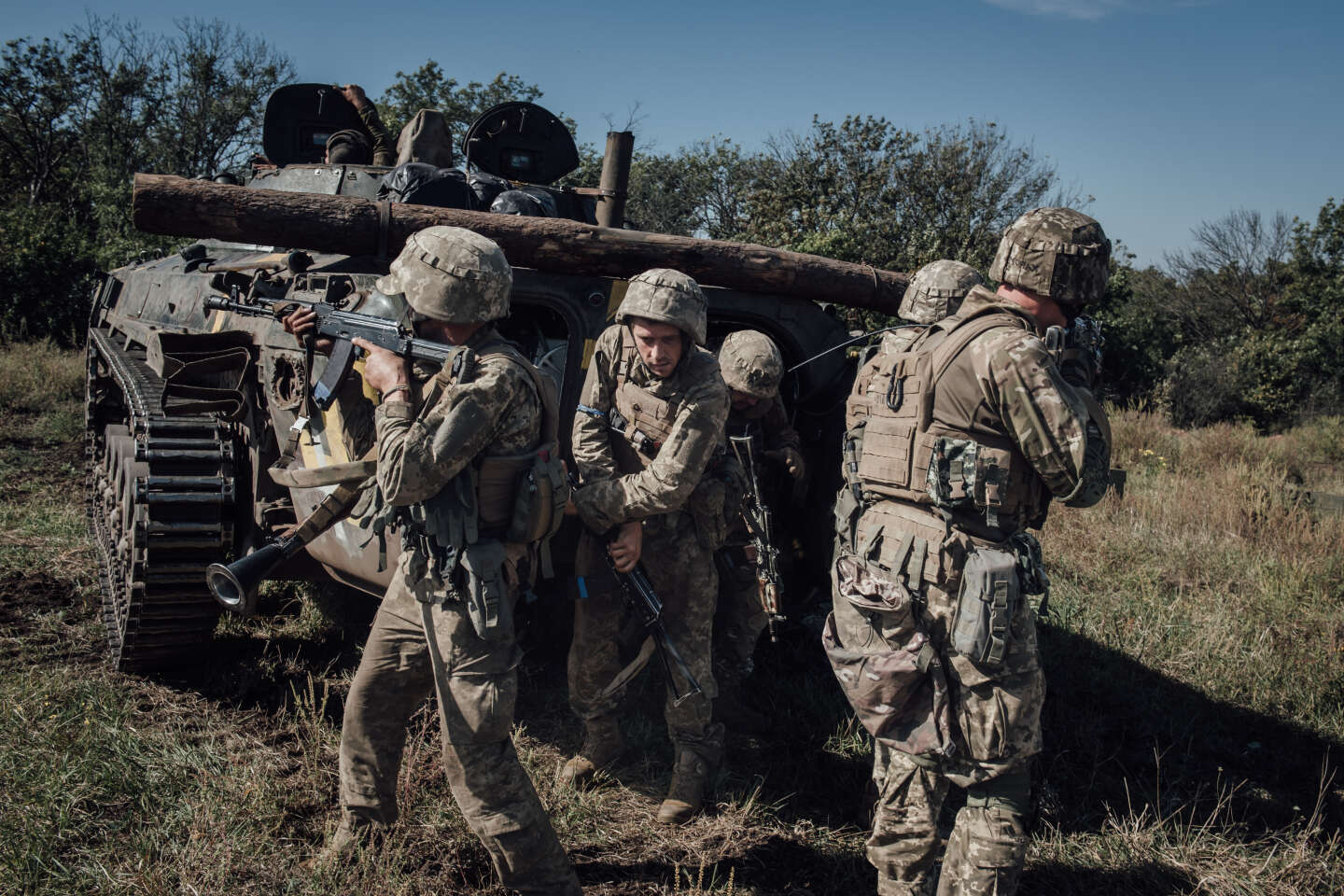
The events of 2014 triggered the most serious geopolitical crisis in Europe since the Cold War.
Within weeks of Yanukovych’s removal:
Russia annexed Crimea, citing the protection of Russian speakers and strategic interests.
In eastern Ukraine, separatist movements emerged in Donetsk and Luhansk, leading to a prolonged war in the Donbas region.
The conflict simmered for eight years until Russia launched a full-scale invasion of Ukraine in February 2022.
Today the war remains one of the most significant geopolitical conflicts of the 21st century.
The war has reshaped global politics in numerous ways:
• NATO expansion debates intensified
• Energy markets were disrupted across Europe
• Sanctions regimes against Russia expanded dramatically
• Global military spending increased
• The conflict deepened divisions between Western countries and Russia
Ukraine has become a central battlefield in the struggle between competing geopolitical blocs.
Why Ukraine Matters
Ukraine sits at the crossroads of two competing geopolitical visions:
• Integration with European institutions such as the EU and NATO
• Continued alignment with Russia’s sphere of influence
The Color Revolutions in Ukraine did more than change governments.
They reshaped the balance of power in Eastern Europe.
For supporters, they represent the triumph of democratic aspirations.
For critics, they represent externally influenced political upheavals that destabilized the region.
Either way, they became turning points that helped lead to the current war.
The events in Ukraine also demonstrated that modern revolutions are no longer fought only in the streets.
They are fought simultaneously through:
• Media narratives
• International diplomacy
• Economic sanctions
• Cyber operations
• Social media campaigns
The battlefield of modern politics now extends into the digital information space, where perception, narrative, and influence can shape events as powerfully as armies.
Similar Tags
Search
Subscribe
Donate


Your Statistics
For the care and safety of this prayer space, we gently record the time and location of each visit. This helps us protect sincerity while preserving anonymity.
Your Date and Time
IP Addres:
216.73.216.29
System
- OS Linux n
- PHP 8.3.30
- MySQLi 10.6.25-MariaDB-log
- Time 20:24
- Caching Disabled
- Gzip Disabled
- Users 10
- Articles 315
- Articles View Hits 6411
Website Visitors Map
About Greg Loucks
Greg Loucks is a writer, poet, filmmaker, musician, and graphic designer, as well as a creative visionary and faith-driven storyteller working at the intersection of language, meaning, and human connection. Born and raised in Phoenix, Arizona, he has lived in Cincinnati, Ohio; Hot Springs, Arkansas; Williams, Arizona; and Flagstaff, Arizona—each place shaping his perspective, resilience, and creative voice.

Address:
United States of America and Europe
Phone Numbers:
Arizona: (928) 563-GREG (4734)
Tennessee: (615) 899-GREG (4734)
Toll-Free: 888-457-GREG (4734)

Terms & Conditions
Subscribe
Report
My comments