



🖊️ Post


🌍🎨Color Revolution Series Part 4 🇰🇬 Kyrgyzstan: The Tulip Revolution and the Cycles of Power in Central Asia


4
The Tulip Revolution of 2005 in Kyrgyzstan became one of the most significant Color Revolutions in Central Asia.
Following the earlier revolutions in Serbia (2000), Georgia (2003), and Ukraine (2004), the uprising in Kyrgyzstan appeared to many observers as part of a broader wave of political upheaval spreading across former Soviet states.
Like other Color Revolutions, the Tulip Revolution combined mass protests, allegations of election fraud, youth activism, international attention, and media narratives that helped shape public perception of the events.
However, Kyrgyzstan’s revolution also revealed something unique.
Unlike Georgia and Ukraine, where revolutions produced relatively stable governments for several years, Kyrgyzstan would experience repeated cycles of political instability, revolutions, and leadership changes.
The Tulip Revolution therefore serves as an important example of how Color Revolutions can produce very different outcomes depending on the political, economic, and social conditions of a country.
Kyrgyzstan After the Soviet Union
When the Soviet Union collapsed in 1991, Kyrgyzstan became an independent nation for the first time in modern history.
Compared to other Central Asian states, Kyrgyzstan initially developed a reputation as one of the most politically open countries in the region.
Its first president, Askar Akayev, was originally viewed by many Western observers as a reform-minded leader who supported:
• Democratic institutions
• Market economic reforms
• Cooperation with international organizations
During the early 1990s, Kyrgyzstan even gained the nickname “the island of democracy” in Central Asia.
However, over time, the political system began to change.
By the late 1990s and early 2000s, critics accused Akayev’s government of:
• Increasing authoritarianism
• Election manipulation
• Corruption
• Concentration of power within the president’s family
Members of Akayev’s family and close allies were widely believed to have gained control of important sectors of the economy.
Public frustration began to grow.
Economic hardship also played a major role.
Kyrgyzstan struggled with:
• High unemployment
• Widespread poverty
• Weak infrastructure
• Limited economic opportunities
These frustrations created the conditions that would eventually erupt into a nationwide protest movement.
The 2005 Parliamentary Elections
The immediate trigger for the Tulip Revolution came during parliamentary elections held in February and March 2005.
Opposition candidates and political groups accused the government of widespread election fraud and manipulation.
International election observers also reported numerous irregularities.
Many opposition figures were disqualified from running, while pro-government candidates appeared to benefit from favorable treatment.
The results sparked anger across the country.
Protests began in southern Kyrgyzstan, particularly in the cities of Osh and Jalal-Abad.
Demonstrators accused the government of attempting to consolidate power through corrupt elections.
Within days, protests spread northward toward the capital city of Bishkek.
Opposition leaders began organizing demonstrations demanding that the election results be annulled.
The Rise of the Protest Movement


4
As protests intensified, a number of opposition groups and activist organizations began coordinating demonstrations.
One youth movement that gained attention was called KelKel, meaning “Renaissance” or “Rebirth.”
KelKel activists organized rallies, distributed leaflets, and used early internet tools to help mobilize supporters.
The movement drew inspiration from earlier protest groups such as:
• Otpor in Serbia
• Kmara in Georgia
• Pora in Ukraine
These movements shared similar strategies focused on:
• Nonviolent protest tactics
• Symbolic imagery
• Public demonstrations designed for media visibility
• Grassroots mobilization
However, Kyrgyzstan’s political environment was very different from Eastern Europe.
Regional divisions between the north and south of the country played a significant role in shaping the protests.
Local power networks, tribal affiliations, and regional loyalties all influenced how the uprising unfolded.
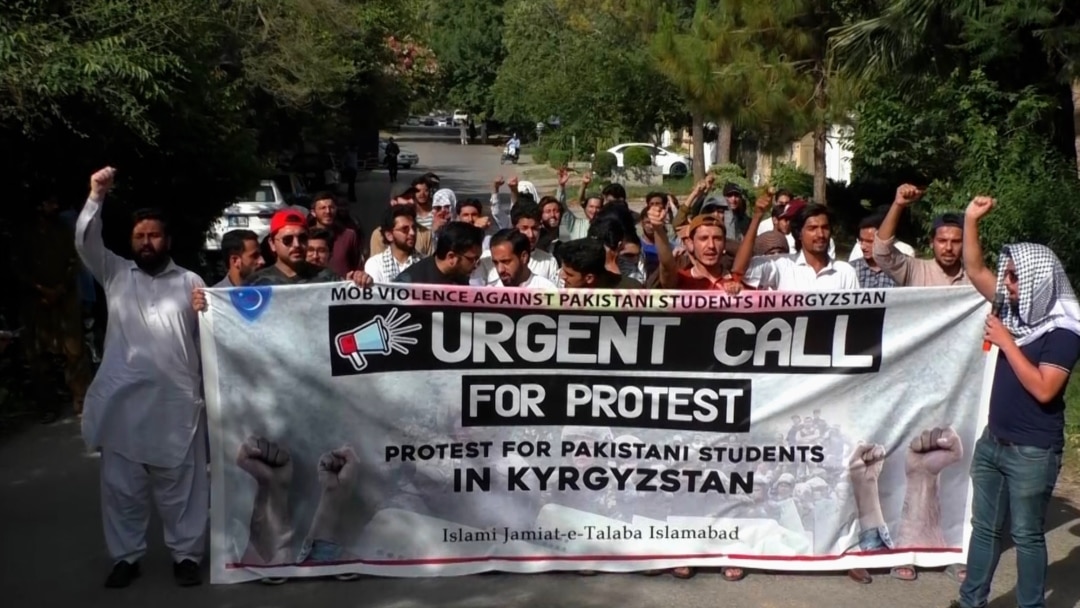
As protests grew larger, demonstrators began seizing government buildings in several cities.
The movement was no longer limited to peaceful rallies.
It had begun to transform into a nationwide political crisis.
The Fall of President Akayev
The turning point came in March 2005, when massive crowds gathered in Bishkek.
Protesters eventually stormed the presidential palace, forcing security forces to retreat.
President Askar Akayev fled the country, eventually seeking refuge in Russia.
The sudden collapse of the government shocked many observers.
Unlike the more carefully organized transitions seen in Georgia and Ukraine, the events in Kyrgyzstan unfolded rapidly and chaotically.
Government institutions struggled to maintain control.
In the immediate aftermath, looting broke out in parts of the capital.
Political leaders rushed to form an interim government.
Opposition figure Kurmanbek Bakiyev soon emerged as the country’s new leader.
Later that year, he won the presidential election.
NGOs, Civil Society, and International Influence


4
As with other Color Revolutions, the role of international NGOs and civil society organizations became a topic of debate.
Various democracy promotion groups had been active in Kyrgyzstan during the years leading up to the revolution.
Organizations involved in supporting civil society initiatives included:
• The Open Society Foundations, associated with George Soros
• The National Endowment for Democracy (NED)
• The National Democratic Institute (NDI)
• The International Republican Institute (IRI)
These organizations funded programs focused on:
• Election monitoring
• Media development
• Civic education
• Training for political activists and journalists
Supporters argue that these programs helped strengthen independent institutions and democratic participation.
Critics argue that such programs sometimes serve broader geopolitical interests, particularly in regions where global powers compete for influence.
Regardless of interpretation, Kyrgyzstan’s revolution demonstrated how civil society networks and activist organizations could interact with domestic political dissatisfaction.
Media and the Information Environment
The Tulip Revolution occurred during a period when information networks were rapidly expanding, though social media had not yet reached the dominance it would achieve later during events like Euromaidan.
Independent newspapers and regional media outlets played a significant role in spreading reports about election irregularities and government corruption.
Opposition leaders also used:
• Local radio stations
• Print media
• Early internet platforms
• International news coverage
These channels helped amplify protest messages and mobilize public anger.
International media attention further increased pressure on the Kyrgyz government.
However, Kyrgyzstan’s information environment was less developed than in Eastern Europe.
This meant that local power networks, regional alliances, and personal leadership played a larger role in shaping the outcome of events.
The Tulip Revolution therefore reflected a mix of traditional political mobilization and emerging modern protest strategies.
The Aftermath: Political Instability
The overthrow of President Akayev did not produce long-term political stability.
Instead, Kyrgyzstan entered a period of continued turmoil.
President Kurmanbek Bakiyev, who had come to power after the revolution, soon faced many of the same accusations that had been directed at the previous government.
Critics accused his administration of:
• Corruption
• Concentration of power
• Favoritism toward family members
• Suppression of political opponents
Public frustration once again began to grow.
In 2010, another uprising erupted in Kyrgyzstan.
This second revolution forced President Bakiyev to flee the country.
The political system was then restructured into a parliamentary republic, making Kyrgyzstan the only Central Asian country to adopt such a system.
However, political tensions and instability continued in the years that followed.
Why the Tulip Revolution Matters
The Tulip Revolution became a key example in the study of Color Revolutions because it showed that overthrowing a government does not automatically create stable democratic institutions.
Several important lessons emerged from Kyrgyzstan’s experience:
• Political revolutions can spread between countries through shared strategies and networks.
• Local political culture and regional divisions can strongly shape outcomes.
• Removing one leader does not necessarily resolve deeper structural problems.
Kyrgyzstan also highlighted how post-Soviet states were navigating complex pressures from both domestic populations and international geopolitical forces.
The country sits at a strategic crossroads between major powers, including:
• Russia
• China
• The United States
• Regional Central Asian neighbors
Because of this position, Kyrgyzstan has often found itself balancing competing geopolitical interests.
Kyrgyzstan Today
Today, Kyrgyzstan remains one of the most politically dynamic countries in Central Asia.
Unlike many of its neighbors, the country has experienced multiple revolutions, leadership changes, and constitutional reforms.
While political instability has been a challenge, the country also maintains a relatively active political environment compared to other states in the region.
The legacy of the Tulip Revolution therefore continues to shape Kyrgyzstan’s political culture.
It remains a powerful example of how Color Revolution movements can emerge from deep public frustration while producing unpredictable outcomes.
Similar Tags
Search
Subscribe
Donate


Your Statistics
For the care and safety of this prayer space, we gently record the time and location of each visit. This helps us protect sincerity while preserving anonymity.
Your Date and Time
IP Addres:
216.73.216.29
System
- OS Linux n
- PHP 8.3.30
- MySQLi 10.6.25-MariaDB-log
- Time 19:07
- Caching Disabled
- Gzip Disabled
- Users 10
- Articles 315
- Articles View Hits 6386
Website Visitors Map
About Greg Loucks
Greg Loucks is a writer, poet, filmmaker, musician, and graphic designer, as well as a creative visionary and faith-driven storyteller working at the intersection of language, meaning, and human connection. Born and raised in Phoenix, Arizona, he has lived in Cincinnati, Ohio; Hot Springs, Arkansas; Williams, Arizona; and Flagstaff, Arizona—each place shaping his perspective, resilience, and creative voice.

Address:
United States of America and Europe
Phone Numbers:
Arizona: (928) 563-GREG (4734)
Tennessee: (615) 899-GREG (4734)
Toll-Free: 888-457-GREG (4734)

Terms & Conditions
Subscribe
Report
My comments