



🖊️ Post


🌍🎨Color Revolution Series Part 6 🇷🇸 Serbia: The Bulldozer Revolution and the Birth of the Color Revolution Model


4
The political uprising that took place in Serbia in October 2000, often called the Bulldozer Revolution, is widely considered the origin point for what later became known as Color Revolutions.
Although it did not carry a color-based name like the Rose Revolution in Georgia or the Orange Revolution in Ukraine, many of the strategies and protest techniques first used in Serbia later became the template for similar movements across Eastern Europe and the former Soviet Union.
The revolution led to the fall of Slobodan Milošević, who had ruled Serbia and the Federal Republic of Yugoslavia throughout the turbulent 1990s.
For supporters, the revolution represented a democratic uprising against authoritarian rule.
For critics, it demonstrated how international political influence, activist networks, and modern media strategies could shape political change in sovereign states.
Either way, the events in Serbia became a turning point in modern political activism, introducing a model that would influence protest movements across the world.
Serbia During the Milošević Era
To understand the Bulldozer Revolution, it is important to examine the political climate of Serbia during the 1990s.
Slobodan Milošević rose to power in the late 1980s during the final years of socialist Yugoslavia.
As Yugoslavia began to break apart, Milošević became the dominant political figure in Serbia and later the president of the Federal Republic of Yugoslavia, which consisted of Serbia and Montenegro.
The 1990s were a period of extreme turmoil across the Balkans.
Several conflicts erupted following the collapse of Yugoslavia, including:
• The Croatian War of Independence
• The Bosnian War
• The Kosovo conflict
These wars were accompanied by severe economic hardship.
Serbia faced:
• International sanctions
• Economic collapse
• Hyperinflation
• Political isolation
• Rising corruption
By the late 1990s, much of the population had become exhausted by years of war and economic instability.
The situation worsened further in 1999, when the NATO bombing campaign against Yugoslavia targeted Serbian military infrastructure during the Kosovo conflict.
Although Milošević maintained power after the bombing campaign ended, public frustration with his leadership continued to grow.
The 2000 Presidential Election
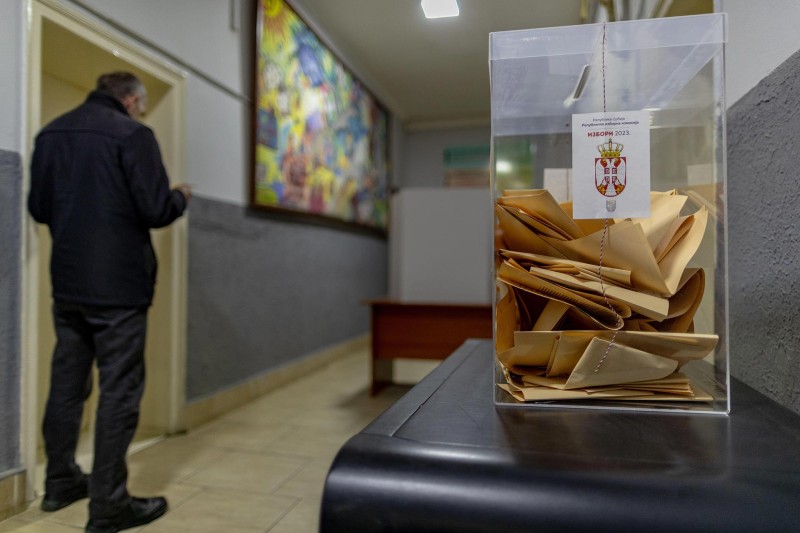
The immediate trigger for the revolution came during the September 2000 presidential election.
Milošević ran against opposition candidate Vojislav Koštunica, who had united several opposition parties into a coalition known as the Democratic Opposition of Serbia (DOS).
When the election results were announced, the government claimed that neither candidate had won a majority and that a second round of voting would be required.
However, opposition leaders insisted that Koštunica had already won the election outright.
They accused the government of manipulating the vote count in order to remain in power.
The dispute sparked widespread anger.
Opposition groups began calling for mass protests across the country.
Large demonstrations erupted in cities and towns throughout Serbia.
Workers, students, miners, truck drivers, and farmers all began joining the movement.
The Rise of Otpor


4
One of the most influential organizations during the uprising was a youth movement known as Otpor, which means “Resistance” in Serbian.
Otpor had originally formed in 1998 as a student movement opposing Milošević’s government.
The group quickly became known for its distinctive black clenched fist symbol, which later became one of the most recognizable protest icons in modern political activism.
Otpor used several innovative strategies that would later become common in other Color Revolutions.
These included:
• Nonviolent resistance tactics
• Humor and satire directed at political leaders
• Creative street protests and symbolic imagery
• Youth mobilization across universities and cities
• Media-focused demonstrations designed to attract attention
The movement’s strategy emphasized nonviolent resistance rather than armed confrontation.
Otpor activists organized demonstrations, distributed posters, and encouraged citizens to participate in elections and protests.
Their messaging focused on simple slogans such as:
“Gotov je!” (“He’s finished!”)
The slogan became a powerful symbol of the growing belief that Milošević’s rule was coming to an end.
International Support and Civil Society Networks

4
As in later Color Revolutions, the events in Serbia occurred in an environment where international organizations were supporting civil society initiatives.
Several organizations were involved in funding or supporting programs focused on:
• Election monitoring
• Independent media development
• Civic education
• Political organizing
These institutions included organizations such as:
• The National Endowment for Democracy (NED)
• The National Democratic Institute (NDI)
• The International Republican Institute (IRI)
• Various European democracy promotion programs
Some activists were also influenced by the writings of Gene Sharp, an American political theorist who developed theories of nonviolent resistance.
Sharp’s ideas emphasized how coordinated civil resistance could weaken authoritarian governments without the use of violence.
Supporters of these initiatives argue that they helped strengthen democratic institutions and citizen participation.
Critics argue that such programs sometimes serve broader geopolitical interests of Western governments.
Regardless of perspective, the Serbian uprising demonstrated how civil society networks, activist movements, and international attention could interact during moments of political crisis.
Media and the Information Battle
Another crucial factor in the revolution was the role of independent media and information networks.
During the Milošević era, many state-controlled media outlets supported the government.
However, several independent newspapers, radio stations, and television channels emerged that provided alternative perspectives.
Independent outlets reported extensively on:
• Allegations of election fraud
• Government corruption
• Protest movements across the country
International news networks also covered events in Serbia closely.
Images of student demonstrations, protest graffiti, and mass rallies spread across global media.
These images helped shape international perceptions of the uprising as a popular democratic movement challenging authoritarian leadership.
The information battle became a central part of the political struggle.
Public perception—both inside Serbia and internationally—played a major role in increasing pressure on the government.
October 5, 2000: The Bulldozer Revolution


4
The decisive moment came on October 5, 2000.
Hundreds of thousands of protesters converged on Belgrade, the capital of Serbia.
Workers from across the country traveled to the city to join the demonstrations.
Miners from the Kolubara coal basin, truck drivers, farmers, and students all participated.
One protester famously drove a bulldozer through the doors of the Serbian parliament building.
The dramatic image quickly spread through international media and gave the uprising its name: The Bulldozer Revolution.
Protesters occupied several government buildings.
Security forces largely refused to suppress the demonstrations.
Facing overwhelming pressure and the collapse of political support, Slobodan Milošević conceded defeat the following day.
Opposition leader Vojislav Koštunica became the new president.
The Beginning of the Color Revolution Era
The events in Serbia had a powerful influence on activists and political movements in other countries.
Members of Otpor later helped train activists involved in protest movements elsewhere.
These included movements such as:
• Georgia’s Rose Revolution (2003)
• Ukraine’s Orange Revolution (2004)
• Kyrgyzstan’s Tulip Revolution (2005)
Many of the strategies first used in Serbia became standard features of Color Revolutions.
These strategies included:
• Youth-led activist movements
• Strong symbolic branding and imagery
• Nonviolent protest tactics
• Media-focused demonstrations
• International election monitoring
• Civil society mobilization
Because of this influence, the Bulldozer Revolution is often viewed as the starting point of the modern Color Revolution model.
Serbia After the Revolution
Following Milošević’s fall, Serbia entered a period of political transformation.
The new government began pursuing reforms aimed at:
• Democratizing political institutions
• Rebuilding the economy
• Reintegrating Serbia into international institutions
In 2001, Milošević was arrested and transferred to The Hague to stand trial before the International Criminal Tribunal for the former Yugoslavia.
However, Serbia’s transition to democracy was not without difficulties.
The country faced challenges including:
• Political divisions among reformist leaders
• Economic restructuring
• Public dissatisfaction with the pace of reform
Nevertheless, the revolution marked a decisive break with the authoritarian political system of the 1990s.
Why the Serbian Revolution Matters
The Bulldozer Revolution remains one of the most important case studies in the history of modern protest movements.
It demonstrated how:
• Mass protests could challenge entrenched governments
• Youth movements could mobilize large segments of society
• Symbolic imagery could capture global attention
• Information networks could shape political outcomes
Most importantly, it created a model for nonviolent political uprisings that would later appear across multiple regions of the world.
In this sense, Serbia’s revolution did more than change its own government.
It helped launch a new era of political activism that would reshape global geopolitics in the decades that followed.
Similar Tags
Search
Subscribe
Donate


Your Statistics
For the care and safety of this prayer space, we gently record the time and location of each visit. This helps us protect sincerity while preserving anonymity.
Your Date and Time
IP Addres:
216.73.216.29
System
- OS Linux n
- PHP 8.3.30
- MySQLi 10.6.25-MariaDB-log
- Time 19:06
- Caching Disabled
- Gzip Disabled
- Users 10
- Articles 315
- Articles View Hits 6384
Website Visitors Map
About Greg Loucks
Greg Loucks is a writer, poet, filmmaker, musician, and graphic designer, as well as a creative visionary and faith-driven storyteller working at the intersection of language, meaning, and human connection. Born and raised in Phoenix, Arizona, he has lived in Cincinnati, Ohio; Hot Springs, Arkansas; Williams, Arizona; and Flagstaff, Arizona—each place shaping his perspective, resilience, and creative voice.

Address:
United States of America and Europe
Phone Numbers:
Arizona: (928) 563-GREG (4734)
Tennessee: (615) 899-GREG (4734)
Toll-Free: 888-457-GREG (4734)

Terms & Conditions
Subscribe
Report
My comments