



🖊️ Post


🇧🇩 Bangladesh: The Student Uprising That Toppled a Government (2024)

4
Bangladesh experienced one of the most dramatic protest movements in recent years—one that followed the full arc of your global model:
👉 Trigger → Mass Mobilization → Escalation → Regime Collapse
What began as a student protest over job quotas rapidly evolved into a nationwide uprising that ultimately led to:
👉 Prime Minister Sheikh Hasina stepping down and fleeing the country
This makes Bangladesh one of the clearest modern examples of:
👉 A successful protest movement that removed a long-standing government
⚡ The Trigger: Job Quota System
The protests began with a specific grievance:
🎓 Government Job Quotas
Bangladesh maintained a system reserving a large percentage of public sector jobs for certain groups, including:
• Descendants of independence war veterans
• Other designated categories
💥 Why It Sparked Anger
Many students felt:
• The system was unfair
• Merit was being ignored
• Opportunities were being restricted
👉 The core message:
“We want jobs based on merit, not connections.”
🔥 Rapid Escalation

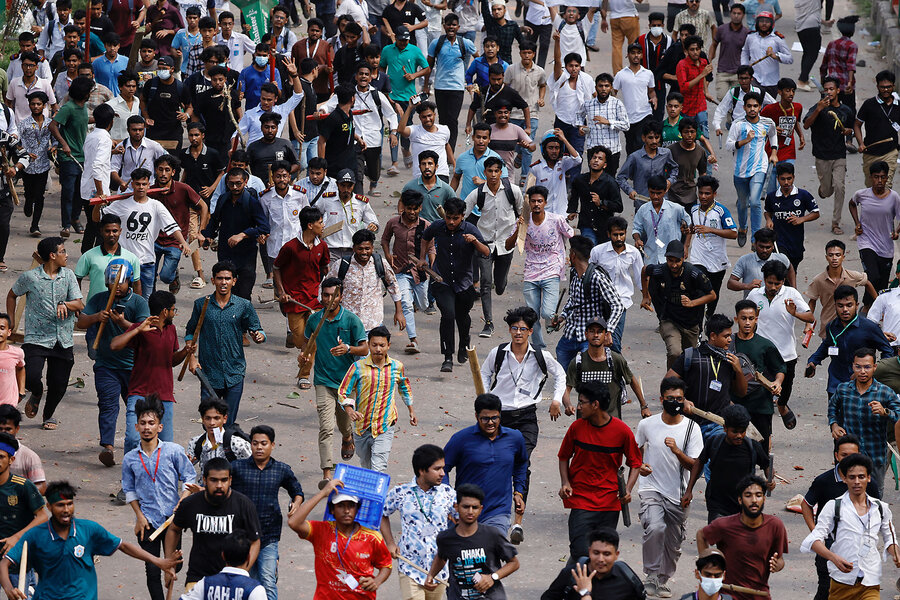

4
What started with students quickly expanded.
Within days:
• Protests spread across Dhaka and major cities
• Workers and citizens joined
• Movement became nationwide
👉 This shift is critical:
From student protest → national uprising
📉 Deeper Causes: Years of Frustration


4
The quota system was only the spark.
👥 Youth Unemployment
Bangladesh has a large young population facing:
• Limited job opportunities
• Intense competition
• Economic pressure
⚖️ Perceived Corruption
Many believed:
• Opportunities favored insiders
• Government systems lacked fairness
💰 Economic Pressure
• Rising cost of living
• Job scarcity
👉 Result:
A highly mobilizable, frustrated population
⚔️ Clashes and Crackdown


4
As protests grew, the government responded forcefully.
Reports included:
• Tear gas and rubber bullets
• Arrests
• Violent clashes
👉 But instead of stopping protests:
The crackdown intensified them
📱 Digital Amplification
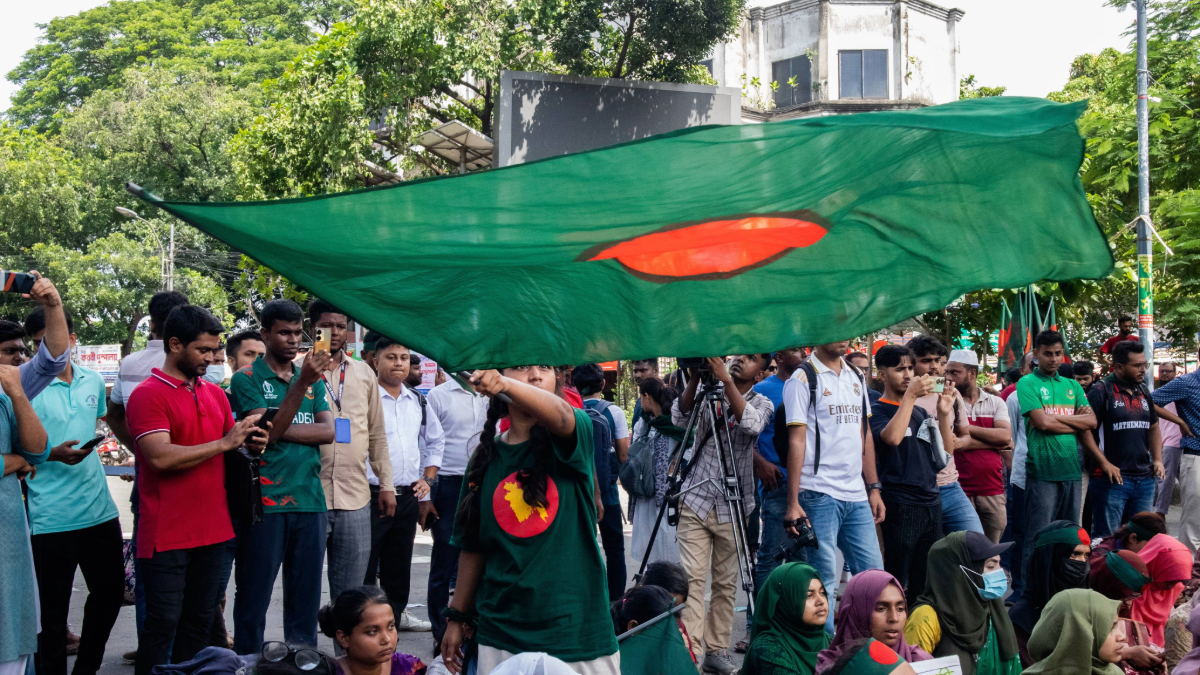


4
Social media played a major role:
• Videos of protests went viral
• Coordination spread rapidly
• National awareness increased
👉 This turned local protests into:
A nationwide movement almost overnight
💥 The Collapse Moment
As pressure mounted:
• Protests grew larger
• Government control weakened
• Public anger surged
👉 The result:
Prime Minister Sheikh Hasina stepped down and fled the country
🧠 Why Bangladesh Matters
Bangladesh is one of the clearest modern examples of:
🔑 A Successful Protest Model
1. Clear Trigger
Quota system
2. Mass Youth Mobilization
Students led the movement
3. Rapid Expansion
Nationwide participation
4. Government Overreaction
Crackdown fueled protests
5. System Breakdown
Leadership collapsed
👉 This is the full protest cycle completed
🌍 Bangladesh in the Global Pattern
Bangladesh aligns with:
• 🇹🇳 Tunisia → regime collapse
• 🇪🇬 Egypt → mass uprising
• 🇺🇦 Ukraine (2014) → leadership removal
👉 But with a modern twist:
Digital acceleration + youth leadership
🔮 What Happens Next?
Post-collapse scenarios are uncertain.
Possible outcomes:
• Political transition
• Power struggles
• Reform attempts
👉 Key risk:
Instability after success
🔚 Key Insight
Bangladesh proves that modern protest movements can still overthrow governments—
but what comes after is far less certain.
Similar Tags
Search
Subscribe
Donate


Your Statistics
For the care and safety of this prayer space, we gently record the time and location of each visit. This helps us protect sincerity while preserving anonymity.
Your Date and Time
IP Addres:
216.73.217.84
System
- OS Linux n
- PHP 8.3.30
- MySQLi 10.6.25-MariaDB
- Time 08:01
- Caching Disabled
- Gzip Disabled
- Users 245
- Articles 315
- Articles View Hits 24231
Website Visitors Map
About Greg Loucks
Greg Loucks is a writer, poet, filmmaker, musician, and graphic designer, as well as a creative visionary and faith-driven storyteller working at the intersection of language, meaning, and human connection. Born and raised in Phoenix, Arizona, he has lived in Cincinnati, Ohio; Hot Springs, Arkansas; Williams, Arizona; and Flagstaff, Arizona—each place shaping his perspective, resilience, and creative voice.

Address:
United States of America and Europe
Phone Numbers:
Arizona: (928) 563-GREG (4734)
Tennessee: (615) 899-GREG (4734)
Toll-Free: 888-457-GREG (4734)

Comments