





🖊️ Post



🏭 Manufacturing Reality: Media, Power, Propaganda, and the Battle for Truth: Seeing Through the Fog — Or Building a New One?
Two Nations, One Border: How America Split Into Parallel Realities
There is something deeply unsettling happening in America right now, and it goes far beyond elections, parties, or policies.
We are no longer simply divided by opinion.
We are divided by reality itself.
Millions of Americans are living inside two opposing worldviews that barely overlap—each with its own facts, moral framework, villains, heroes, and version of history. When people argue today, they are often not disagreeing about conclusions; they are disagreeing about what is real.
This is not normal political disagreement.
Psychologically, historically, and spiritually, it is a warning sign.
The Psychology of Split Reality
From a psychological perspective, humans rely on shared narratives to function as societies. When those narratives fracture, anxiety rises, trust collapses, and tribal instincts take over.
Three dynamics are especially dangerous:
1. Identity Fusion
Beliefs are no longer things people hold—they are things people are.
When ideology fuses with identity:
-
Disagreement feels like a personal attack
-
Doubt feels like betrayal
-
Correction feels like violence
This is why conversations feel impossible. You are no longer talking to ideas—you are threatening someone’s sense of self.
“A fool takes no pleasure in understanding, but only in expressing his opinion.”
— Proverbs 18:2
2. Fear-Driven Cognition
Chronic fear changes how the brain works. Under stress, humans:
-
Seek certainty over truth
-
Prefer simple stories over complex ones
-
Dehumanize outsiders
A population kept in a constant state of outrage is neurologically easier to control.
“For God has not given us a spirit of fear, but of power, love, and a sound mind.”
— 2 Timothy 1:7
A sound mind is the first casualty of perpetual crisis.
Echo Chambers and the Illusion of Consensus
Social media and modern news algorithms do not inform—they reinforce.
Each side sees:
-
Only confirming evidence
-
Only sympathetic experts
-
Only opposing voices at their worst
Over time, this creates epistemic closure—a sealed belief system that becomes immune to outside information. Inside these echo chambers, dissent is treated as heresy.
This is not accidental.
Propaganda: A Historical Parallel We Ignore at Our Peril
History does not repeat itself exactly—but it rhymes.
In Nazi Germany, Joseph Goebbels, Minister of Propaganda, understood something chillingly simple:
Control the narrative, and you control the people.
Goebbels didn’t rely on lies alone. He relied on:
-
Repetition
-
Emotional framing
-
Moral absolutism
-
Suppression of dissenting voices
He famously said:
“If you tell a lie big enough and keep repeating it, people will eventually come to believe it.”
The most effective propaganda does not look like propaganda.
It looks like moral clarity.
This is where modern America should feel uncomfortable.
Censorship: When “Protection” Becomes Control
Censorship is always sold as protection:
-
Protection from misinformation
-
Protection from harm
-
Protection from dangerous ideas
But historically, censorship is never neutral. Someone always decides:
-
What is allowed
-
What is suppressed
-
What questions may not be asked
When dissent is framed as “dangerous,” truth becomes whatever power says it is.
“Woe to those who call evil good and good evil, who put darkness for light and light for darkness.”
— Isaiah 5:20
A society that cannot question itself is already in decline.
Follow the Money: Who Funds the Story?
News is not free. Narratives are not spontaneous.
Every major media outlet is funded by:
-
Corporations
-
Political interests
-
Advertisers
-
Billionaire owners
-
Government contracts
This does not mean everything is false—but it does mean nothing is neutral.
When financial incentives reward outrage, division, and fear, those become the product.
“The love of money is a root of all kinds of evil.”
— 1 Timothy 6:10
When truth becomes unprofitable, it becomes optional.
The Spiritual Dimension We Avoid Naming
At its core, this crisis is not just political or psychological—it is spiritual.
Scripture repeatedly warns about deception, false narratives, and mass delusion:
“For the time will come when people will not endure sound teaching… and will turn away from listening to the truth and wander off into myths.”
— 2 Timothy 4:3–4
And:
“The whole world lies in the power of the evil one.”
— 1 John 5:19
A divided people is a weakened people.
A confused people is a controllable people.
Two Realities Cannot Share a Future
A nation can survive disagreement.
It cannot survive mutual incomprehension.
When neighbors see each other not as wrong—but as evil, insane, or subhuman—history shows where that road leads.
Jesus warned of this dynamic plainly:
“Every kingdom divided against itself is laid waste.”
— Matthew 12:25
What Now?
The answer is not retreat, rage, or blind loyalty to a side.
It starts smaller—and harder:
-
Humility over certainty
-
Curiosity over outrage
-
Truth over tribal loyalty
-
Courage to question even “your own side”
And spiritually:
“You shall know the truth, and the truth shall set you free.”
— John 8:32
Not “your truth.”
Not “our truth.”
The truth.
Final Thought
When a society loses its shared reality, it doesn’t collapse overnight.
It slowly forgets how to listen, how to reason, and how to love its neighbor.
That is the real danger America faces—not from one side or the other, but from the moment when truth becomes tribal and fear becomes law.
And history is very clear about what happens next.
ADDITIONAL CONTEXT & CONTROVERSIES SHAPING AMERICAN PERCEPTION
Operation Mockingbird and the Question of Media Independence
In the 1970s, congressional investigations revealed Operation Mockingbird, a Cold War–era CIA program that involved relationships with journalists and media organizations to shape public perception against foreign adversaries.
While the program was officially exposed and curtailed, its legacy left a permanent question in the American psyche:
If intelligence agencies influenced media before, how certain can we be they never do now?
This question—fair or not—has contributed to widespread skepticism toward mainstream news.
Psychological Experiments, Mind Control, and Distrust of Authority
Programs like MKUltra, which involved unethical mind control experiments conducted by the CIA during the Cold War, are now historically documented.
These revelations shattered a once-assumed trust:
-
That institutions always act ethically
-
That government power is self-restraining
-
That “conspiracy” automatically means false
When truth eventually surfaced decades later, it validated a painful lesson:
Authorities can lie—and sometimes do.
Media Consolidation: Fewer Voices Than We Think
Today, the majority of mainstream American media is controlled by a very small number of corporate conglomerates, often cited as companies such as:
-
Comcast / NBCUniversal
-
Disney (ABC)
-
Warner Bros. Discovery (CNN)
-
Paramount Global (CBS)
-
Fox Corporation
This consolidation does not automatically imply coordination—but it does reduce diversity of perspective and increases alignment with corporate, political, and advertiser interests.
Alternative Media: A Double-Edged Sword
As trust in mainstream media declines, many Americans seek alternative or independent media.
This shift has benefits:
-
More viewpoints
-
Faster dissent
-
Less centralized control
But it also carries risks:
-
Poor fact-checking
-
Ideological extremism
-
Grifters exploiting distrust
Rejecting mainstream media does not guarantee truth—it simply shifts the burden of discernment onto the individual.
“Test all things; hold fast what is good.”
— 1 Thessalonians 5:21
Faith, Perception, and Spiritual Discernment
From a Christian perspective, many believers hold that spiritual truth requires spiritual rebirth.
Jesus said plainly:
“Unless one is born again, he cannot see the kingdom of God.”
— John 3:3
This belief shapes how many Christians interpret current events—not merely as political conflict, but as spiritual blindness versus spiritual discernment.
Not everyone agrees with this view—but it profoundly influences how millions of Americans understand reality.
Trump, Media Polarization, and Competing Narratives
The presidency of Donald Trump intensified these fractures.
Many Americans believe:
-
Media coverage of Trump was overwhelmingly negative
-
Positive actions were minimized or ignored
-
The term “fake news” resonated because trust was already eroding
Others believe the opposite:
-
That Trump represented a dangerous threat
-
That aggressive media scrutiny was necessary
-
That institutional resistance was justified
Similarly, perceptions differ sharply regarding:
-
President Biden’s cognitive capacity
-
Who truly ran his administration
-
Media tone compared to coverage of Obama
What is undeniable is this: Americans were not watching the same story.
“The Deep State” and the Language of Power
To some, the idea of a “deep state” represents entrenched bureaucratic power resisting elected leadership.
To others, it is a conspiracy theory used to undermine trust in institutions.
Both interpretations exist simultaneously—and reinforce the sense that reality itself is contested.
A Spiritual Pattern Older Than Politics
Christians often frame these dynamics through a biblical lens:
“The thief comes only to steal and kill and destroy.”
— John 10:10
Division, deception, confusion, and mutual hatred are not new strategies. Scripture attributes them to a spiritual adversary whose primary weapon is lies.
Others reject this framing entirely.
And so the divide continues.
Closing Reflection
America is not just arguing about leaders.
It is arguing about truth, authority, and reality itself.
Until there is humility, discernment, and a willingness to question every source—including those we trust most—the divide will widen.
And history warns us:
when truth fractures, something else always rushes in to replace it.
Media Consolidation: Six Corporations, One Narrative Funnel
A critical but often overlooked factor in America’s split reality is media consolidation.
Today, the vast majority of national mainstream news content originates from just six major corporations:
-
Comcast / NBCUniversal – Owns NBC News, MSNBC, CNBC
-
Disney – Owns ABC News and related properties
-
Warner Bros. Discovery – Owns CNN
-
Paramount Global – Owns CBS News
-
Fox Corporation – Owns Fox News, Fox Business
-
Sony (less dominant in news, but part of the legacy consolidation ecosystem)
While these companies compete publicly, they often:
-
Share advertisers
-
Share elite social circles
-
Share access journalism relationships
-
Share similar corporate and political incentives
This does not require a formal conspiracy to produce narrative alignment. Structural incentives alone can do that.
When a handful of corporations shape what millions see as “the news,” diversity of perspective narrows, even when presentation styles differ.
Local News Ownership: Sinclair, Nexstar, Gray, TEGNA, and Fox
Beyond national outlets, local news—once the most trusted form of journalism—has also been consolidated.
Major players include:
-
Sinclair Broadcast Group
Owns or operates hundreds of local TV stations. Known for centrally produced segments that air nationwide, sometimes sparking criticism over editorial uniformity. -
Nexstar Media Group
The largest local station owner in the U.S., controlling more than 200 stations. Owns NewsNation, positioning itself as an alternative but still operating within corporate constraints. -
Gray Television
A major owner of local stations, especially in smaller markets. -
TEGNA
Owns dozens of local stations and digital platforms, with deep advertising and political revenue ties. -
Fox Corporation
In addition to Fox News, it owns numerous local affiliates that shape regional narratives.
The concern is not that these companies tell people what to think—but that local voices are increasingly filtered through national corporate structures, reducing independent reporting and increasing homogenization.
The Double-Edged Sword: Consolidated Media vs. Alternative Media
The danger of consolidation:
-
Reduced viewpoint diversity
-
Corporate and political pressure
-
Narrative inertia
-
Trust erosion
The danger of alternative media:
-
Poor sourcing
-
Algorithm-driven extremism
-
Financial incentives for outrage
-
False certainty replacing skepticism
The collapse of trust in mainstream media has driven many Americans to alternative platforms—but alternative does not automatically mean accurate.
Truth requires discernment no matter the source.
“The simple believes everything, but the prudent gives thought to his steps.”
— Proverbs 14:15
Think Tanks, Global Influence, and Elite Networks
Organizations such as the Council on Foreign Relations (CFR) and the Trilateral Commission are frequently cited in discussions about elite influence.
Documented facts:
-
These groups include politicians, business leaders, academics, and media figures.
-
They promote global cooperation, economic integration, and policy dialogue.
Points of contention:
-
Critics believe these organizations exert disproportionate influence over policy and media narratives.
-
Supporters argue they are discussion forums, not controlling bodies.
What matters psychologically is this:
When media figures, policymakers, and global elites overlap socially and professionally, public trust erodes, regardless of intent.
Media Control Abroad—and the American Parallel
In many countries, media control is overt:
-
State-run broadcasters
-
Government licensing
-
Legal penalties for dissent
The United States does not operate this way formally. Instead, critics argue it functions through:
-
Corporate consolidation
-
Advertising dependence
-
Intelligence and national security relationships
-
Access journalism
The result, some believe, is soft control rather than direct censorship.
Different mechanism—similar effect.
Political Bias in Mainstream Media
Multiple media studies over the past decade suggest that mainstream U.S. news skews left-of-center overall, though the degree varies by outlet.
General patterns often cited:
-
Majority-left or progressive framing
-
Smaller centrist representation
-
Minority right-leaning coverage (primarily Fox)
Critics argue this imbalance creates:
-
Narrative asymmetry
-
Disproportionate negative coverage of conservative figures
-
Reduced trust among half the population
Supporters counter that:
-
Reality itself has a “liberal bias”
-
Scrutiny reflects behavior, not ideology
Once again—two realities interpreting the same data differently.
Trump, Public Broadcasting, and Funding Controversy
Donald Trump did not shut down NPR or PBS during his presidency.
What he did propose—and repeatedly state—was:
Government should not fund media outlets.
Supporters argue:
-
If outlets collapse without taxpayer funding, they are not truly independent.
-
Public money inevitably shapes editorial incentives.
Critics argue:
-
Public broadcasting provides educational and cultural value.
-
Defunding weakens non-commercial journalism.
The debate exposed a deeper truth:
Media independence is fragile when funding is political—no matter which side controls it.
Globalism, Deep State, and Competing Interpretations
Some Americans believe:
-
A “globalist deep state” exerts influence over media and government
-
Trump threatened entrenched systems
-
Negative media coverage reflects resistance to reform
-
America has been economically and culturally “robbed”
Others believe:
-
These claims are unfounded or exaggerated
-
Trump represented chaos rather than reform
-
Institutions were protecting democracy
Once again, the issue is not which belief is correct—but that Americans are interpreting the same events through incompatible frameworks.
A Spiritual Reading of Power and Deception
Many Christians interpret these dynamics spiritually:
“For we do not wrestle against flesh and blood, but against rulers, against authorities, against the cosmic powers over this present darkness.”
— Ephesians 6:12
From this view, deception, division, and confusion are not accidental—but strategic.
Others reject this entirely.
And so the divide deepens—not just politically, but ontologically.
Final Addition: The Cost of a Broken Information World
Whether one believes the threat is:
-
Corporate media
-
Alternative media
-
Government influence
-
Global elites
-
Or spiritual deception
The outcome is the same:
A population unsure of what—or whom—to trust.
And history shows that when trust collapses, power concentrates, fear spreads, and truth becomes negotiable.
That is the moment every society must stop, reflect, and choose discernment over allegiance.
Documented Political–Media Connections: Affiliations, Family Ties & the Revolving Door
One reason Americans struggle to trust mainstream news is the constant overlap between government, political campaigns, and media institutions — a phenomenon scholars call the revolving door. You don’t need a conspiracy theory to see that many reporters, executives, and political aides move easily between journalism and government — and sometimes have family ties across these worlds.
Below are many documented examples of these intersections.
Familial or Marital Ties Between Politicians and Media
These are publicly reported personal connections between major media figures and political operatives:
✅ Claire Shipman (ABC News) is married to Jay Carney, who served as White House Press Secretary under President Obama.
✅ Matthew Jaffe (ABC/Univision) is married to Katie Hogan, who served as Deputy Press Secretary to President Obama.
✅ David Rhodes, former CBS News president, is the brother of Ben Rhodes, who was a Deputy National Security Adviser under Obama.
✅ Virginia Moseley (CNN) was married to Tom Nides, who served as Deputy Secretary of State under Hillary Clinton.
✅ Ian Cameron, former ABC News executive producer, is married to Susan Rice, who served as National Security Adviser.
✅ Ari Shapiro (NPR) is married to a lawyer who once worked in the Obama White House counsel’s office.
✅ Multiple news spouses and siblings have appeared in political contexts — e.g., reporters married to political advisers, former White House staffers, or campaign officials.
Why this matters:
Even if no conflicts of interest occur, these relationships blur the line between political power and news coverage for many observers — especially during intense election cycles.
The Revolving Door: Journalists Who Go to Politics and Back
Another major pattern is journalists leaving media outlets to join political campaigns or government, and vice versa:
🟢 Jay Carney went from Time magazine to Obama’s White House and later became a CNN political analyst.
🟢 Jen Psaki served as White House Press Secretary under Biden, then became a CNN/MSNBC contributor.
🟢 Many MSNBC and CNN contributors joined Biden’s communications team, including former journalists who worked as analysts or producers before government service.
🟢 Other reporters have moved to government communications roles, including at the White House, Federal agencies, and campaign teams.
This pattern — media → politics → media — is neither unique to one party nor new, but it does mean audiences often see familiar faces and voices on both sides of the newsroom–state divide.
What This Looks Like in Practice
Here are dozens of intersections that raise eyebrows for people on both sides of the political spectrum:
-
Reporters and anchors married to political staffers.
-
Network news executives with siblings who were senior advisers in government.
-
Political aides becoming media analysts (and sometimes vice versa).
-
Journalists who took government roles then returned to media.
These do not prove coordination or collusion, but they do illustrate how intertwined media and politics can be in Washington, D.C. — especially compared with earlier eras when reporters and political staffers tended to operate more separately.
Why This Combination Matters
There are two major effects from these affiliations:
📌 1. Perception of Bias & Insider Networks
When many journalists have personal or professional ties to political figures, it looks like there’s a club — even if individual reporters strive for integrity.
When audiences see familiar names move between news and government, trust erodes.
📌 2. Narrative Reinforcement
When elites circulate between political and media institutions, it can create shared assumptions and blind spots — not necessarily because of intentional coordination, but because people in the same social and professional circles tend to see the world similarly.
This dynamic contributes to:
-
The perception that mainstream media has a left-leaning bias overall,
-
The belief among many conservatives that “fake news” is a structural issue, not just a few bad actors,
-
And the contrasting perception among many liberals that criticism of mainstream outlets is itself misinformation.
All of these are real disagreements about reality, not just opinion battles.
Not the Only Side: Critics on Both Ends
It should also be noted:
-
Conservatives point to these documented ties as reasons to distrust legacy media.
-
Liberals point to the ownership interests, advertiser pressures, and political leanings of media conglomerates as shaping narratives.
-
Centrists see media errors and bias on all sides, recognizing that no institution is immune to influence.
In sociology and media studies, this is part of the echo chamber and agenda-setting theories, which show that sources and networks of information shape what people see as real — again contributing to the “two realities” phenomenon Americans increasingly feel.
Bottom Line (Without Overclaiming)
These documented affiliations — marriage, career moves, family ties, and shared professional networks — show that:
✅ Journalism and politics are often professionally entangled.
✅ This does not prove manipulation, but it does affect perception and trust.
✅ The public’s reaction to these overlaps is part of why Americans feel like they inhabit different realities when it comes to news and truth.
WHY THIS MOMENT FEELS DIFFERENT IN HISTORY
A Fracture Deeper Than Partisanship
America has been divided before—over slavery, civil rights, war, economics, and culture. But most past divisions still operated within a shared epistemic frame: people disagreed inside the same reality.
What makes the current moment distinct is that agreement on basic premises has collapsed:
-
What counts as evidence
-
Which institutions are credible
-
Whether disagreement is legitimate
-
Whether opponents are merely wrong or fundamentally evil
Once that threshold is crossed, compromise becomes nearly impossible.
Political scientist Hannah Arendt warned that the most dangerous form of power is not brute force, but organized lying, because it dissolves the category of truth itself. When people no longer believe truth exists, they become dependent on authority, tribe, or emotion to tell them what is real.
The Role of Narrative Saturation
Never in history have humans been exposed to this much narrative density:
-
24/7 news cycles
-
Push notifications
-
Algorithmic amplification
-
Social signaling rewards
Psychologically, this produces learned certainty rather than wisdom. People become fluent in talking points, not understanding.
Studies in cognitive psychology show that repetition alone increases perceived truthfulness, even when claims are false. This is not a moral failure—it is a neurological one.
This is why propaganda does not require lies.
It requires selective emphasis.
Agenda-Setting vs. Lying
A crucial distinction often missed in public debate:
Most modern media influence does not come from fabricating facts.
It comes from deciding:
-
What is covered
-
What is ignored
-
What is framed as urgent
-
What is framed as fringe
Agenda-setting theory shows that media tells people what to think about, even when not telling them what to think.
This explains why two people can both be “informed” and yet live in incompatible worlds.
Why Trust Did Not Collapse Overnight
Public trust in institutions did not vanish because of one president, one war, or one scandal. It eroded through accumulated disillusionment:
-
Vietnam and Pentagon Papers
-
Watergate
-
Iran-Contra
-
Weapons of Mass Destruction claims
-
Financial crises
-
Surveillance revelations
Each moment chipped away at the assumption that elites tell the truth when it matters most.
When previously dismissed “conspiracies” later proved partially or fully true, skepticism hardened into suspicion.
Skepticism vs. Cynicism
There is an important difference:
-
Skepticism questions claims in search of truth.
-
Cynicism assumes deception everywhere and stops searching.
America now contains both — and often confuses one for the other.
This is why alternative media can be both:
-
A corrective to institutional blind spots
-
A breeding ground for unfalsifiable belief systems
Without humility, skepticism hardens into its own echo chamber.
Why “Objectivity” Failed as a Cultural Ideal
For decades, journalism promised neutrality. But neutrality is not the same as truth, and audiences eventually noticed:
-
Editorial choices
-
Language framing
-
Selective outrage
-
Disproportionate scrutiny
As cultural values shifted, many outlets replaced objectivity with moral mission. This gained loyalty from some audiences — and permanently alienated others.
Once journalism adopts activism, it forfeits universal trust.
The Rise of Moralized Politics
Politics used to be about interests.
It is now about identity and morality.
When political disagreement becomes moralized:
-
Opponents are not mistaken — they are immoral
-
Dialogue becomes endorsement
-
Silence becomes complicity
This dynamic mirrors religious conflict more than democratic debate.
Ironically, both secular and religious actors now use theological language:
-
“Evil”
-
“Salvation”
-
“Redemption”
-
“Heresy”
But without shared doctrine or humility.
Why Trump Became a Psychological Earthquake
Donald Trump did not create this fracture — he exposed it.
To supporters, he:
-
Spoke what others wouldn’t
-
Challenged institutional hypocrisy
-
Disrupted entrenched power
To opponents, he:
-
Violated norms
-
Threatened stability
-
Embodied moral danger
The reaction to Trump revealed how much trust had already evaporated. Media hostility toward him did not create his base — it confirmed their suspicions.
At the same time, his rhetoric intensified fear among those already anxious about democratic erosion.
Thus, the same man became proof of opposite realities.
The Biden Era and the Quieting of Scrutiny
Perception matters as much as policy.
Many Americans observed:
-
Softer media tone
-
Reduced investigative intensity
-
Less focus on cognitive decline concerns
Others argue:
-
Normalcy returned
-
Coverage reflected competence
-
Fatigue with chaos
Again, two interpretations of the same phenomenon.
When scrutiny appears asymmetrical, trust fractures further.
Why “Globalism” Became a Loaded Word
Global integration is not imaginary:
-
Trade agreements
-
Multinational corporations
-
Supranational institutions
-
International policy coordination
Supporters view this as cooperation.
Critics view it as erosion of sovereignty.
When media, finance, politics, and NGOs share global networks, skepticism naturally follows — especially among populations experiencing economic stagnation or cultural dislocation.
Perception of loss fuels populism.
Theological Discernment vs. Political Certainty
For Christians, this moment is interpreted through Scripture:
-
Deception
-
False authority
-
Spiritual blindness
-
Testing of spirits
But Scripture also warns believers against pride, false prophecy, and misplaced certainty.
Discernment is not the same as partisanship.
A faith that only confirms political preference ceases to be faith — it becomes ideology with religious language.
The Danger of Substituting One Authority for Another
Many Americans rejected mainstream media — only to replace it with:
-
Influencers
-
Anonymous accounts
-
Algorithmic feeds
-
Ideological prophets
Authority did not disappear.
It merely changed form.
This is why discernment must be internal, not outsourced.
What a Healthy Information Ecosystem Requires
A functioning society needs:
-
Competing narratives
-
Shared standards of evidence
-
Room for dissent
-
Moral humility
-
Institutional accountability
-
Individual responsibility
Remove any one of these, and reality fragments.
Why This Moment Still Has Hope
Despite appearances:
-
Americans are questioning sources
-
Centralized authority is weakening
-
Independent thinking is rising
-
Faith conversations are returning
-
Young people are less trusting of narratives
Awakening does not always look orderly.
Sometimes it looks like chaos before clarity.
A Choice Point
America stands at a crossroads not between left and right — but between:
-
Discernment and delusion
-
Humility and certainty
-
Truth-seeking and tribalism
-
Fear and courage
Power thrives on confusion.
Truth thrives on light.
And light, by its nature, exposes everyone — not just the people we disagree with.
“And this is the judgment: the light has come into the world, and people loved the darkness rather than the light because their works were evil.”
— John 3:19
Seeing Through the Fog — Or Building a New One?
A Self-Critical Examination of Media, Power, Faith, and Perception
If propaganda is most effective when it feels righteous, then any honest critique of media power must also turn inward. The moment we stop questioning our own assumptions, we risk replacing one echo chamber with another—one that feels braver, truer, and more awake, but may still be shaped by selective perception.
This companion piece exists for that reason.
1. If Media Shapes Reality, Am I Immune?
A core claim of media-critique—whether left, right, or alternative—is that other people are manipulated. But psychology tells us something uncomfortable: no one is immune.
“The heart is deceitful above all things, and desperately sick; who can understand it?” — Jeremiah 17:9
Confirmation bias does not disappear when someone “wakes up.” In fact, research shows it often intensifies once a person believes they have escaped manipulation. The belief “I see the truth now” can become armor against correction.
So the question becomes uncomfortable but necessary:
-
Do I evaluate information by evidence—or by whether it fits my narrative?
-
Do I scrutinize sources that confirm my beliefs as harshly as those that challenge them?
-
Have I replaced institutional trust with tribal trust?
2. Is Distrust of Mainstream Media Automatically Wisdom?
There are documented reasons to be skeptical of mainstream media: consolidation of ownership, revolving doors between politics and journalism, ideological homogeneity in newsrooms, and historic intelligence-media entanglements.
But skepticism can slide into absolutism.
If all mainstream outlets are assumed to be lying at all times, then any contrary evidence can be dismissed by default—which is structurally identical to propaganda thinking.
Ironically, this mirrors Joseph Goebbels’ own insight:
“If you repeat a lie often enough, people will believe it.”
But repetition does not require state media anymore. Algorithms, influencers, podcasts, and alternative outlets can repeat narratives just as effectively—sometimes with less accountability.
3. When Does Pattern Recognition Become Apophenia?
Connecting dots is necessary for critical thinking. But psychology warns of apophenia—the tendency to perceive meaningful patterns where none exist.
When discussing:
-
globalist influence
-
elite networks
-
think tanks and councils
-
media-political marriages
The question is not whether these connections exist (many do), but how much explanatory weight we give them.
Do connections always imply coordination?
Does shared ideology always mean shared conspiracy?
At what point does skepticism turn into certainty without falsifiability?
A belief that everything is controlled can paradoxically become disempowering—and unfalsifiable.
4. Faith as Discernment—or as Filter?
Your belief that spiritual truth requires being born again is theologically coherent within Christian doctrine.
“The natural person does not accept the things of the Spirit of God, for they are folly to him.” — 1 Corinthians 2:14
But this belief carries a risk: spiritual certainty can override empirical humility.
Hard questions worth sitting with:
-
How do I distinguish spiritual discernment from emotional conviction?
-
Could sincere believers reach different political conclusions?
-
Does disagreement automatically imply deception or blindness?
History shows that Christians—deeply sincere ones—have supported opposing political movements while all claiming divine clarity.
5. Trump, Media Bias, and Selective Metrics
There is evidence of disproportionate negative coverage of Trump compared to other presidents. But self-critique demands further questions:
-
Do I account for differences in rhetoric, behavior, and norms?
-
Do I treat media criticism of Trump as inherently illegitimate?
-
Would I accept similar coverage of a leader I oppose?
If bias exists (and it likely does), the antidote is not inversion—“everything negative is fake”—but proportional analysis.
Truth rarely lives at extremes.
6. When Anti-Censorship Becomes Anti-Accountability
Censorship is dangerous. But so is a media ecosystem with no standards at all.
Alternative media has produced:
-
real investigative journalism
-
whistleblower amplification
-
narrative correction
It has also produced:
-
monetized outrage
-
unverifiable claims
-
psychological addiction to crisis
-
charismatic figures who are never wrong
A movement that cannot tolerate internal critique is not free—it is fragile.
“Test everything; hold fast what is good.” — 1 Thessalonians 5:21
7. Is “Waking Up” a Process—or an Identity?
The most dangerous moment in any awakening is when it becomes an identity rather than a posture.
Once “awake” becomes who we are, evidence becomes a threat. Doubt becomes betrayal. Questions become weakness.
True discernment is quieter.
It asks:
-
What would change my mind?
-
What evidence would disconfirm my view?
-
Where might I be wrong?
8. Power, Satan, and the Temptation of Certainty
The Bible is clear that deception exists, power corrupts, and spiritual warfare is real.
But it is also clear that pride is Satan’s oldest tool.
“You will be like God, knowing good and evil.” — Genesis 3:5
The temptation is not merely to be deceived—but to believe we are above deception.
Closing Reflection
Critiquing media power is necessary.
Questioning narratives is healthy.
Seeking truth is holy work.
But the line between discernment and dogma is thinner than we like to admit.
Perhaps the most dangerous propaganda is not the one imposed on us—but the one we stop questioning because it feels righteous.
If truth is light, it should withstand examination from every angle—including our own.
SOURCES, CITATIONS & FOOTNOTES
I. Documented Government Programs & Historical Record
[1] Operation Mockingbird
-
U.S. Senate Select Committee to Study Governmental Operations with Respect to Intelligence Activities (Church Committee), 1975–1976.
-
Carl Bernstein, Rolling Stone, “The CIA and the Media,” 1977.
(Documents relationships between U.S. intelligence agencies and journalists during the Cold War.)
[2] MKUltra / CIA Mind Control Experiments
-
U.S. Senate Hearings, 1977
-
CIA declassified documents (via FOIA)
-
National Archives and Records Administration
(Confirmed unethical experimentation on U.S. citizens.)
[3] Pentagon Papers & Vietnam Deception
-
New York Times Co. v. United States (1971)
-
Daniel Ellsberg, Secrets: A Memoir of Vietnam and the Pentagon Papers
[4] Watergate & Media–Government Trust Collapse
-
Senate Watergate Committee Reports
-
Bob Woodward & Carl Bernstein, All the President’s Men
II. Media Consolidation & Ownership
[5] Media Ownership Concentration
-
Free Press, Who Owns the Media?
-
Columbia Journalism Review
-
Federal Communications Commission (FCC) ownership data
Major conglomerates referenced:
-
Comcast / NBCUniversal
-
Disney (ABC)
-
Warner Bros. Discovery (CNN)
-
Paramount Global (CBS)
-
Fox Corporation
-
Sony (legacy media holdings)
[6] Local News Consolidation
-
Pew Research Center, State of the News Media
-
Sinclair Broadcast Group filings
-
Nexstar Media Group SEC filings
-
Gray Television investor reports
-
TEGNA corporate disclosures
III. Political–Media Affiliations & Revolving Door
[7] Documented Familial & Professional Connections
Examples cited in public reporting:
-
Claire Shipman (ABC News) ↔ Jay Carney (Obama WH Press Secretary)
-
David Rhodes (CBS News) ↔ Ben Rhodes (Obama National Security Council)
-
Ian Cameron (ABC News producer) ↔ Susan Rice (National Security Adviser)
-
Virginia Moseley (CNN) ↔ Tom Nides (State Dept.)
Sources:
-
Politico
-
Washington Post
-
Columbia Journalism Review
-
Public biographical disclosures
(These document relationships, not wrongdoing.)
[8] Revolving Door Journalism
-
Pew Research Center
-
Brookings Institution
-
Columbia Journalism Review
(Journalists moving between media, campaigns, and government roles.)
IV. Media Bias & Public Trust Data
[9] Media Trust & Bias Perception
-
Pew Research Center, Trust in Media surveys
-
Gallup Polls on institutional trust
-
Reuters Institute Digital News Report
Findings often cited:
-
Majority of U.S. journalists identify as left-of-center
-
Conservatives show lowest trust in mainstream media
-
Centrists report dissatisfaction with both sides
V. Alternative Media & Algorithmic Effects
[10] Echo Chambers & Algorithmic Reinforcement
-
Cass Sunstein, #Republic
-
Eli Pariser, The Filter Bubble
-
MIT Media Lab studies on misinformation spread
[11] Repetition & Perceived Truth Effect
-
Dechêne et al., Psychological Science
-
Hasher et al., Journal of Verbal Learning and Verbal Behavior
VI. Global Institutions & Elite Networks
[12] Council on Foreign Relations (CFR)
-
CFR official membership lists
-
CFR mission statements
(Policy discussion forum; influence debated.)
[13] Trilateral Commission
-
Trilateral Commission publications
-
Founding documents (Brzezinski, Rockefeller)
(Critics argue influence; supporters argue advisory role.)
VII. Public Broadcasting & Funding Debate
[14] NPR & PBS Funding
-
Corporation for Public Broadcasting (CPB) budget data
-
Congressional appropriations records
(Trump proposed defunding; outlets were not shut down.)
VIII. International Media Control Comparisons
[15] State Media Models
-
Freedom House, Freedom of the Press
-
Reporters Without Borders
(Documents overt government control abroad.)
IX. Theology & Scriptural References
[16] Biblical Citations
-
Proverbs 18:2
-
2 Timothy 1:7
-
Isaiah 5:20
-
1 Timothy 6:10
-
2 Timothy 4:3–4
-
John 8:32
-
Matthew 12:25
-
John 10:10
-
Ephesians 6:12
-
John 3:3
-
1 Thessalonians 5:21
(Scripture cited as faith-based interpretive framework.)
X. Interpretive & Belief-Based Claims
The following are clearly stated beliefs or interpretations, not established facts:
-
“Deep state” as coordinated entity
-
Globalist control narratives
-
Spiritual deception as causal force
-
Trump as divinely appointed reformer
These are included because millions of Americans genuinely believe them, making them sociologically relevant regardless of agreement.
Editorial Transparency Statement
This essay intentionally distinguishes between documented history, peer-reviewed research, journalism studies, public data, and faith-based interpretation. The purpose is not to enforce consensus, but to illuminate why Americans experience reality so differently.
Related Articles
Similar Tags
Search
Subscribe
Donate


Your Statistics
For the care and safety of this prayer space, we gently record the time and location of each visit. This helps us protect sincerity while preserving anonymity.
Your Date and Time
IP Addres:
216.73.217.38
System
- OS Linux n
- PHP 8.3.31
- MySQLi 10.6.27-MariaDB
- Time 06:47
- Caching Disabled
- Gzip Disabled
- Users 399
- Articles 314
- Articles View Hits 30552
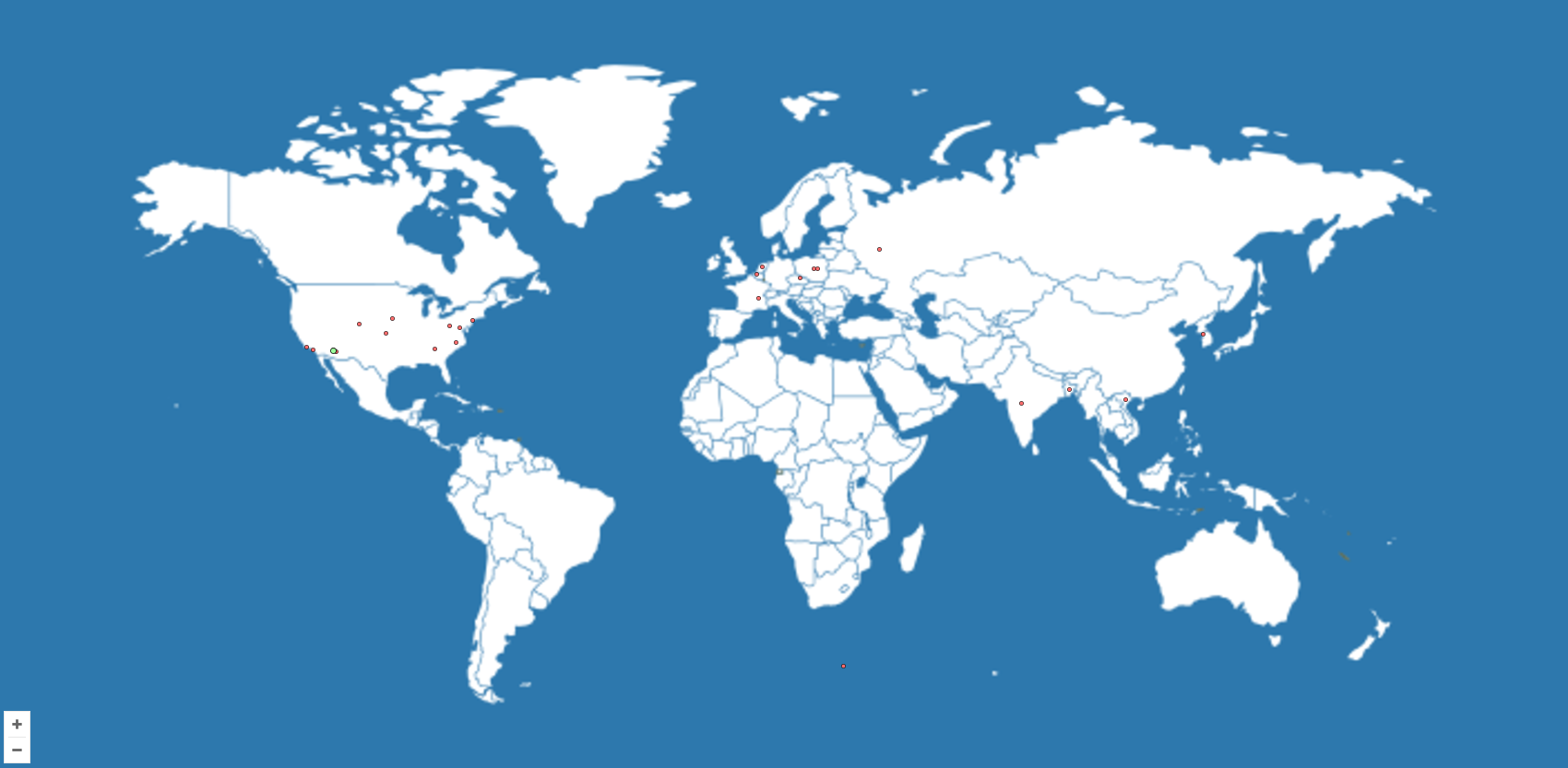
Website Visitors Map
About Greg Loucks
Greg Loucks is a writer, poet, filmmaker, musician, and graphic designer, as well as a creative visionary and faith-driven storyteller working at the intersection of language, meaning, and human connection. Born and raised in Phoenix, Arizona, he has lived in Cincinnati, Ohio; Hot Springs, Arkansas; Williams, Arizona; and Flagstaff, Arizona—each place shaping his perspective, resilience, and creative voice.

Address:
United States of America and Europe
Phone Numbers:
Arizona: (928) 563-GREG (4734)
Tennessee: (615) 899-GREG (4734)
Toll-Free: 888-457-GREG (4734)

Comments