




🖊️ Post


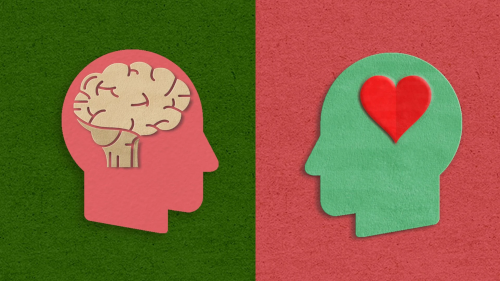
✅ Truth vs. Feeling: Why Modern America Treats Opinions as More Important Than Facts — and Why History and Scripture Warn Us This Never Ends Well
“Buy the truth, and do not sell it; buy wisdom, instruction, and understanding.” — Proverbs 23:23
We are living through something deeper than political polarization, deeper than media bias, and deeper than generational disagreement. What we are witnessing is an epistemological collapse — a breakdown in how people determine what is real, what is true, and what deserves authority.
In today’s America, many people sincerely believe they can disagree with facts themselves, not merely with interpretations. Feelings, lived experience, and personal opinion are often treated not as inputs into understanding reality, but as final authorities that override it. The phrase “my truth” has become socially sacrosanct — even when it directly contradicts evidence, logic, biology, history, or shared experience.
This is not merely a cultural irritation.
It is not just “kids these days.”
It is not confined to one political side.
It is a civilizational fault line.
1. This Is Not New — But It Is Unprecedented in Scale and Structure
Human beings have always struggled with truth.
Ancient empires employed propaganda.
Medieval authorities suppressed inconvenient facts.
Totalitarian regimes in the 20th century perfected mass psychological manipulation.
But something fundamentally different is happening now.
The scale, speed, and personalization of modern information systems have created an environment where millions of parallel realities can coexist simultaneously — each emotionally reinforced, socially rewarded, and algorithmically protected from challenge.
The RAND Corporation’s concept of Truth Decay captures this shift precisely: a measurable decline in the role of facts, evidence, and shared reality in public life. Earlier eras experienced intense disagreement over interpretation. Our era increasingly experiences disagreement over whether facts exist at all.
That distinction is not academic.
It is existential.
A society can survive competing interpretations of reality.
It cannot survive competing realities.
2. Why Facts Lose to Feelings: The Human Mind Was Never Neutral
Modern neuroscience and psychology now confirm what Scripture has declared for thousands of years: human beings are not objective information processors.
“The heart is deceitful above all things, and desperately sick; who can understand it?” — Jeremiah 17:9
This verse is not poetic pessimism.
It is a diagnostic statement.
Human cognition prioritizes:
-
emotional coherence over accuracy
-
identity protection over truth
-
narrative meaning over empirical verification
This made sense in small tribal societies. It is disastrous in complex, technological civilizations.
Cognitive Bias Is Not a Bug — It’s a Feature
Biases such as:
-
confirmation bias
-
motivated reasoning
-
the illusory truth effect
mean that people often evaluate claims based on how those claims make them feel or what they imply about their identity — not whether they correspond to reality.
Scripture anticipated this long before psychology named it:
“There is a way that seems right to a man, but its end is the way to death.” — Proverbs 14:12
What feels right is not the same as what is right.
3. Social Media Didn’t Create the Crisis — It Weaponized It
Social media platforms did not invent human bias.
They industrialized it.
Algorithms are optimized for:
-
engagement
-
retention
-
emotional reaction
They are not optimized for:
-
truth
-
coherence
-
long-term social stability
Content that provokes anger, fear, affirmation, or moral superiority spreads faster than content that carefully explains facts. Over time, popularity becomes a proxy for truth, and emotional resonance replaces verification.
The result is not merely misinformation.
It is epistemic fragmentation.
People do not simply disagree — they inhabit different conceptual universes.
Scripture describes this condition with startling clarity:
“Truth has stumbled in the public squares, and uprightness cannot enter.” — Isaiah 59:14
When truth collapses publicly, justice soon follows it into the ground.
4. Feelings Are Not the Enemy — But They Are Terrible Masters
This must be said clearly and repeatedly:
Truth is not anti-compassion.
Truth is what makes compassion possible.
Modern culture often frames facts as cold and feelings as moral. This is a false and dangerous dichotomy.
The Bible never dismisses emotion:
-
Jesus wept.
-
David cried out in anguish.
-
The Psalms are saturated with grief, joy, anger, longing, and hope.
But Scripture never treats emotion as authoritative.
“Whoever trusts in his own heart is a fool, but he who walks in wisdom will be delivered.” — Proverbs 28:26
Feelings are indicators, not judges.
They tell us that something matters, not what is true.
When feelings become supreme, compassion detaches from reality. At that point:
-
mercy becomes indulgence
-
empathy becomes enablement
-
love becomes affirmation without accountability
This is not kindness. It is abandonment disguised as care.
5. History’s Relentless Warning: When Truth Becomes Optional, Power Takes Over
Here is the historical pattern that repeats without exception:
When truth collapses, power fills the vacuum.
When facts can no longer arbitrate disputes, the winners are not the wise — they are the loud, the manipulative, and the coercive.
Throughout history:
-
Regimes did not begin by banning facts — they relativized them.
-
Propaganda did not replace truth overnight — it buried it under emotion.
-
Atroccity was rarely justified with logic — it was justified with feelings, fear, and identity.
Once shared reality disappears, persuasion gives way to force.
The Bible names this danger explicitly:
**“For the time is coming when people will not endure sound teaching, but having itching ears they will accumulate for themselves teachers to suit their own (2 Timothy 4:3-4)
6. The Compassion Trap: How Truth Came to Be Seen as Cruel
One of the most effective cultural sleights of hand in the modern era is the idea that truth and compassion are opposites.
In contemporary discourse:
Facts are framed as cold
Evidence is framed as harmful
Disagreement is framed as violence
Correction is framed as oppression
This framing did not arise organically. It emerged from a slow cultural shift in which emotional safety became the highest moral good, eclipsing truth, responsibility, and accountability.
But Scripture draws a very different picture.
“Faithful are the wounds of a friend; profuse are the kisses of an enemy.” — Proverbs 27:6
Here, the Bible teaches that truth can wound, and that this is not cruelty — it is fidelity. By contrast, affirmation without truth is portrayed as deceitful, even predatory.
The modern insistence that truth must never cause discomfort misunderstands both truth and compassion. Real compassion aims at healing, not merely soothing. And healing often requires diagnosis — which means naming what is, not what feels pleasant.
“Speak the truth in love.” — Ephesians 4:15
This verse is often quoted but rarely obeyed in full.
Love without truth becomes indulgence.
Truth without love becomes brutality.Scripture demands both — not as rivals, but as partners.
7. Predictable Objections — and Why They Fail
Any serious defense of truth in a post-truth culture will encounter the same objections. It’s important to address them directly, not dismissively.
Objection 1: “All truth is relative.”
This claim collapses under its own weight.
If all truth is relative, then that statement itself must also be relative — and therefore not universally binding.Biblically, truth is grounded not in human perspective but in God’s nature:
“God is not a man, that he should lie.” — Numbers 23:19
Reality does not bend to perception. Perception bends to reality — or breaks.
Objection 2: “Facts are just tools of power.”
It is true that facts can be abused.
It is not true that facts are abuse.The solution to corrupted truth is not abandoning truth, but recovering it. When facts are discarded, power does not disappear — it becomes unchecked.
Scripture warns against exactly this inversion:
“Woe to those who call evil good and good evil, who put darkness for light and light for darkness.” — Isaiah 5:20
When truth is reduced to power dynamics, the strongest narrative wins — not the truest one.
Objection 3: “Lived experience matters more than data.”
Lived experience matters — but it does not interpret itself.
Experience is evidence, not conclusion. Without a truthful framework, experience can be misunderstood, misdirected, or weaponized.
The Bible consistently submits experience to discernment:
“Test the spirits to see whether they are from God.” — 1 John 4:1
Testing implies standards. Standards imply truth.
8. Historical Case Studies: When Feeling Replaced Fact
History does not need to be mined selectively to make this point — the pattern is universal.
A. Propaganda and Emotional Narrative
Totalitarian movements did not convince populations through spreadsheets and peer-reviewed studies. They mobilized:
grievance
fear
humiliation
identity
Facts were not debated — they were drowned.
Once emotion replaced verification, dissent became treason and questioning became betrayal.
B. Moral Panics and Mass Delusion
Societies periodically enter moments where emotional contagion overrides reason:
accusations multiply
skepticism disappears
evidence becomes irrelevant
In every case, the inability to appeal to shared facts leads to injustice — not enlightenment.
Scripture captures this dynamic soberly:
“The simple believes everything, but the prudent gives thought to his steps.” — Proverbs 14:15
9. Why This Crisis Is Also Spiritual
The decay of truth is not only cultural or psychological.
It is spiritual.Jesus tied deception directly to spiritual rebellion:
“Everyone who is of the truth listens to my voice.” — John 18:37
To reject truth is not merely to make an intellectual error — it is to reject an ordering principle of reality itself.
Scripture portrays deception not as neutral confusion, but as captivity:
“They exchanged the truth about God for a lie.” — Romans 1:25
This exchange always comes at a cost — personally and collectively.
10. What an Individual Can Do in a Truth-Decaying World
Large cultural trends feel overwhelming, but Scripture never leaves responsibility at the abstract level.
1. Cultivate Intellectual Humility
Admit fallibility without surrendering conviction.
“If any of you lacks wisdom, let him ask God.” — James 1:5
2. Learn to Distinguish Emotion from Evidence
Feelings are signals.
Truth is structure.
Wisdom learns to listen to both — in the right order.3. Refuse to Share What You Cannot Verify
Truth dies not only through lies, but through carelessness.
“Let every person be quick to hear, slow to speak.” — James 1:19
4. Speak Carefully — But Do Not Stay Silent
Silence in the face of falsehood is not neutrality.
“Whoever knows the right thing to do and fails to do it, for him it is sin.” — James 4:17
5. Anchor Yourself in What Does Not Move
Truth rooted in God does not fluctuate with outrage cycles.
“The grass withers, the flower fades, but the word of our God will stand forever.” — Isaiah 40:8
11. Final Warning — and Final Hope
Civilizations do not collapse only from external threats.
They collapse when they lose the ability to tell the truth about themselves.When feelings replace facts:
justice erodes
trust collapses
power concentrates
reality fractures
But truth is resilient.
It does not need to be reinvented — only recovered.Jesus did not promise comfort.
He promised freedom.“You will know the truth, and the truth will set you free.” — John 8:32
Freedom begins when reality is faced — not reimagined.
Preface: Why This Essay Exists
This is not written to persuade everyone.
It is written because a society that cannot agree on what is true cannot remain free, just, or humane — no matter how sincere its intentions.
The following pages do not argue that feelings are fake, that compassion is weakness, or that disagreement is immoral. They argue something more uncomfortable: that truth is prior to all of those things, and when truth is dethroned, everything built on top of it begins to warp.
This is not an attack on people.
It is a warning about patterns.
It is not a call to domination.
It is a call to clarity.Readers should not expect comfort. They should expect coherence.
12. How This Essay Will Be Misread — and Why That Matters
In a culture shaped by emotional primacy, arguments about truth are often distorted before they are even encountered. This section exists to remove common misinterpretations before they take root.
Misreading 1: “This is anti-emotion.”
It is not.
Emotions are acknowledged throughout as real, meaningful, and powerful. What is rejected is emotional sovereignty — the belief that feeling determines reality.
Scripture never condemns emotion; it consistently condemns misplaced authority.
“Why are you cast down, O my soul? … Hope in God.” — Psalm 42:5
The emotion is real.
The emotion is not in charge.
Misreading 2: “This is about winning arguments.”
It is not.
A culture obsessed with winning arguments has already lost the truth. This essay is about shared ground, not rhetorical dominance.
When facts disappear, persuasion gives way to coercion. No one truly wins in that environment — they merely survive until power shifts.
Misreading 3: “This is nostalgia for a perfect past.”
It is not.
No historical era handled truth perfectly. But many recognized that truth existed independently of preference, and that acknowledgment alone restrained excess.
The argument here is not for returning to a moment in time, but for returning to a principle.
13. Why Neutrality Is No Longer Possible
In a functioning society, neutrality toward truth is conceivable. In a truth-fragmented society, it is not.
When facts are negotiable:
silence favors the loudest voice
hesitation empowers manipulation
restraint benefits those willing to exploit it
This is why Scripture treats truth as an active responsibility, not a passive posture:
“Have nothing to do with the fruitless deeds of darkness, but rather expose them.” — Ephesians 5:11
Exposure is not cruelty.
It is prevention.
14. The Difference Between Conviction and Contempt
One of the great moral confusions of the present moment is the belief that strong conviction is identical to hatred.
Scripture rejects this equation.
Jesus spoke with uncompromising clarity while displaying unmatched compassion. The problem is not firmness; the problem is pride.
“If I speak in the tongues of men and of angels, but have not love, I am a noisy gong.” — 1 Corinthians 13:1
Truth spoken without love corrodes the speaker.
Love spoken without truth deceives the hearer.The essay you are reading attempts neither.
15. A Structural Summary (For Readers Who Need Orientation)
This work advances a single, coherent claim:
Truth is objective and prior to feeling
Modern culture increasingly treats emotion as authoritative
This shift erodes shared reality
When shared reality collapses, power replaces persuasion
History confirms this pattern repeatedly
Scripture explains why this pattern is spiritually dangerous
Individuals still retain moral agency within cultural decay
Recovery begins with truth, not outrage
If any one of these steps is removed, the argument weakens. Together, they form a single diagnostic arc.
16. Final Conclusion: The Choice Before Us
Every generation inherits the same decision, though it dresses itself in new language:
Will reality be discovered — or declared?
Will truth be received — or negotiated?
Will feelings inform wisdom — or replace it?Scripture frames the choice plainly:
“See, I have set before you today life and good, death and evil.” — Deuteronomy 30:15
A culture that elevates feeling above fact does not become more humane. It becomes more unstable. And instability always invites control.
Truth does not promise safety.
It promises orientation.And orientation is what allows a society — and a soul — to remain free even in turbulent times.
17. Publication Note (Optional but Intentional)
This piece is designed to be:
read slowly
shared selectively
returned to over time
It is not optimized for outrage cycles or viral consumption. Its value lies in durability, not immediacy.
Truth rarely trends.
But it endures.
Final Word (Author to Reader)
If this essay unsettles you, pause — not to dismiss it, but to examine why.
Discomfort is not always a warning sign.
Sometimes it is the sensation of reality pressing back.“Let God be true though every one were a liar.” — Romans 3:4
18. Beyond America: This Is a Human Pattern, Not a National Flaw
Although this essay has focused on modern America, the phenomenon it describes is not uniquely American. It is human.
Cultures across geography and time demonstrate the same progression when subjective feeling overtakes objective truth. Limiting this diagnosis to one nation would itself be a failure of truth.
A. Revolutionary France: Emotion as Moral Authority
During the French Revolution, appeals to reason were publicly celebrated — but in practice, emotion and ideological purity became the real arbiters.
Fear of being labeled an enemy of the people replaced evidence.
Accusation became proof.
Moral outrage justified execution.
The guillotine did not fall because facts disappeared entirely — it fell because facts no longer mattered once a feeling-aligned narrative took hold.
This is the danger of moral certainty unrestrained by truth: it becomes self-justifying.
Scripture warned of this long before 1789:
“The one who states his case first seems right, until the other comes and examines him.” — Proverbs 18:17
When examination is no longer permitted, injustice accelerates.
B. Maoist China: Lived Experience as Ideological Weapon
During the Cultural Revolution, personal testimony replaced objective reality.
“Correct” feelings toward the Party mattered more than observable facts.
Revision of history became a moral duty.
Public confession of incorrect thoughts was treated as moral cleansing.
The result was not liberation but mass trauma.
This illustrates a recurring truth: when feelings are treated as proof, dissent becomes heresy.
“They have healed the wound of my people lightly, saying, ‘Peace, peace,’ when there is no peace.” — Jeremiah 6:14
C. The Soviet Union: Reality by Declaration
In the USSR, science itself bent under ideological pressure.
Genetics was rewritten to match political doctrine.
Agricultural reality was ignored in favor of ideological optimism.
Millions starved while official narratives declared success.
The state did not deny that reality existed — it claimed authority to redefine it.
This is what happens when truth is subordinated to power.
“A lying tongue hates its victims, and a flattering mouth works ruin.” — Proverbs 26:28
19. Why Education Alone Cannot Fix This
A common response to epistemological collapse is to call for “better education.” While education matters, history shows it is insufficient on its own.
Highly educated societies have embraced mass delusions before.
Intelligence does not immunize against self-deception.
In some cases, it merely rationalizes it more elegantly.Scripture explains why:
“Claiming to be wise, they became fools.” — Romans 1:22
Knowledge without moral orientation does not produce wisdom. It produces sophistication in error.
Truth requires not only information, but submission to reality — something no credential can guarantee.
20. The Psychological Cost of Living Without Truth
A rarely discussed consequence of truth relativism is psychological fragmentation.
When reality is negotiable:
anxiety increases
identity becomes fragile
social trust collapses
meaning becomes unstable
Humans are not built to create reality ex nihilo. We are built to inhabit one.
The Bible frames this not merely as confusion, but as exhaustion:
“They are weary of following worthless pursuits.” — Jeremiah 2:5
A world without truth does not feel freeing for long. It feels disorienting — then oppressive.
21. Why This Moment Feels Different (Even Though It Isn’t New)
This cultural shift feels unprecedented because of three converging forces:
Technological Amplification
Emotion spreads faster than reason at digital scale.Moral Inversion
Questioning feelings is framed as cruelty, while rejecting facts is framed as authenticity.Institutional Abdication
Many institutions once tasked with truth-keeping now mirror public emotion instead of correcting it.When all three align, correction becomes nearly impossible from within the system.
“If the foundations are destroyed, what can the righteous do?” — Psalm 11:3
22. What This Essay Is Ultimately Defending
This essay is not defending tradition for its own sake.
It is not defending religion as a tribal identity.
It is not defending authority as such.It is defending the possibility of correction.
A society that believes truth exists can repent.
A society that believes truth is negotiable cannot — because repentance requires a standard.“Who can discern his errors? Declare me innocent from hidden faults.” — Psalm 19:12
Only truth reveals what needs correcting.
23. Why Scripture Refuses to Separate Truth from Freedom
Modern culture often treats truth as restrictive and freedom as expressive.
Scripture reverses this entirely.
“I will walk about in freedom, for I have sought out your precepts.” — Psalm 119:45
Freedom does not come from inventing reality.
It comes from aligning with it.A train is not free because it can leave the tracks.
It is free because it moves powerfully on them.
24. A Final Historical Observation
Civilizations rarely announce their collapse.
They explain it away.They rename confusion as progress.
They rename indulgence as compassion.
They rename denial as courage.But reality remains unmoved.
“Do not be deceived: God is not mocked, for whatever one sows, that will he also reap.” — Galatians 6:7
Truth has a long memory.
History records the bill when it comes due.
25. Closing Addendum: Why This Still Leaves Room for Hope
The endurance of truth is precisely why hope remains.
Truth does not require majority approval.
It does not require constant defense.
It does not expire when ignored.It waits.
And when cultures exhaust their experiments with self-created reality, truth remains what it always was: the only stable ground left to stand on.
“The sum of your word is truth, and every one of your righteous rules endures forever.” — Psalm 119:160
Related Articles
Similar Tags
Search
Subscribe
Donate


Your Statistics
For the care and safety of this prayer space, we gently record the time and location of each visit. This helps us protect sincerity while preserving anonymity.
Your Date and Time
IP Addres:
216.73.216.29
System
- OS Linux n
- PHP 8.3.30
- MySQLi 10.6.25-MariaDB-log
- Time 23:09
- Caching Disabled
- Gzip Disabled
- Users 10
- Articles 315
- Articles View Hits 6450
Website Visitors Map

About Greg Loucks
Greg Loucks is a writer, poet, filmmaker, musician, and graphic designer, as well as a creative visionary and faith-driven storyteller working at the intersection of language, meaning, and human connection. Born and raised in Phoenix, Arizona, he has lived in Cincinnati, Ohio; Hot Springs, Arkansas; Williams, Arizona; and Flagstaff, Arizona—each place shaping his perspective, resilience, and creative voice.

Address:
United States of America and Europe
Phone Numbers:
Arizona: (928) 563-GREG (4734)
Tennessee: (615) 899-GREG (4734)
Toll-Free: 888-457-GREG (4734)

Terms & Conditions
Subscribe
Report
My comments