







Post
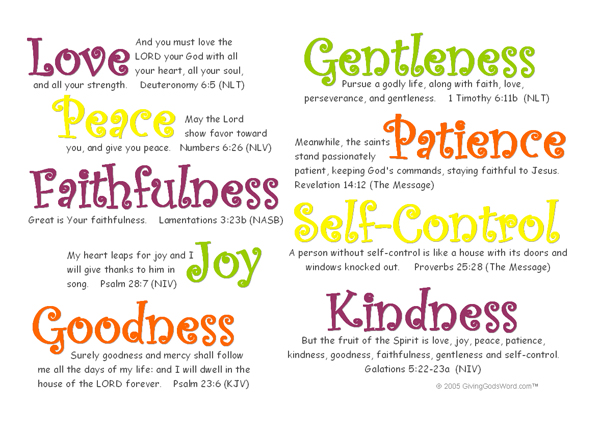
The Fruit of the Spirit: How God Measures Spiritual Maturity
One of the most misunderstood ideas in modern Christianity is how God measures spiritual growth. Many believers equate maturity with gifting, visibility, influence, or spiritual experiences. Scripture does not.
The Bible’s clearest metric for spiritual maturity is found in Galatians 5:22–23 — the Fruit of the Spirit.
“But the fruit of the Spirit is love, joy, peace, patience, kindness, goodness, faithfulness, gentleness, and self-control. Against such things there is no law.”
Fruit is not about what we do for God.
Fruit is about what the Spirit produces in us.
Fruit vs. Gifts: Power Is Not Proof of Maturity
Spiritual gifts are given freely by grace. Fruit is formed slowly through obedience.
Jesus made this distinction unmistakably clear:
“You will know them by their fruits.” (Matthew 7:16)
He did not say, “You will know them by their gifts.”
A person can:
-
Prophesy
-
Heal
-
Teach powerfully
-
Operate in miracles
…while still lacking Christlike character.
Fruit reveals who we are when:
-
No one is watching
-
We are offended
-
We are corrected
-
We are disappointed
-
We do not get our way
Why Paul Calls It “Fruit,” Not “Fruits”
Paul uses the singular word fruit, not fruits, because these qualities are one unified work of the Spirit, not separate virtues we pick and choose.
You don’t grow patience without love.
You don’t grow joy without peace.
You don’t grow self-control without faithfulness.
They mature together.
The Nine Expressions of the Fruit of the Spirit
1. Love — The Root of All Fruit
Biblical love (agape) is not emotional affection; it is self-giving commitment.
“God demonstrates His own love toward us in that while we were still sinners, Christ died for us.” (Romans 5:8)
Love is the soil from which all other fruit grows. Without love, everything else becomes performance.
2. Joy — Stability Beyond Circumstances
Joy is not happiness.
Joy is spiritual stability that comes from knowing God is present, faithful, and sovereign.
“The joy of the Lord is your strength.” (Nehemiah 8:10)
Joy remains even when circumstances do not improve.
3. Peace — Inner Order Under God’s Authority
Peace (shalom) is not the absence of conflict — it is alignment.
“And the peace of God, which surpasses all understanding, will guard your hearts and minds through Christ Jesus.” (Philippians 4:7)
Peace is evidence that the soul is surrendered.
4. Patience — Strength Under Pressure
Biblical patience is endurance, not passivity.
“Let patience have its perfect work.” (James 1:4)
Patience proves whether faith is shallow or rooted.
5. Kindness — The Visible Expression of Love
Kindness reflects God’s posture toward humanity.
“It is the kindness of God that leads you to repentance.” (Romans 2:4)
True kindness does not compromise truth — it delivers truth gently.
6. Goodness — Moral Integrity in Action
Goodness speaks to righteousness, purity, and moral clarity.
“Do not be overcome by evil, but overcome evil with good.” (Romans 12:21)
Goodness resists cultural drift and moral confusion.
7. Faithfulness — Reliability Over Time
Faithfulness is consistency — staying obedient when enthusiasm fades.
“Moreover it is required in stewards that one be found faithful.” (1 Corinthians 4:2)
Faithfulness reflects trustworthiness to God and others.
8. Gentleness — Power Under Control
Gentleness is not weakness.
It is restrained strength modeled after Christ.
“Take My yoke upon you and learn from Me, for I am gentle and lowly in heart.” (Matthew 11:29)
Gentleness protects truth without crushing people.
9. Self-Control — Mastery of the Inner Life
Self-control governs desires, reactions, speech, and impulses.
“Like a city broken down without walls is a man who lacks self-control.” (Proverbs 25:28)
Spiritual power without self-control is dangerous.
Fruit Is Grown, Not Forced
Fruit does not grow through striving.
Jesus said:
“Abide in Me… he who abides in Me bears much fruit.” (John 15:5)
Fruit grows naturally when:
-
We remain in Christ
-
We obey His word
-
We submit to correction
-
We allow pruning
Pruning is uncomfortable — but it is always purposeful.
Fruit as the Measure of True Spiritual Authority
In a culture obsessed with influence, visibility, and platforms, fruit quietly exposes reality.
Fruit determines:
-
Whether leadership is trustworthy
-
Whether gifts are safe
-
Whether authority is Christlike
Without fruit, gifting becomes noise.
Closing Reflection
The Fruit of the Spirit is not a checklist — it is a portrait of Jesus formed in us over time.
Gifts may impress people.
Fruit transforms lives.
And in the end, it is fruit — not fame, not gifting, not influence — that reveals whether Christ truly reigns within us.
Related Articles
Search
Subscribe
Donate


Your Statistics
For the care and safety of this prayer space, we gently record the time and location of each visit. This helps us protect sincerity while preserving anonymity.
Your Date and Time
IP Addres:
216.73.216.142
System
- OS Linux n
- PHP 8.4.17
- MySQLi 10.6.25-MariaDB-log
- Time 22:02
- Caching Disabled
- Gzip Disabled
- Users 4
- Articles 35
- Articles View Hits 1653
Website Visitors Map

About Greg Loucks
Greg Loucks is a writer, poet, filmmaker, musician, and graphic designer, as well as a creative visionary and faith-driven storyteller working at the intersection of language, meaning, and human connection. Born and raised in Phoenix, Arizona, he has lived in Cincinnati, Ohio; Hot Springs, Arkansas; Williams, Arizona; and Flagstaff, Arizona—each place shaping his perspective, resilience, and creative voice.

Address:
United States of America and Europe
Phone Numbers:
Arizona: (928) 563-GREG (4734)
Tennessee: (615) 899-GREG (4734)
Toll-Free: 888-457-GREG (4734)

Comments