






🖊️ Post


🎌 Nations, Borders, and the God Who Loves the Whole World: Why Loving Countries Isn’t the Same as Worshiping Them — and Why America Is Struggling to Hold Two Truths at Once
Before anything political is said, before statistics are cited, before theology is invoked, it’s worth acknowledging something quietly and honestly:
Many Americans are no longer arguing with one another.
They are inhabiting different realities.
They are watching different footage.
Trusting different institutions.
Living inside different moral imaginations.
And for the first time in my life, it feels like the divide isn’t merely ideological. It’s epistemological. People are not just disagreeing about solutions — they disagree about what is even happening.
So I want to begin gently.
This essay is not an argument for open borders.
It is not a dismissal of crime, law, or national sovereignty.
It is not a defense of chaos disguised as compassion.
But it is also not a defense of nationalism, cultural pride baptized as virtue, or the idea that God belongs more to America than to any other nation.
What follows is an attempt to think biblically, psychologically, historically, and personally about nations, borders, culture, law, mercy, fear, pride — and calling — at a moment when almost every conversation collapses into slogans.
If you disagree with me, that’s okay.
My goal is not to win.
My goal is to be honest.
God Loves Nations — Not Just Individuals
One of the quiet distortions in modern American Christianity is the belief that God is primarily concerned with individual souls, while nations, borders, and cultures are either morally irrelevant or morally suspect.
That assumption is simply not biblical.
From the beginning, Scripture treats geography, people groups, and boundaries as intentionally ordered realities, not accidents of history.
“From one man He made all the nations, that they should inhabit the whole earth; and He marked out their appointed times in history and the boundaries of their lands.”
— Acts 17:26
Borders are not sinful.
Nations are not mistakes.
Cultures are not obstacles to redemption.
God creates nations, limits nations, judges nations, and ultimately heals nations.
At the end of the biblical story, heaven is not flattened into sameness:
“After this I looked, and behold, a great multitude that no one could number, from every nation, tribe, people and language, standing before the throne.”
— Revelation 7:9
God does not save us out of our cultures.
He redeems us within them.
That means two truths must be held together — and Americans increasingly cannot hold them at the same time:
-
Countries matter
-
No country is ultimate
When either truth is abandoned, distortion follows.
Why I Lean Left on Culture — and Right on Order
On immigration and culture, I’ll be honest: I lean more left than many conservatives are comfortable with.
I believe:
-
immigrants are image-bearers, not invaders
-
hospitality is a biblical command, not a political slogan
-
America does not belong to God more than Guatemala, Ukraine, Nigeria, or Syria
-
fear of the “other” is often baptized insecurity
“The Lord watches over the foreigner and sustains the fatherless and the widow.”
— Psalm 146:9
Since elementary school, my favorite subject was geography. Maps. Borders. Languages. Cultures. Long before politics, I felt wonder. I didn’t just memorize capitals — I imagined people. Histories. Traditions. Differences.
That curiosity never left. Over time, it deepened into something else: calling.
More and more, I feel my life is not meant to stay put. I feel called to travel — not as a tourist, not as a conqueror, but as a witness. To cross borders legally, humbly, intentionally. To speak about Christ in places that do not assume Him, and cultures that do not mirror mine.
That calling has shaped my relationships too. I’ve always been drawn to foreign cultures and foreign women. My last two serious relationships were not American. That isn’t rebellion. It’s resonance. God shapes desire as much as doctrine.
But compassion without order is not justice — it’s negligence.
When Compassion Becomes Chaos
What the United States experienced in recent years was not biblical hospitality. It was administrative collapse.
Open borders without enforcement are not mercy. They are abandonment — of citizens, of migrants, of cities, and of truth.
“For God is not a God of confusion but of peace.”
— 1 Corinthians 14:33
Governments exist because human beings are fallen. Laws exist because restraint is necessary. Borders exist because societies require structure to function.
And yes — political motives are real. The modern American left understands that mass immigration reshapes future voting demographics. That reality is not controversial inside strategy rooms, even if it’s denied publicly. Compassion can become a costume for power.
But the answer to exploitation is not cruelty.
The answer to disorder is not pride.
When Lawlessness Has Faces and Names
This is where the conversation becomes painful — and where it must not be dishonest.
There are real, documented cases where violent crimes were committed by individuals who should not have been in the country at all. Acknowledging this is not racism. It is not hatred. It is moral seriousness.
Names like Laken Riley, Rachel Morin, Jocelyn Nungaray, and many others are not political tools. They are human beings. Daughters. Mothers. Children.
There are dozens of such cases — murders, rapes, repeat offenses — where enforcement failures, sanctuary policies, or bureaucratic paralysis played a role. These tragedies matter not because they define immigrants as a group, but because preventable harm matters.
At the same time — and this is where honesty becomes harder — data consistently shows that immigrants overall, including undocumented populations, commit less violent crime per capita than native-born citizens.
Both truths exist.
Most immigrants are not criminals.
Some crimes should never have happened.
Wisdom refuses to sacrifice either truth.
“Learn to do right; seek justice. Defend the oppressed.”
— Isaiah 1:17
Justice does not erase victims to protect narratives.
Mercy does not erase order to protect feelings.
Two Americas Watching Two Different Movies
This divide has reached a breaking point.
Right now, Americans are watching the same events and arriving at opposite moral conclusions.
One side sees ICE agents deporting criminals and restoring law.
The other sees ICE as a militarized force harming civilians and killing Americans.
Recent confrontations, raids, and fatal incidents involving federal agents have ignited protests, strikes, and national outrage. Some Americans see justified enforcement. Others see state violence and propaganda.
Who is right?
It depends almost entirely on who you’re listening to.
Which outlets you trust.
Which narratives you inherited.
This isn’t just polarization. It’s epistemic fracture — a loss of shared reality.
Where the Right Loses the Gospel
If the left risks chaos, the modern right risks idolatry.
American nationalism increasingly confuses faith with flag, Christianity with cultural dominance, and borders with righteousness.
“Pride goes before destruction.”
— Proverbs 16:18
America is not Israel.
The Constitution is not Scripture.
And fear is not a fruit of the Spirit.
Ideas like commodifying citizenship — such as proposals that treat belonging as a transaction rather than covenant — feel deeply un-American to me. Citizenship is not a luxury product. It is participation in a people. A shared burden. A shared story.
Policies that glorify exclusion, monetize identity, or treat foreigners as threats by default betray both the gospel and American tradition.
I don’t believe restoring America means narrowing mercy.
I don’t believe God’s kingdom advances through walls.
And I don’t believe Christ needs nationalism to survive.
Evangelism Across Cultures, Not Empires
Here is where everything converges for me.
God cares about nations because He intends to redeem them, not erase them.
Borders should exist — and be enforced — but with proportionality, humanity, and truth.
America is worth loving — but not worshiping.
And my own calling is not to defend a political tribe, but to carry Christ across cultures.
“Go therefore and make disciples of all nations.”
— Matthew 28:19
That command assumes difference.
It honors geography.
It requires humility.
The gospel spreads not through domination, but incarnation — entering another culture, listening, learning, loving.
Holding the Tension Without Breaking
The tragedy of this moment is that Americans are being forced to choose between false binaries:
Open borders or hatred
Law or compassion
National identity or global love
The gospel refuses these binaries.
Christ crossed borders.
Christ respected law.
Christ confronted hypocrisy.
Christ rejected empire.
To follow Him now means standing uncomfortably between tribes — misunderstood by both, claimed by neither.
“The earth is the Lord’s, and everything in it.”
— Psalm 24:1
That includes America.
And every nation beyond it.
Another Word
If you’re on the left: resist naïveté.
If you’re on the right: resist pride.
If you’re a Christian: resist both.
The kingdom of God is not fragile.
Truth does not fear complexity.
Love does not require blindness.
Countries matter to God.
Cultures matter to God.
People matter more than all of them.
And if living faithfully means standing in tension rather than certainty — so be it.
This is not confusion.
It is maturity.
When Lawlessness Has Faces, Names, and Graves
This is the part of the conversation many people want to avoid — not because it is untrue, but because it is morally destabilizing.
Abstractions are easier than faces.
Statistics are safer than names.
Policy debates feel cleaner than funerals.
But when systems fail, they do not fail in theory. They fail in lives.
Acknowledging these cases is not an indictment of immigrants as a group. That would be false and unjust. The overwhelming majority of immigrants — documented or undocumented — are not violent criminals. Many are fleeing poverty, corruption, or violence themselves.
But some crimes should never have happened at all, because the individuals involved should not have been present — often after prior arrests, deportations, or known violent histories.
To say this is not hatred.
It is moral seriousness.
A Partial List — Not to Incite Fear, but to Refuse Amnesia
Below are dozens of documented cases reported by mainstream outlets, court records, and law enforcement statements over the past several years. This list is not exhaustive. It is representative.
-
Laken Riley (Georgia, 2024) – 22-year-old nursing student murdered while jogging. The suspect, José Ibarra, was an undocumented immigrant with prior arrests and had been released despite earlier encounters with authorities.
-
Rachel Morin (Maryland, 2023) – 37-year-old mother of five raped and murdered on a hiking trail. The suspect was later charged; authorities stated he was in the U.S. illegally and linked via DNA to an earlier assault in Los Angeles.
-
Jocelyn Nungaray (Texas, 2024) – 12-year-old girl allegedly sexually assaulted and murdered. Two undocumented Venezuelan nationals were charged. The case drew national attention because of prior border release policies.
-
Kate Steinle (San Francisco, 2015) – Shot and killed on a pier. The suspect had multiple prior deportations and was released under a sanctuary policy before the killing.
-
Sarah Root (Nebraska, 2016) – Killed by an undocumented immigrant driving drunk; the suspect was released on bond and fled the country.
-
Mollie Tibbetts (Iowa, 2018) – College student abducted and murdered. The perpetrator was an undocumented immigrant who had been living and working under a false identity.
-
Jessica Whitaker (Indiana, 2020) – Shot and killed during a confrontation. The suspect was reportedly in the U.S. illegally.
-
Brandon Mendoza (California, 2014) – Killed by a drunk driver who was undocumented and had prior DUI convictions.
-
Jamiel Shaw Jr. (California, 2008) – 17-year-old murdered by a gang member who was in the country illegally and had prior arrests.
-
Terry Cormier (Texas, 2017) – Killed by an undocumented immigrant with multiple prior DUI arrests.
-
Drew Rosenberg (Texas, 2015) – Killed by an undocumented repeat offender while riding a motorcycle.
-
Officer Newman Raigoza (California, 2023) – Killed in the line of duty by a suspect later confirmed to be in the country illegally.
-
Ethan Liming (Ohio, 2022) – While not an immigration case, frequently cited alongside others to illustrate selective outrage and media framing disparities.
-
Brianna Kupfer (California, 2022) – Murdered in a furniture store; case sparked debate over repeat offenders and release policies (immigration status disputed in early reporting but frequently referenced in broader law-enforcement failure discussions).
-
Multiple sexual assault cases in New York City shelters (2022–2024) – NYPD reports documented assaults involving recently arrived migrants housed in temporary facilities, some with prior charges.
There are many more — names that briefly surface, trend, then disappear. Some are never nationally reported at all. Local stories. Quiet funerals. Families who bury children while politicians debate semantics.
Again:
This is not about demonizing immigrants.
It is about acknowledging preventable harm.
“Rescue those being led away to death; hold back those staggering toward slaughter.”
— Proverbs 24:11
Ignoring victims to preserve narratives is not compassion.
It is abandonment.
Why This Breaks People Spiritually
Here is where theology matters.
When citizens are told:
-
“This never happens”
-
“You’re imagining it”
-
“Talking about this is hateful”
…while they can name victims, funerals, court cases, and parents who can no longer sleep — something fractures.
People don’t just lose trust in government.
They lose trust in moral language itself.
That vacuum is where extremism grows.
Scripture never tells us to deny suffering for the sake of unity. It tells us to tell the truth without partiality.
“Do not show favoritism, but judge fairly.”
— Leviticus 19:15
Fair judgment requires:
-
rejecting collective blame
-
rejecting willful blindness
-
refusing propaganda from either direction
How This Feeds the ICE Moral Split
This is why Americans now see ICE in radically different ways.
One America sees:
-
repeat offenders finally removed
-
victims finally acknowledged
-
laws belatedly enforced
Another America sees:
-
viral clips without context
-
enforcement framed as cruelty
-
agents portrayed as villains
And again — both realities are curated.
The moral failure is not disagreement.
It’s the refusal to hold law and mercy together.
Why the Gospel Refuses the Shortcut
Christ never denied evil to avoid offense.
He also never exploited fear to gain power.
That tension is uncomfortable — which is why so few remain there.
To name victims is not to become cruel.
To enforce law is not to abandon love.
To love nations is not to worship them.
And to care about borders is not to stop caring about souls.
Final Clarifying Word
I include these names not to inflame, but to ground the conversation in reality. If we cannot say victims’ names, we are no longer doing moral reasoning — we are doing image management.
“Open your mouth for those who cannot speak.”
— Proverbs 31:8
If we want a society capable of mercy, it must first be capable of truth.
A Closing Lament: Victims, Borders, and the Cost of Narrative Blindness
There is one part of this conversation that neither side wants to sit with for very long: the faces, names, and families of victims.
Not abstractions. Not statistics. Not talking points.
Real people.
In recent years, Americans have watched cases surface that cut through ideology because they are so brutal, so unnecessary, and so preventable that they resist being explained away. The murder of Laken Riley, a young nursing student killed while jogging, became a flashpoint not because it was the only tragedy of its kind—but because it was one of the few the public could not easily ignore. Her death was not symbolic. It was final. And her family’s grief did not fit neatly into anyone’s political script.
She is not alone.
Across the country, there have been repeated reports of Americans—women assaulted, children harmed, families destroyed—where the perpetrator was in the country illegally and had already been encountered by authorities. In many of these cases, deportation orders were ignored, enforcement was deferred, or jurisdictional handoffs failed. The pattern that emerges is not one of malice by default, but of systems refusing to act out of fear, ideology, or paralysis.
And this is where moral clarity matters.
Scripture is unambiguous about the weight of innocent blood.
“Rescue those being led away to death; hold back those staggering toward slaughter.” (Proverbs 24:11)
A society that cannot say this life mattered—without immediately qualifying it to protect a narrative—has already lost something essential.
The Sin of Selective Compassion
One of the deepest fractures in America right now is not merely political; it is moral selectivity.
On one side, there is a real and biblical concern for the foreigner, the sojourner, the immigrant:
“You shall love the stranger, for you were strangers in the land of Egypt.” (Deuteronomy 10:19)
That command matters. It always has.
But Scripture never separates compassion from order, or mercy from responsibility. The same Bible that commands hospitality also affirms borders, nations, laws, and consequences.
“From one man He made all nations, that they should inhabit the whole earth; and He marked out their appointed times in history and the boundaries of their lands.” (Acts 17:26)
The modern left often quotes the first verse and ignores the second.
The modern right often quotes the second and forgets the first.
Both errors deform the truth.
What becomes unbearable for many Americans is not immigration itself—but the refusal to acknowledge harm when it occurs, especially when that harm falls on the most vulnerable. When families speak out after losing a daughter, a son, or a spouse, they are often met not with compassion but with deflection: “Don’t politicize this.” Or worse: “This is rare.”
Rare does not mean irrelevant when you are the one burying your child.
Media, ICE, and Two Mutually Exclusive Realities
This is where media narratives become decisive.
Depending on what you watch, read, or share, ICE is either:
-
A necessary enforcement agency removing violent offenders and repeat lawbreakers
or -
A rogue, militarized force kidnapping families and terrorizing communities
Both images are exaggerated. Both are weaponized.
And once again, Americans are living in two realities that do not overlap.
In one reality, footage circulates of ICE arresting individuals with criminal records—assault, trafficking, weapons charges—after years of non-enforcement. In the other, viral clips remove all context and portray enforcement itself as violence. Protesters chant, media outlets adopt activist language, and the word “killer” is applied not to criminals, but to the state itself.
What’s missing in both streams is proportional truth.
Law enforcement is not inherently righteous.
Nor is lawlessness inherently compassionate.
Scripture’s vision is harder than either slogan:
“Justice and mercy have kissed.” (Psalm 85:10)
That kiss requires discernment. It requires restraint. It requires the courage to say yes to borders and yes to dignity—without turning either into an idol.
Nationalism, Globalism, and the Temptation of Pride
This is also where the pendulum swing becomes dangerous.
You’re right to sense that the reaction to chaos can overshoot into something colder, harsher, and less Christlike. Nationalism—especially when baptized with religious language—quickly becomes pride.
Scripture is relentless about this:
“Pride goes before destruction, a haughty spirit before a fall.” (Proverbs 16:18)
America is not the Kingdom of God.
Neither is any global system that treats people as units to be moved, exploited, or ignored.
Your love of geography—of nations, cultures, languages—is not incidental here. It reflects something true: God delights in difference.
“After this I looked, and behold, a great multitude that no one could number, from every nation, from all tribes and peoples and languages.” (Revelation 7:9)
Borders exist because cultures exist.
Cultures exist because God intended diversity, not sameness.
That means neither open borders nor fortress nationalism can claim biblical purity.
Calling, Travel, and Seeing Clearly Across Cultures
I think part of why this tension hits me so deeply is because of my sense of calling.
Since elementary school, my favorite subject has been geography. Long before politics ever entered the picture, I was fascinated by countries, borders, cultures, languages, and history—how different peoples live, think, worship, and understand the world. That curiosity never left me. If anything, it matured. Today, I genuinely believe I’m called to travel, to cross cultures, and to evangelize—to carry the Gospel beyond my own familiar spaces.
When you’ve actually loved people from other countries—not as ideas, not as talking points, but as real human beings—your perspective changes. When you’ve dated outside your own culture, built real relationships across borders, learned languages, studied histories, and listened to people tell their stories face to face, you stop thinking in slogans.
You start thinking in faces.
That’s why I don’t fit neatly into either political camp on immigration. I care deeply about nations and cultures because God does. Borders exist for a reason, but they exist alongside human dignity, not in opposition to it. And because of that, some current proposals—even from leaders I’ve defended in other areas—don’t sit right with me.
Ideas like Trump’s so-called “Gold Card,” which reduces immigration to a wealth-based transaction, feel fundamentally wrong. That’s not American in the deepest sense. Citizenship shouldn’t be something you can simply buy your way into. A nation is not a corporation, and belonging is not a commodity. It’s a covenant—social, moral, cultural—not merely an economic exchange.
At the same time, I refuse to lie to myself and pretend that chaos is compassion.
I won’t call lawlessness love. I won’t ignore victims or erase suffering to protect an ideology. I won’t spiritualize disorder just so I can feel morally superior. That path is tempting, but it isn’t honest—and it isn’t biblical.
The truth is, this really is a narrow road. Jesus warned us it would be.
“Wide is the gate and broad is the road that leads to destruction, and many enter through it. But small is the gate and narrow the road that leads to life, and only
Related Articles
Similar Tags
Search
Subscribe
Donate


Your Statistics
For the care and safety of this prayer space, we gently record the time and location of each visit. This helps us protect sincerity while preserving anonymity.
Your Date and Time
IP Addres:
216.73.217.38
System
- OS Linux n
- PHP 8.3.31
- MySQLi 10.6.27-MariaDB
- Time 07:47
- Caching Disabled
- Gzip Disabled
- Users 399
- Articles 314
- Articles View Hits 30570
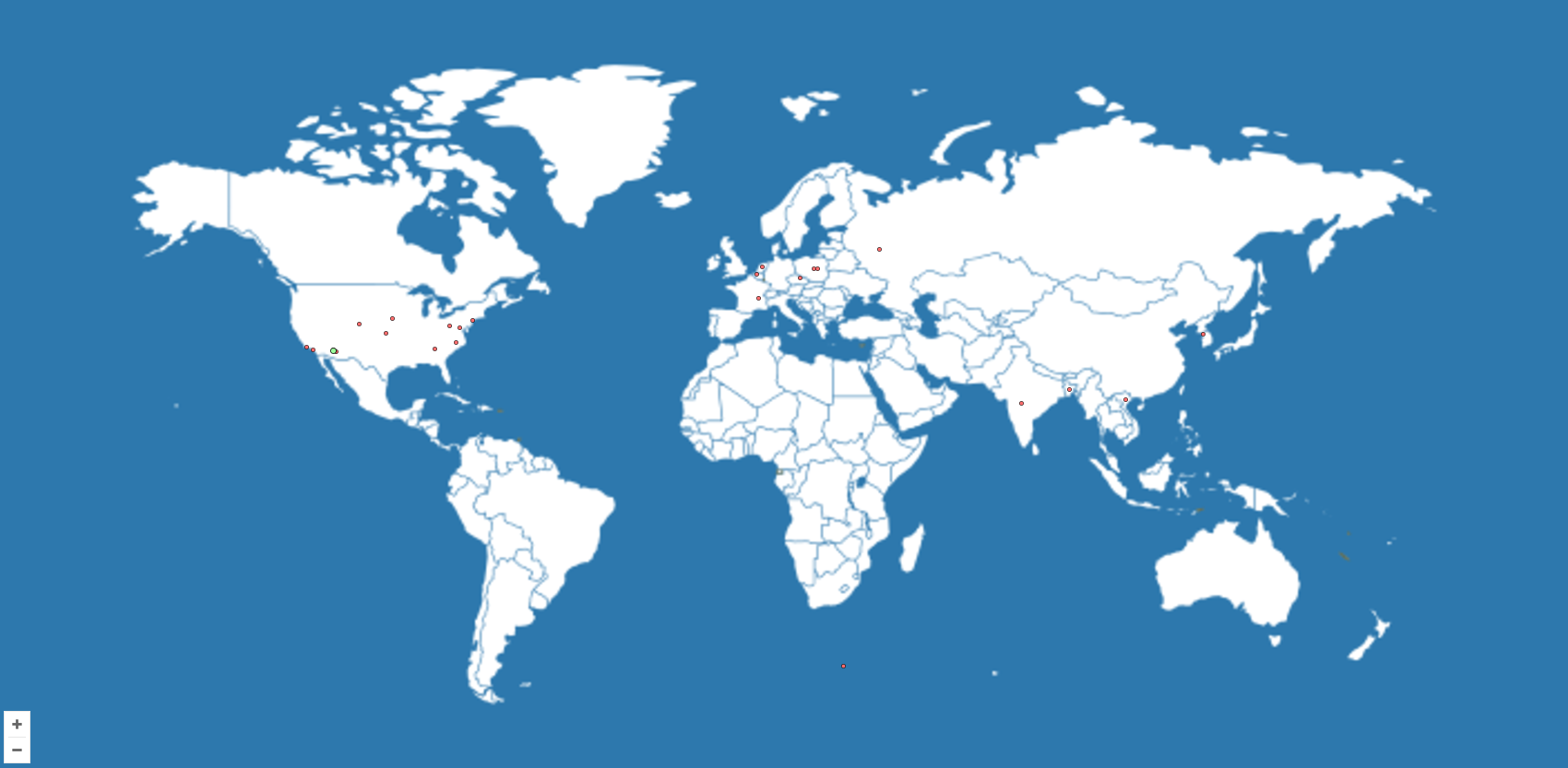
Website Visitors Map
About Greg Loucks
Greg Loucks is a writer, poet, filmmaker, musician, and graphic designer, as well as a creative visionary and faith-driven storyteller working at the intersection of language, meaning, and human connection. Born and raised in Phoenix, Arizona, he has lived in Cincinnati, Ohio; Hot Springs, Arkansas; Williams, Arizona; and Flagstaff, Arizona—each place shaping his perspective, resilience, and creative voice.

Address:
United States of America and Europe
Phone Numbers:
Arizona: (928) 563-GREG (4734)
Tennessee: (615) 899-GREG (4734)
Toll-Free: 888-457-GREG (4734)

Comments