






Post
Legalism and Religion: When Obedience Replaces Relationship
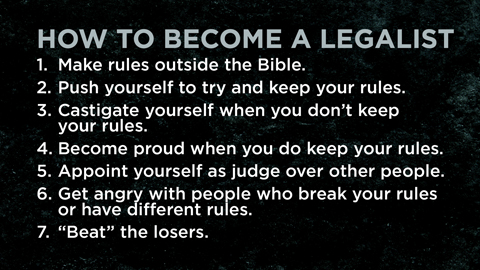
Few things did Jesus confront more directly than religion without relationship. Legalism is not merely strict behavior or discipline—it is the belief that righteousness is achieved, maintained, or proven through external performance rather than inward transformation.
Legalism does not reject God.
It replaces Him.
What Legalism Actually Is
Legalism is not obedience.
Legalism is obedience without intimacy.
Paul defines the problem clearly:
“Having a form of godliness but denying its power.” (2 Timothy 3:5)
Legalism focuses on:
-
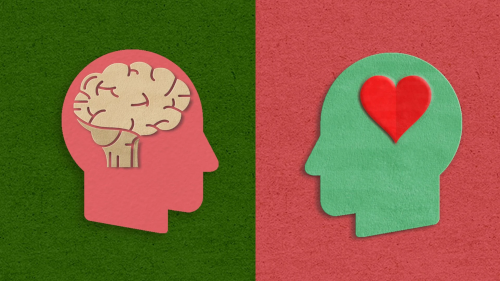
Rules over relationship
-
Appearance over heart
-
Control over transformation
-
Behavior modification instead of spiritual rebirth
Religion becomes the substitute for God’s presence.
Jesus vs. Religious Systems
Jesus’ strongest rebukes were reserved not for sinners, but for religious leaders.
“Woe to you, scribes and Pharisees, hypocrites!” (Matthew 23)
The Pharisees knew Scripture, practiced discipline, and maintained morality—but they missed God entirely.
Jesus said:
“You search the Scriptures, for in them you think you have eternal life; and these are they which testify of Me. But you are not willing to come to Me.” (John 5:39–40)
Legalism studies God without knowing Him.
Why Legalism Feels Safe
Legalism thrives because it offers:
-
Clear boundaries
-
Predictable outcomes
-
A sense of control
-
Measurable righteousness
But safety is not the same as surrender.
The cross was not safe.
Grace is not manageable.
The Holy Spirit cannot be systematized.
“The letter kills, but the Spirit gives life.” (2 Corinthians 3:6)
Religion vs. Relationship
Religion says:
-
“Try harder”
-
“Do better”
-
“Earn approval”
The gospel says:
-
“It is finished”
-
“Abide in Me”
-
“Walk by the Spirit”
Paul warns:
“Are you so foolish? Having begun in the Spirit, are you now being made perfect by the flesh?” (Galatians 3:3)
Legalism begins where faith stops trusting.
Legalism and the Fear of Freedom
One reason legalism persists is fear—fear that grace will lead to sin.
Paul addressed this directly:
“Shall we continue in sin that grace may abound? Certainly not!” (Romans 6:1–2)
Grace does not remove holiness; it produces it.
Legalism restrains behavior.
Grace transforms desire.
How Legalism Destroys the Church
Legalism produces:
-
Judgment without mercy
-
Pride without humility
-
Conformity without unity
-
Burnout without joy
It creates outward compliance while hiding inward rebellion.
Jesus warned:
“They bind heavy burdens, hard to bear, and lay them on men’s shoulders.” (Matthew 23:4)
Legalism exhausts what grace was meant to heal.
True Obedience Flows from Love
Jesus did not abolish obedience. He redefined its source.
“If you love Me, keep My commandments.” (John 14:15)
Obedience is the fruit of love—not the price of acceptance.
When love leads, obedience follows naturally.
The Holy Spirit vs. Religious Control
The Spirit leads internally, not through pressure.
“For as many as are led by the Spirit of God, these are sons of God.” (Romans 8:14)
Religion controls from the outside.
The Spirit transforms from within.
Where the Spirit is present, freedom follows:
“Where the Spirit of the Lord is, there is liberty.” (2 Corinthians 3:17)
Freedom Is Not Lawlessness
Freedom does not mean self-rule—it means Spirit rule.
Paul explains:
“You were called to freedom… but through love serve one another.” (Galatians 5:13)
Grace produces responsibility, not rebellion.
Closing Reflection
Legalism looks righteous but produces death.
Grace looks risky but produces life.
The gospel does not call us to behave better—it calls us to become new.
True Christianity is not about avoiding sin.
It is about walking with God.
And when relationship comes first, obedience becomes joy instead of burden.
Related Articles
Search
Subscribe
Donate


Your Statistics
For the care and safety of this prayer space, we gently record the time and location of each visit. This helps us protect sincerity while preserving anonymity.
Your Date and Time
IP Addres:
216.73.216.36
System
- OS Linux n
- PHP 8.4.17
- MySQLi 10.6.25-MariaDB-log
- Time 20:31
- Caching Disabled
- Gzip Disabled
- Users 4
- Articles 35
- Articles View Hits 1818
Website Visitors Map

About Greg Loucks
Greg Loucks is a writer, poet, filmmaker, musician, and graphic designer, as well as a creative visionary and faith-driven storyteller working at the intersection of language, meaning, and human connection. Born and raised in Phoenix, Arizona, he has lived in Cincinnati, Ohio; Hot Springs, Arkansas; Williams, Arizona; and Flagstaff, Arizona—each place shaping his perspective, resilience, and creative voice.

Address:
United States of America and Europe
Phone Numbers:
Arizona: (928) 563-GREG (4734)
Tennessee: (615) 899-GREG (4734)
Toll-Free: 888-457-GREG (4734)

Comments