







Post
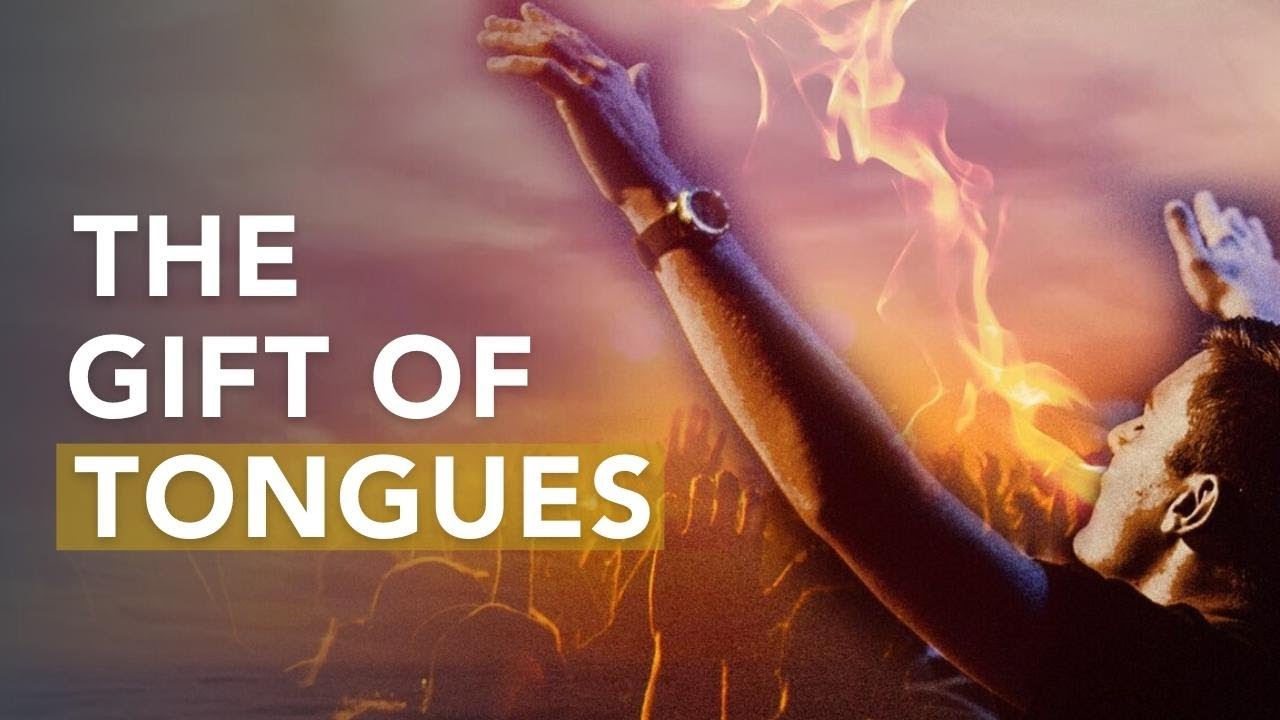
The Gift of Tongues: What the Bible Actually Teaches — and Why So Many People Misunderstand It
Few spiritual gifts provoke as much confusion, fear, fascination, or division as the gift of tongues. For some Christians, it is central to their spiritual life. For others, it is dismissed as emotionalism or even deception.
Yet Scripture does not treat tongues as fringe or optional.
Tongues appear:
-
At the birth of the Church
-
Throughout the New Testament
-
In Paul’s detailed teaching on spiritual gifts
The issue is not whether tongues exist.
The issue is how they are understood, practiced, and taught.
The Biblical Foundation of Tongues
The first public outpouring of tongues occurred at Pentecost:
“All of them were filled with the Holy Spirit and began to speak in other tongues as the Spirit enabled them.”
(Acts 2:4)
Tongues were not taught.
They were not coached.
They were initiated by the Spirit.
Later, tongues appear again:
-
Acts 10 (Gentiles)
-
Acts 19 (Ephesus)
-
1 Corinthians 12–14 (church instruction)
This repetition shows tongues were normative, not exceptional.
What the Gift of Tongues Is
At its core, tongues is:
-
Spirit-enabled speech
-
Expressed in a language unknown to the speaker
-
Directed either to God or to people (depending on context)
Paul explains:
“For one who speaks in a tongue speaks not to men but to God; for no one understands him, but he utters mysteries in the Spirit.”
(1 Corinthians 14:2)
Tongues are prayer and praise, not performance.
Two Primary Expressions of Tongues
1. Personal Prayer Language
This is the most common expression.
Characteristics:
-
Spoken privately
-
Directed toward God
-
Strengthens the believer
-
Does not require interpretation
Paul says:
“The one who speaks in a tongue builds up himself.”
(1 Corinthians 14:4)
This is not selfish—it is edification, just as prayer and Scripture reading are.
2. Public Tongues (with Interpretation)
When tongues are spoken publicly:
-
An interpretation is required
-
It functions similarly to prophecy
-
It edifies the body when understood
“If there is no one to interpret, let each of them keep silent in church and speak to himself and to God.”
(1 Corinthians 14:28)
Paul does not forbid tongues—he regulates them.
Tongues Are Not a Measure of Spiritual Maturity
This is crucial.
The Corinthian church spoke in tongues abundantly—and yet Paul called them immature.
Tongues indicate Spirit empowerment, not character completion.
Love, humility, and obedience matter more than manifestation.
Tongues and the Mind
Paul addresses a common concern:
“If I pray in a tongue, my spirit prays but my mind is unfruitful.”
(1 Corinthians 14:14)
This does not mean tongues are irrational.
It means they bypass cognitive formulation.
Spirit-led prayer is not mindless—it is Spirit-prioritized.
Paul models balance:
“I will pray with my spirit, but I will pray with my mind also.”
(1 Corinthians 14:15)
Do Tongues Need Interpretation Every Time?
No.
Interpretation is required only when tongues are addressed publicly to the congregation.
Private prayer does not require interpretation.
Confusing these contexts has caused unnecessary division.
Are Tongues a Sign for Believers or Unbelievers?
Paul gives a nuanced answer:
“Tongues are a sign not for believers but for unbelievers.”
(1 Corinthians 14:22)
At Pentecost, tongues functioned as a sign.
In Corinth, uncontrolled tongues caused confusion.
The difference was order and purpose.
Common Misuses and Errors
Tongues are often mishandled when:
-
People are pressured to imitate sounds
-
Tongues are elevated above all other gifts
-
Public tongues are used without interpretation
-
Tongues are treated as proof of salvation
-
Tongues replace Scripture instead of supporting it
Paul corrects abuse without suppressing the gift.
Tongues and Self-Control
The Spirit does not overpower the will.
“The spirits of prophets are subject to prophets.”
(1 Corinthians 14:32)
If someone claims “the Spirit made me do it,” Paul would disagree.
Spiritual expression always includes responsibility.
Why Tongues Still Matter Today
Tongues:
-
Strengthen prayer life
-
Increase sensitivity to the Spirit
-
Enable worship beyond language
-
Build faith during uncertainty
“I thank God that I speak in tongues more than all of you.”
(1 Corinthians 14:18)
Paul valued tongues deeply—he just valued love and order more.
Love Governs Tongues
Tongues sit between two love chapters for a reason.
Without love:
-
Tongues become noise
-
Expression becomes ego
-
Freedom becomes disorder
“If I speak in the tongues of men and of angels, but have not love, I am a noisy gong.”
(1 Corinthians 13:1)
Final Thoughts
Tongues are not strange—they are biblical.
They are not dangerous—they are powerful.
They are not mandatory—but they are available.
The gift of tongues was never meant to divide the Church.
It was meant to deepen prayer, expand worship, and build faith.
When practiced with humility, wisdom, and love, tongues remain exactly what they were at Pentecost:
A sign that God still fills people with His Spirit.
Related Articles
Search
Subscribe
Donate


Your Statistics
For the care and safety of this prayer space, we gently record the time and location of each visit. This helps us protect sincerity while preserving anonymity.
Your Date and Time
IP Addres:
216.73.216.26
System
- OS Linux n
- PHP 8.4.17
- MySQLi 10.6.25-MariaDB-log
- Time 14:57
- Caching Disabled
- Gzip Disabled
- Users 4
- Articles 35
- Articles View Hits 1250
Website Visitors Map

About Greg Loucks
Greg Loucks is a writer, poet, filmmaker, musician, and graphic designer, as well as a creative visionary and faith-driven storyteller working at the intersection of language, meaning, and human connection. Born and raised in Phoenix, Arizona, he has lived in Cincinnati, Ohio; Hot Springs, Arkansas; Williams, Arizona; and Flagstaff, Arizona—each place shaping his perspective, resilience, and creative voice.

Address:
United States of America and Europe
Phone Numbers:
Arizona: (928) 563-GREG (4734)
Tennessee: (615) 899-GREG (4734)
Toll-Free: 888-457-GREG (4734)

Comments