






🖊️ Post
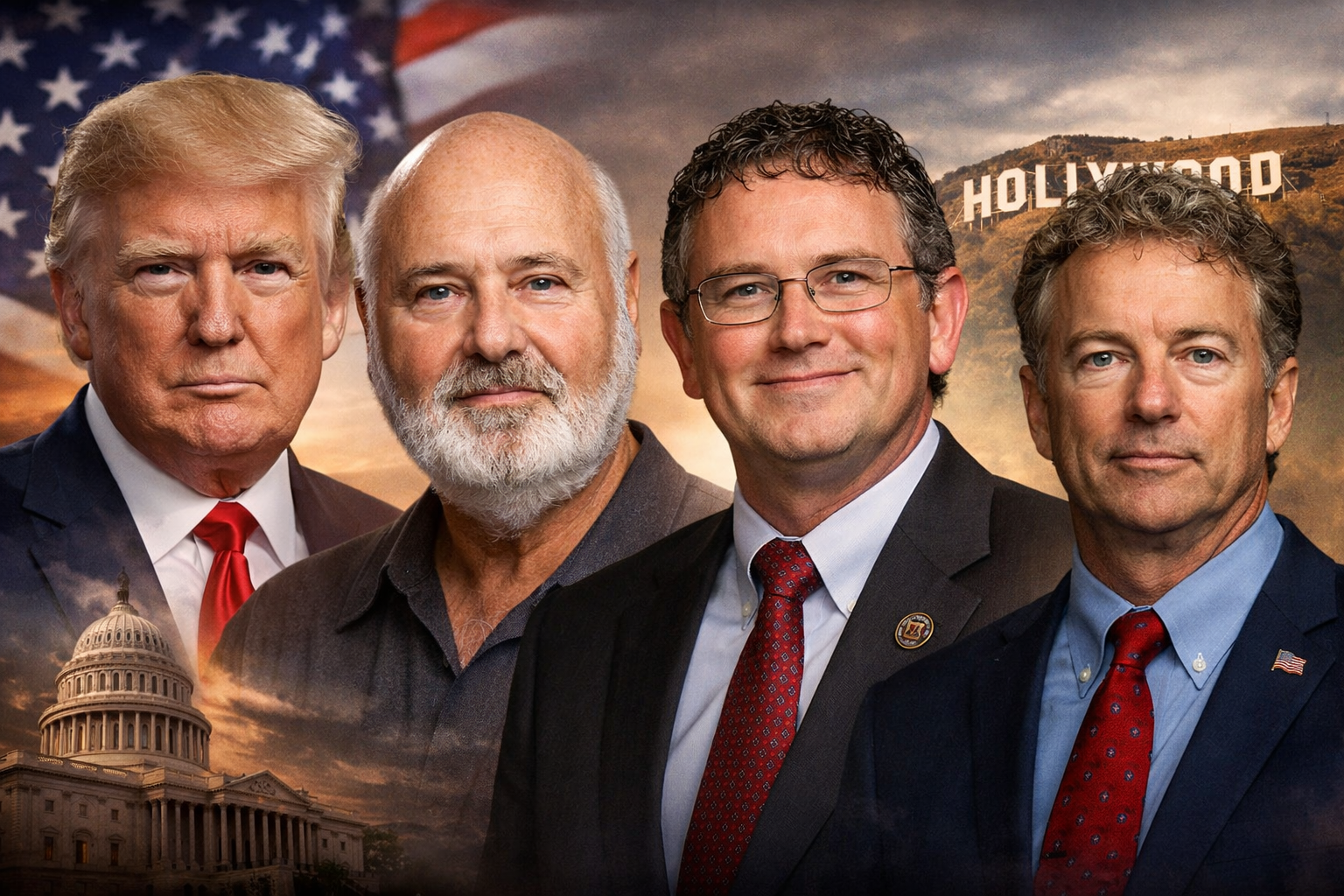
You Can Like Trump Without Liking Everything He Says or Does
American politics has reached a point where nuance is treated like betrayal. If you say you support Donald Trump, many assume you must defend every word he speaks, every insult he throws, and every strategic or unstrategic decision he makes. If you don’t, you’re accused of disloyalty, weakness, or secretly siding with the opposition.
That expectation is wrong. It’s also dangerous.
You can like Trump without liking everything Trump says or does. You can support a movement without surrendering your conscience, your reasoning, or your principles.
Support Is Not Worship
Donald Trump rose to power because he was willing to say things others wouldn’t. He challenged the media, confronted globalism, exposed corruption, and disrupted a political class that had grown comfortable managing decline instead of solving problems. For many Americans, he gave voice to frustrations that had been ignored for decades.
That matters. It still matters.
But bluntness is not the same as wisdom, and disruption is not the same as reform. Trump’s political style often involves personal attacks, public feuds, and responding emotionally to critics. Sometimes that strategy rallies supporters and dominates the news cycle. Other times, it distracts from policy, undermines allies, and weakens the very arguments he claims to champion.
Recognizing that distinction is not betrayal. It’s adulthood.
What Trump Says — and How He Says It
Trump frequently argues that politics is a rough arena and that anyone who criticizes him should be able to take criticism in return. There’s truth in that. Politics is not church fellowship.
But leadership isn’t just about hitting back—it’s about choosing which fights are worth having. When every disagreement becomes personal, substance gets lost. When legitimate policy objections are dismissed as disloyalty, accountability disappears.
Movements fail not because of outside enemies, but because they stop correcting themselves.
Congress and the Illusion of Change
Nowhere is that failure more obvious than in Congress.
Republicans in both the House and Senate continue to pass clean continuing resolutions (CRs)—bills that simply extend current government funding levels with no reforms, no spending cuts, and no structural change. These votes are sold as necessary to avoid shutdowns, but the result is always the same:
-
Wasteful programs remain untouched
-
Spending stays historically high
-
Debt continues to explode
-
Accountability is postponed yet again
This is not conservative governance. This is maintenance of the status quo.
Year after year, election after election, voters are promised fiscal responsibility. Then, once in office, leaders choose the path of least resistance and call it pragmatism.
Business as Usual, Regardless of Party
Democrats are honest about wanting big government. Republicans often campaign against it—then quietly manage it once elected.
That’s why so many Americans feel betrayed. The rhetoric changes, but the outcomes don’t.
Clean CRs are the clearest evidence of that betrayal. They represent a refusal to make hard decisions, a fear of confrontation, and an unwillingness to force real debate about priorities.
If nothing changes, nothing changes.
When Principle Becomes a Problem
Against that backdrop, figures like Senator Rand Paul and Representative Thomas Massie stand out—not because they are flawless, but because they are consistent.
Paul and Massie routinely oppose clean CRs and bloated spending bills. They demand recorded votes, constitutional process, transparency, and genuine fiscal restraint. They do this knowing it will cost them politically, knowing it will anger leadership, and knowing it will isolate them.
They stand on principle when it would be easier—and far more comfortable—to cave.
Instead of engaging their arguments, party leaders often attack them personally. Thomas Massie has been mocked, insulted, and publicly ridiculed. Rand Paul’s name has become shorthand for obstruction rather than conviction.
Yet the core question remains unanswered:
If runaway spending is the problem, why attack the few people trying to stop it?
Misinformation, Rhetoric, and Responsibility
Public discourse is already volatile, which makes accuracy and restraint even more important for leaders with large platforms.
It’s worth stating clearly: Rob Reiner is alive. Online rumors claiming he was dead or attacked by a family member are false. Reiner has been a long‑time and very public critic of Donald Trump, and the two have traded harsh words while Reiner was alive and active in political debate. That back‑and‑forth, however ugly, was part of a mutual public feud.
What crosses a line—regardless of party—is amplifying or validating false reports about someone’s death or personal harm, or piling on narratives that rest on misinformation. Leaders don’t have to like their critics, but they do have a responsibility not to fuel falsehoods that inflame or mislead.
Holding this standard is not about defending Rob Reiner’s politics. It’s about defending truth. When rhetoric drifts away from verifiable facts, it weakens the credibility of the speaker and the movement they represent.
Mixed Signals From the Top
Frustration deepens when mixed signals come from leadership.
Trump has at times spoken favorably of Bill Clinton, a former president widely rejected by conservatives for corruption, moral hypocrisy, abuse of power, and unresolved associations—including those connected to Jeffrey Epstein.
For many Americans, the Epstein case represents something larger than politics. It represents whether power protects people from accountability and whether victims ever receive justice.
Wanting transparency is not partisan. It’s moral.
So when the public is told to “move on” or focus on something else, it creates cognitive dissonance among supporters who were promised that no one would be above scrutiny.
Truth Should Not Be Optional
Demanding truth is not obsession. It is not conspiracy. It is not disloyalty.
A system that protects the powerful while lecturing the public about trust is not sustainable. If accountability matters, it must matter consistently.
Selective outrage and selective silence erode credibility faster than opposition attacks ever could.
Standing Alone Is Biblical
The Bible does not teach that righteousness is determined by consensus.
“You shall not follow a multitude to do evil.” (Exodus 23:2)“Woe to those who call evil good and good evil.” (Isaiah 5:20)“Wide is the gate and broad is the way that leads to destruction… narrow is the gate and difficult is the way which leads to life.” (Matthew 7:13–14)
Scripture consistently honors those who stand for what is right—even when they stand alone. Faithfulness is measured by obedience, not applause.
The Cost of Integrity
Standing on principle often brings isolation. It invites mockery. It provokes anger from those who benefit from compromise.
Paul understood this well:
“If I were still trying to please people, I would not be a servant of Christ.” (Galatians 1:10)
Integrity is expensive. But compromise is costlier.
Loyalty vs. Integrity
Supporting Trump does not require defending every decision, excusing wasteful spending, or ignoring contradictions. A healthy movement allows internal correction. An unhealthy one punishes it.
You can:
-
Appreciate Trump’s disruption of a corrupt system
-
Reject endless spending and clean CRs
-
Defend lawmakers who stand on fiscal and constitutional principle
-
Demand truth and transparency from everyone, regardless of party
Those positions are not in conflict. They reinforce one another.
The Real Choice
America doesn’t need blind allegiance—to Trump or to any political figure. It needs leaders and citizens willing to say “no” when “yes” would be easier.
Rand Paul and Thomas Massie remind us that principle often leads to standing alone. Scripture reminds us that standing alone is not failure—it is often the evidence that you are standing correctly.
You can like Trump without liking everything Trump does. You can support reform without selling out. You can stand on what is right even when it costs you.
That is not weakness. That is integrity.
If we claim to stand on principle—like Rand Paul and Thomas Massie do on spending and constitutional limits—then truth itself must be non‑negotiable. False stories weaken real arguments, distract from legitimate critiques, and give opponents an easy way to dismiss everything else we say.
Standing for what is right sometimes means standing alone. Sometimes it also means correcting our own side when facts are wrong, even when the narrative feels emotionally satisfying. That is not betrayal—it is integrity.
Standing on Principle When It Costs You
Scripture is unambiguous about the value of standing for what is right—even when you stand alone.
“The righteous care about justice for the poor, but the wicked have no such concern.” — Proverbs 29:7“Better is a poor man who walks in his integrity than a rich man who is crooked in his ways.” — Proverbs 28:6“We must obey God rather than men.” — Acts 5:29Biblical courage is not loud loyalty to a person. It is quiet faithfulness to truth.Throughout Scripture, the men and women God honors most are not those who went along to get along, but those who refused to bow—Daniel before Nebuchadnezzar, Elijah against the prophets of Baal, Jeremiah speaking truth to power, John the Baptist confronting Herod, and ultimately Jesus Himself, standing alone before both religious and political authorities.Standing alone does not automatically make someone right.But standing on truth often results in standing alone.“We must obey God rather than men.” — Acts 5:29Liking a Leader Without Surrendering Your ConscienceIt is possible—and necessary—to support Donald Trump’s policies, judicial appointments, border enforcement, and resistance to entrenched bureaucratic power without approving every word, insult, or strategic choice he makes.Conservatism has never required emotional loyalty to a man. At its best, it has required loyalty to:the Constitutionfiscal restrainttruthmoral accountability“Put not your trust in princes, in a son of man, in whom there is no salvation.” — Psalm 146:3When politics becomes personality worship rather than principled conviction, it stops being conservatism and becomes tribalism.Congress, Clean CRs, and Business as UsualDespite campaign promises and fiery rhetoric, Republicans in both the House and Senate continue passing clean Continuing Resolutions, funding the government at current levels and postponing real reform.No structural change.No meaningful spending cuts.No accountability.Just another kick of the can.“Woe to those who decree iniquitous decrees, and the writers who keep writing oppression.” — Isaiah 10:1This is not a Democrat-only failure. It is an institutional failure—and voters are right to be frustrated.Rand Paul and Thomas Massie: Principle Over PartySenator Rand Paul and Representative Thomas Massie consistently oppose runaway spending, unconstitutional overreach, and fake fiscal conservatism. They vote no when it costs them politically—and they do it anyway.They are mocked, isolated, and attacked not because they are unserious, but because they are inconvenient.“Faithful are the wounds of a friend; profuse are the kisses of an enemy.” — Proverbs 27:6When leadership punishes those who tell the truth and rewards those who comply, something is upside down.Attacking the Few Who ResistWhile Congress advances clean CRs, President Trump has publicly criticized Rand Paul and Thomas Massie—despite their long records of opposing wasteful spending.This creates a contradiction:Praise fiscal responsibilityAttack the people who actually practice it“A double-minded man is unstable in all his ways.” — James 1:8Criticism from your own side does not make someone a traitor. Sometimes it means they are doing their job.Truth, Rhetoric, and ResponsibilityPolitical conflict does not excuse carelessness with facts. Even our enemies deserve truth.“You shall not bear false witness against your neighbor.” — Exodus 20:16“Let no corrupting talk come out of your mouths, but only such as is good for building up.” — Ephesians 4:29Strong leadership requires restraint. Words shape culture. When leaders blur truth for applause, everyone pays the price.Standing Alone Is Not Failure“Enter by the narrow gate. For the gate is wide and the way is easy that leads to destruction, and those who enter by it are many.” — Matthew 7:13The narrow path is rarely crowded. That does not make it wrong.If conservatism means anything at all, it must mean:saying no when spending is recklesstelling the truth when lies are convenienthonoring principle even when it costs political capitalRand Paul and Thomas Massie are not perfect. But they are consistent. And consistency, in an age of performance politics, is rare.Conclusion: Integrity Before VictoryWinning elections matters. But how we win matters too.“What does the Lord require of you but to do justice, and to love kindness, and to walk humbly with your God?” — Micah 6:8Supporting a leader does not require surrendering your conscience. In fact, real support sometimes means saying, “This is wrong.”That is not betrayal.That is backbone.Final WordA movement that cannot tolerate principled dissent will eventually collapse under its own contradictions.The American people are not asking for perfection. They are asking for honesty. They are asking for leaders who will say no when saying yes is easier, safer, and more profitable.Unity built on denial is not unity—it is fragility pretending to be strength.“Let us not grow weary of doing good, for in due season we will reap, if we do not give up.” — Galatians 6:9Truth does not need a majority vote.Integrity does not need permission.Principle does not need applause.Stand anyway.— End of ArticleReferences & SourcesCongressional Spending & Continuing ResolutionsU.S. Congress – House & Senate Roll Call VotesOfficial voting records on Continuing Resolutions and federal funding bills.→ congress.govCongressional Budget Office (CBO)Baseline budget projections, deficit reports, and spending analyses.→ cbo.govU.S. Treasury DepartmentNational debt figures and federal outlay data.→ fiscaldata.treasury.govRand Paul – Fiscal & Constitutional RecordOffice of Senator Rand PaulStatements and votes opposing clean CRs, omnibus bills, and deficit spending.→ paul.senate.govHeritage Action ScorecardLegislative scorecards measuring fiscal and constitutional conservatism.→ heritageaction.comClub for GrowthVoting records and fiscal responsibility ratings.→ clubforgrowth.orgThomas Massie – Fiscal & Constitutional RecordOffice of Representative Thomas MassieVoting record, public statements, and explanations opposing CRs and debt expansion.→ massie.house.govHouse Clerk – Voting HistoryRoll call votes confirming opposition to spending increases and debt ceiling hikes.→ clerk.house.govTrump Statements & Intra-Party CriticismDonald J. Trump – Public Statements & Social Media PostsRemarks related to spending, Republican dissenters, and party discipline.(Primary-source material via official statements and archived posts.)Fox News / The Hill / PoliticoCoverage of Republican disputes over CRs, fiscal policy, and internal criticism.(Used for contextual reporting, not opinion.)Biblical SourcesThe Holy Bible (ESV translation unless otherwise noted)Scriptures cited include:Proverbs 28:6Proverbs 29:7Psalm 146:3Isaiah 10:1Proverbs 27:6Acts 5:29James 1:8Exodus 20:16Ephesians 4:29Matthew 7:13Micah 6:8Galatians 6:9James 4:17Notes on MethodAll political claims are based on public voting records and direct statementsNo rumors, unverifiable claims, or anonymous sources are relied uponScripture is cited for moral framework, not partisan endorsement
Thanks for reading! Subscribe for free to receive new posts and support my work.
Related Articles
Search
Subscribe
Donate


Your Statistics
For the care and safety of this prayer space, we gently record the time and location of each visit. This helps us protect sincerity while preserving anonymity.
Your Date and Time
IP Addres:
216.73.216.149
System
- OS Linux n
- PHP 8.4.17
- MySQLi 10.6.25-MariaDB-log
- Time 02:46
- Caching Disabled
- Gzip Disabled
- Users 18
- Articles 38
- Articles View Hits 2927
Website Visitors Map

About Greg Loucks
Greg Loucks is a writer, poet, filmmaker, musician, and graphic designer, as well as a creative visionary and faith-driven storyteller working at the intersection of language, meaning, and human connection. Born and raised in Phoenix, Arizona, he has lived in Cincinnati, Ohio; Hot Springs, Arkansas; Williams, Arizona; and Flagstaff, Arizona—each place shaping his perspective, resilience, and creative voice.

Address:
United States of America and Europe
Phone Numbers:
Arizona: (928) 563-GREG (4734)
Tennessee: (615) 899-GREG (4734)
Toll-Free: 888-457-GREG (4734)

Comments